Freethinker
The Captain and Ann BarbaraFreethinker is the identity Mary Antin seizes for herself in the schoolyard of her Chelsea public school, the word she hurls at her horrified classmates when they demand to know why she will not observe Passover. It is the name of her atheism, her declaration that she does not believe in God, and it marks the most dramatic moment of her Americanization. The term gathers into itself the whole arc of her break with the Old World: her father's quiet apostasy, her own childhood experiments with religious doubt, and her conviction that the Constitution of the United States guarantees her the right to believe — or not believe — as she chooses. Yet the word also names a contradiction, for the girl who proudly calls herself a Freethinker will soon discover that her emancipation is not so complete as she imagines.
Origins in the Old World
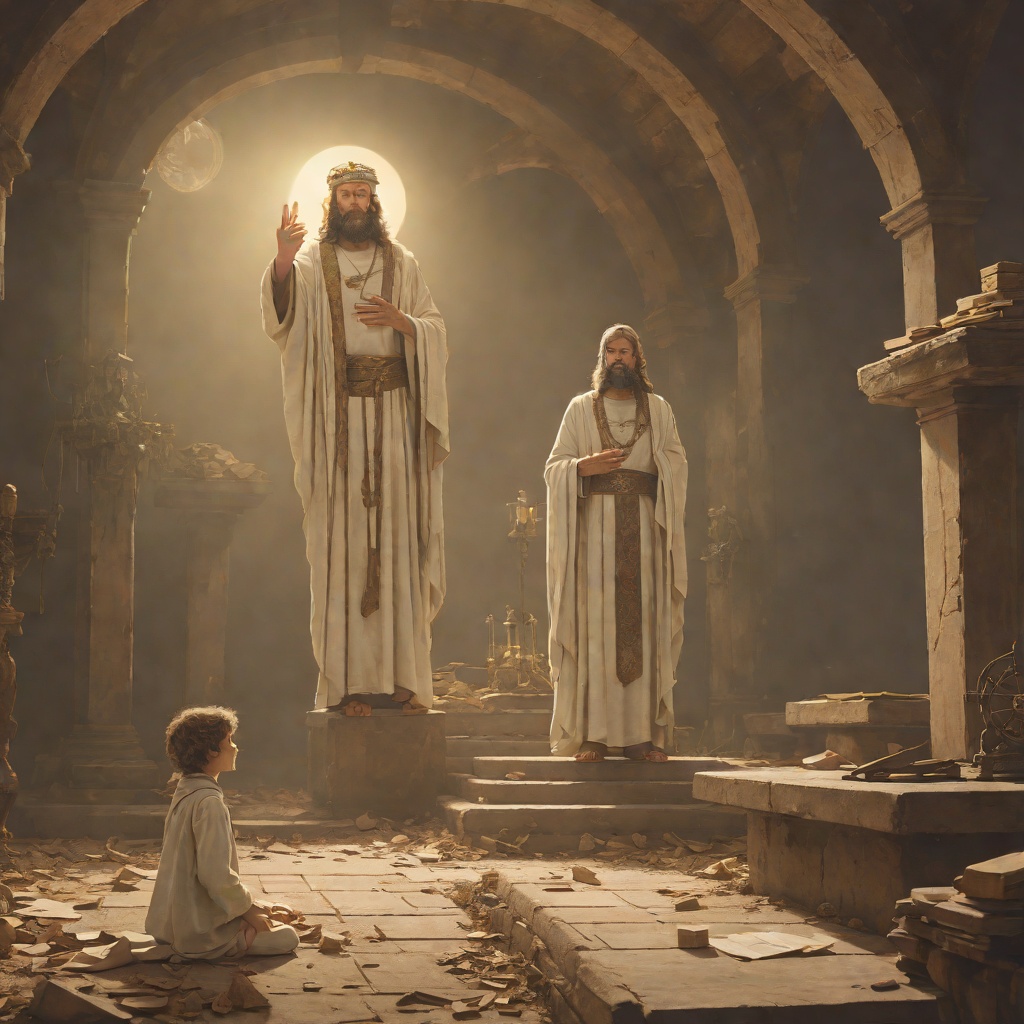
The ground of Mary's freethought was laid long before she reached America, in the religious world of Polotzk that she was already beginning to question. As a girl in the Pale of Settlement, she was excluded from the serious study that occupied the boys of her community. The boys came to heder before nine in the morning and remained until eight or nine at night, while for a girl it was enough to read her prayers in Hebrew and follow the meaning by the Yiddish translation at the bottom of the page. A girl's real schoolroom was her mother's kitchen, where she learned to bake and cook and manage, to knit, sew, and embroider, and where her mother instructed her in the laws regulating a pious Jewish household. Marriage was a sacrament among the Jews of the Pale; to rear a family of children was to serve God, and woman's only work was motherhood. To be left an old maid was the greatest misfortune that could threaten a girl, and every nerve of the family was strained to ward off that calamity. This was the world that made Mary's freethought possible, for it was a world in which religion and duty were so tightly bound together that to question one was to begin to question the other. Her own faith had always been weak; she played at sanctity as she played at soldiers, in the mood or not, and she had neglected her books of devotion and given herself up to profane literature at the first opportunity, in Vitebsk. She never took up her prayer book again.
The Father's Example
The decisive influence on Mary's freethought was her father, Joseph Antin, whose own rejection of religious observance she witnessed and absorbed. When she joined her father in America, she saw that he did not wear the sacred fringes, and did not put on the phylacteries and pray, and she was neither surprised nor shocked, remembering the Sabbath night when he had with his own hand turned out the lamp. When she saw him go out to work on Sabbath exactly as on a week day, she understood why God had not annihilated her with his lightnings that time when she purposely carried something in her pocket on Sabbath: there was no God, and there was no sin. This was the logic of her conversion to atheism — not a slow intellectual struggle, but a sudden, almost joyful recognition that the prohibitions and obligations that had hemmed her about at every step in Polotzk were founded on nothing. She ran out to play, pleased to find that she was free, like other little girls in the street. Yet she herself would later reflect that if the golden truth of Judaism had not been handed to her in the motley rags of formalism, she might not have been so ready to put away her religion. The very rigidity of the Old World faith had prepared her to discard it wholesale.
The Schoolyard Declaration
It was Rachel Goldstein who provoked Mary's avowal of atheism. Rachel asked if she wasn't going to stay out of school during Passover, and Mary said no. Wasn't she a Jew? Rachel wanted to know. No, she wasn't; she was a Freethinker. What was that? She didn't believe in God. Rachel was horrified — why, Kitty Maloney believed in God, and Kitty was only a Catholic! She appealed to Kitty, and Kitty Maloney, who used to mock Rachel's Jewish accent, instantly became her voluble ally. Rachel and Kitty and Maggie, Sadie and Annie and Beckie, made a circle around Mary, and pressed her with questions, and mocked her, and threatened her with hell flames and utter extinction. Mary held her ground against them all obstinately enough, though her argument was exceedingly lame. She glibly repeated phrases she had heard her father use, but she had no real understanding of his atheistic doctrines. She had been surprised into this dispute; she had no spontaneous interest in the subject, and her mind was occupied with other things. But as the number of her opponents grew, and she saw how unanimously they condemned her, her indifference turned into a heat of indignation. The actual point at issue was as little as ever to her, but she perceived that a crowd of Free Americans were disputing the right of a Fellow Citizen to have any kind of God she chose. She knew, from her father's teaching, that this persecution was contrary to the Constitution of the United States, and she held her ground as befitted the defender of a cause. George Washington would not have treated her as Rachel Goldstein and Kitty Maloney were doing! "This is a free country," she reminded them in the middle of the argument. The excitement in the yard amounted to a toy riot, and when the school bell rang and the children began to file in, she stood out there as long as any of her enemies remained, although it was her habit to go to her room very promptly. Sadie Cohen told the teacher who kept the line in the corridor, in tones of awe, what the commotion was about.
The Test of the Ham
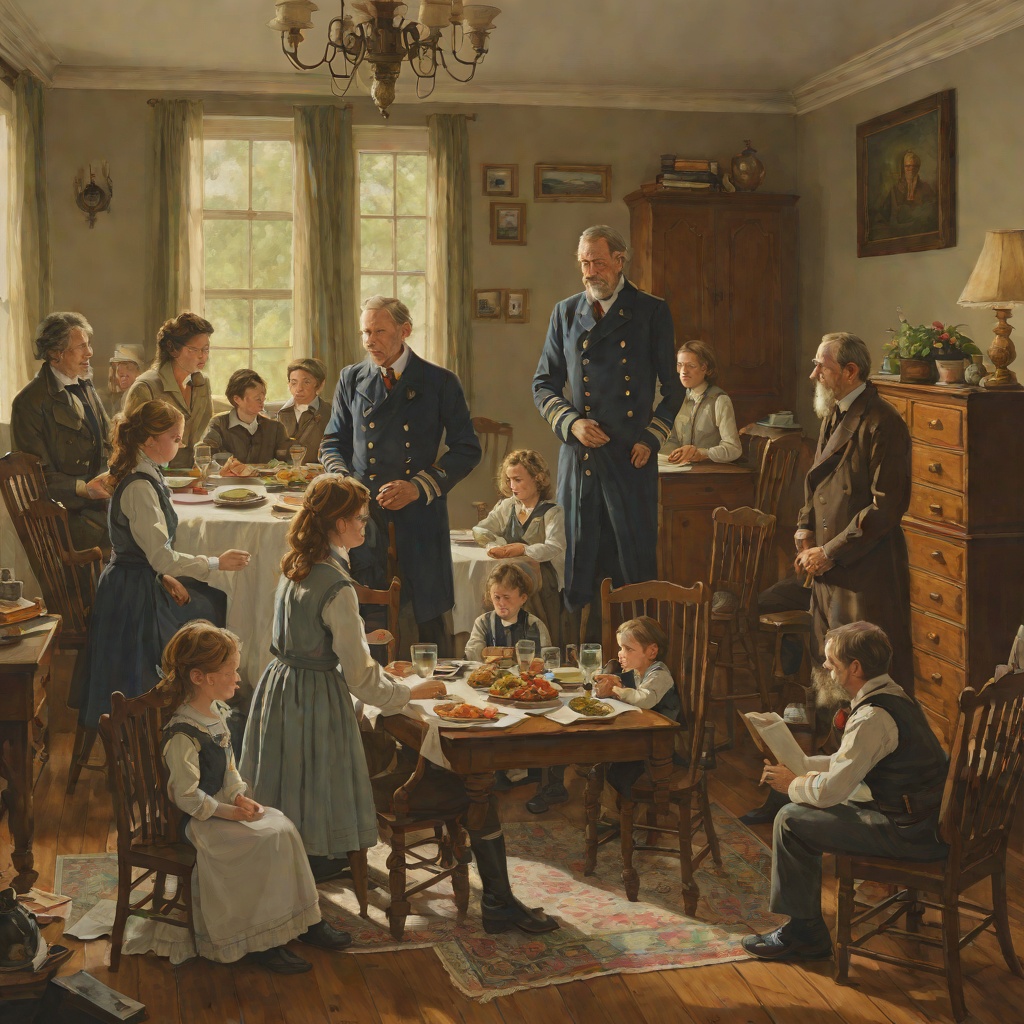
Mary's freethought, so confidently proclaimed in the schoolyard, was soon put to a far more private and humiliating test. It was Miss Dillingham, she who helped Mary in so many ways, who unconsciously put her to an early trial, the result of which gave her a shock that she did not get over for many a day. Miss Dillingham invited her to tea one day, and Mary came in much trepidation. It was her first entrance into a genuine American household; her first meal at a Gentile — yes, a Christian — board. She proceeded very cautiously with her spoons and forks, cunning enough to try to conceal her uncertainty by being just a little bit slow, so that she did not get to any given spoon until the others at table had shown her which it was. All went well, until a platter was passed with a kind of meat that was strange to her. Some mischievous instinct told her that it was ham — forbidden food — and she, the liberal, the free, was afraid to touch it! She had a terrible moment of surprise, mortification, self-contempt; but she helped herself to a slice of ham, nevertheless, and hung her head over her plate to hide her confusion. She was furious with herself for her weakness. She to be afraid of a pink piece of pig's flesh, who had defied at least two religions in defence of free thought! And she began to reduce her ham to indivisible atoms, determined to eat more of it than anybody at the table. But she learned that to eat in defence of principles was not so easy as to talk. She ate, but only a newly abnegated Jew can understand with what squirming, what protesting of the inner man, what exquisite abhorrence of herself. That Spartan boy who allowed the stolen fox hidden in his bosom to consume his vitals rather than be detected in the theft showed no such miracle of self-control as did she, sitting there at her friend's tea-table, eating unjewish meat. The incident revealed to her that her freethought was an intellectual conviction, not a bodily one — that the habits of a lifetime in the Pale could not be shed by a single declaration in a schoolyard.
The Atheist at Fourteen
At the age of fourteen, Mary considered herself absolutely, eternally, delightfully emancipated from the yoke of indefensible superstitions. She was wild with indignation and pity when she remembered how her poor brother had been cruelly tormented because he did not want to sit in heder and learn what was after all false or useless. She knew now why poor Reb' Lebe had been unable to answer her questions; it was because the truth was not whispered outside America. She was very much in love with her enlightenment, and eager for opportunities to give proof of it. This self-satisfied atheism colored her judgment of others, including the well-meaning Brother Hotchkins, who ran the entertainments at the Morgan Chapel. She could not help admiring him, he was so eminently efficient in every part of the hall, at every stage of the proceedings. The way he handled the bad boys was masterly. The way he introduced the performers was inimitable. And yet she did not like Brother Hotchkins. He was too slim, too pale, too fair. His voice was too encouraging, his smile was too restrained. The man was a missionary, and it stuck out all over him. She could not abide a missionary. That was the Jew in her, the European Jew, trained by the cruel centuries of his outcast existence to distrust any one who spoke of God by any other name than Adonai. But she would have resented the suggestion that inherited distrust was the cause of her dislike for good Brother Hotchkins; for she considered herself freed from racial prejudices, by the same triumph of her infallible judgment which had lifted from her the yoke of credulity. An uncompromising atheist, such as she was at the age of fourteen, was bound to scorn all those who sought to implant religion in their fellow men, and thereby prolong the reign of superstition. Of course that was the explanation. She always got out of the chapel before Brother Tompkins could do her any harm — as if there was anything he could steal from her, now that there was no God in her heart.
The Persistence of the Heritage
Mary's freethought, for all its confidence, was shadowed by her own doubts about its permanence. She reflected that her backsliding had cost her no travail of spirit, and that she had arrived at her conviction of impiety without struggle. She wondered how she had come, from praying and fasting and Psalm-singing, to extreme impiety. And she acknowledged that her father, in his first violent rejection of everything old and established, cast from him much that he afterwards missed; he might tell to what extent he later retraced his steps, seeking to recover what he had learned to value anew. She thought it doubtful if the conversion of the Jew to any alien belief or disbelief is ever thoroughly accomplished, and she speculated that her grandchildren might have to testify that the faith of Israel is a heritage that no heir in the direct line has the power to alienate from his successors. None of these hints and prophecies troubled her at the time when she horrified the schoolyard by denying the existence of God, on the authority of her father, and defended her right to her atheism, on the authority of the Constitution. But the very fact that she could entertain such thoughts suggests that her freethought was never as simple as her schoolyard declaration made it seem. The word Freethinker named her rebellion, but it could not name everything she carried with her from Polotzk — the flavors of Sabbath cheese cakes, the memory of cherry-stone contests with her Cousin Shimke, the habits of a girlhood shaped by a piety she had rejected. Her freethought was an American identity, claimed in an American schoolyard, defended by an American Constitution; but it was worn by a body and a memory that had been formed elsewhere, and that would never be entirely remade.