Mrs. Hutch
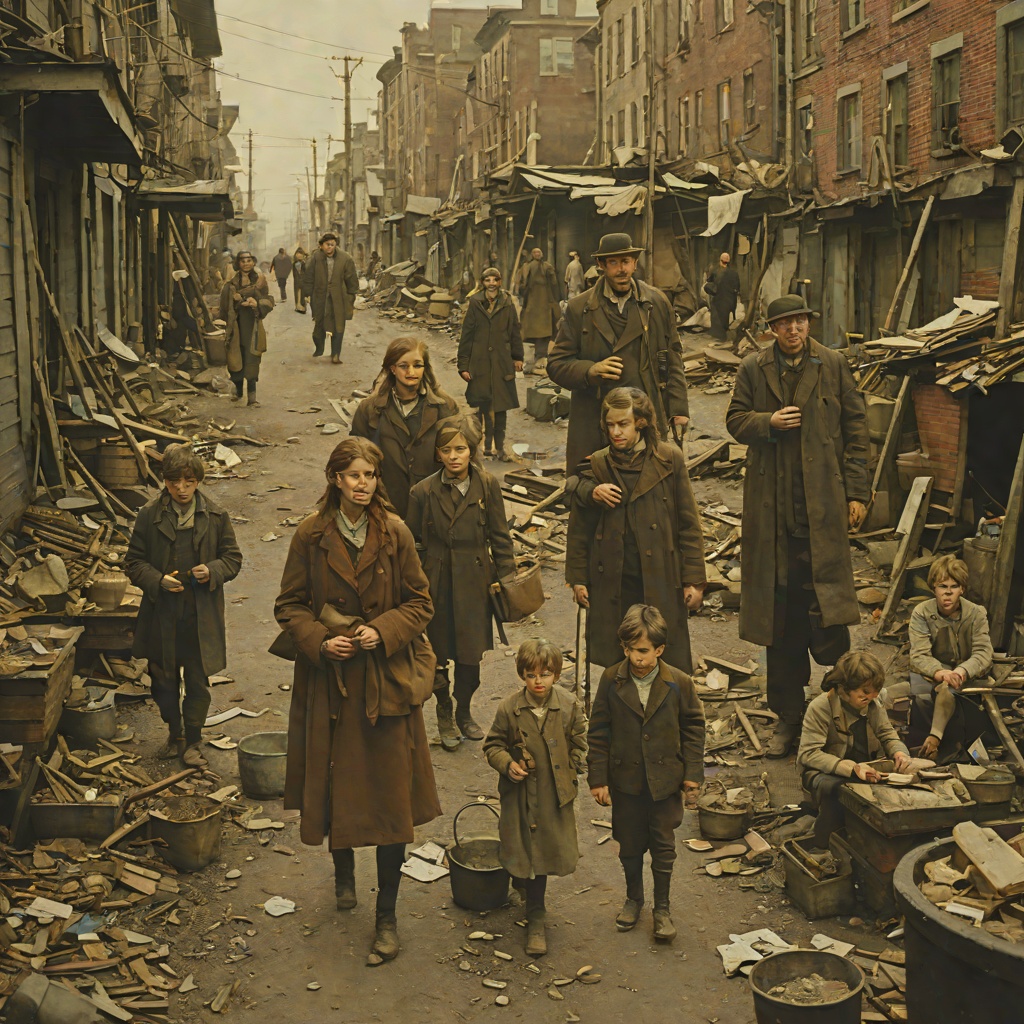
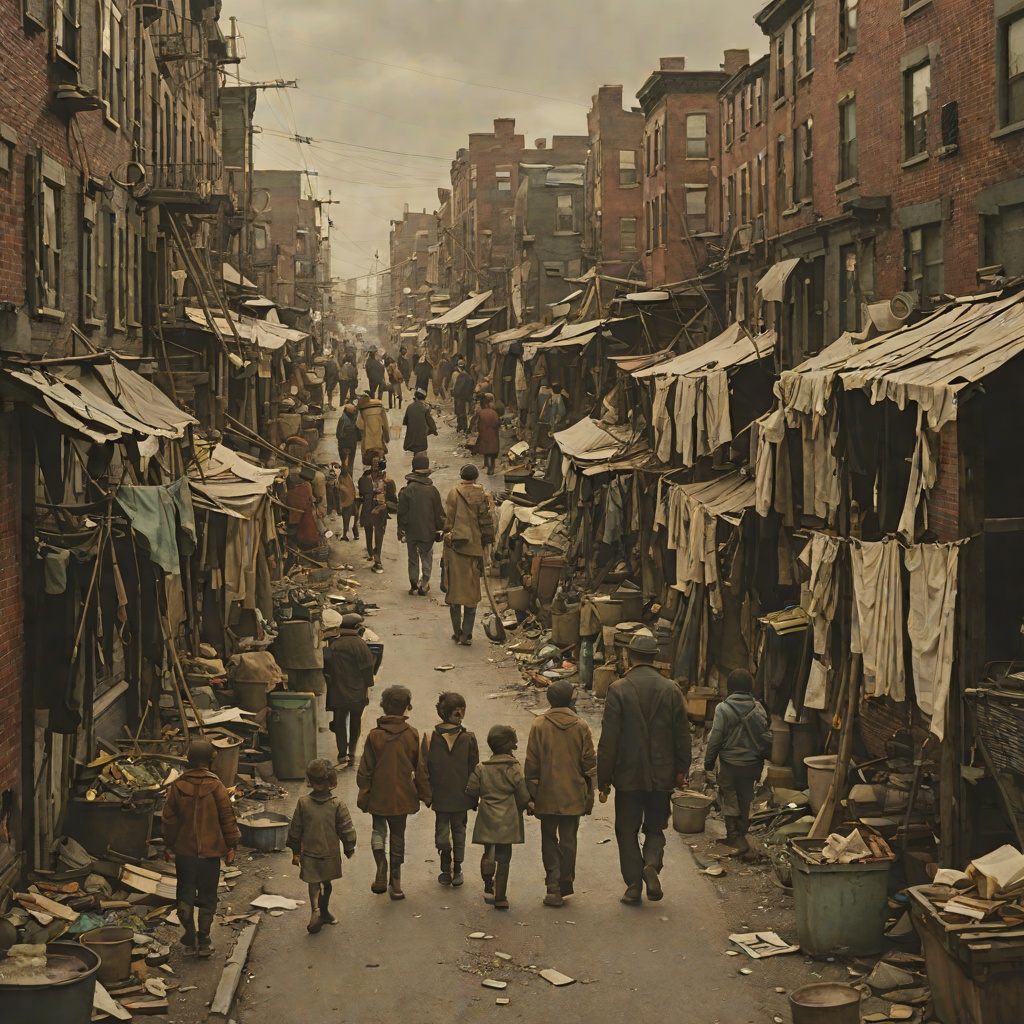
The Captain and Ann BarbaraMrs. Hutch is the landlady of the tenement on Dover Street where the Antin family lives during their first years in Boston. She is a widow, always seen in an ample black coat and widow's bonnet, whose weekly visits to collect rent become the most dreaded recurring event in the household's calendar. To the young Mary Antin, she represents the sharpest tooth of the gnawing canker of poverty — a living, breathing embodiment of the economic pressure that grinds down the family. Her character is defined almost entirely through her relationship with the Antins, and through her, the book dramatizes the daily, unglamorous struggle of the urban poor against the relentless demands of survival.
The Saturday Terror
Mrs. Hutch's visits are so regular and so dreaded that they give Saturday a distinct, oppressive quality. For Mary, waking on Saturday morning brings not just the pleasant no-school feeling but the grim, immediate consciousness that "Mrs.-Hutch-is-coming-and-there's-no-rent." The landlady's approach is theatrical and impossible to ignore: she climbs the stairs with determination, lands at the top with emphasis, and delivers a knock so clear, sharp, and unfaltering that it is impossible to pretend not to hear it. Her "Good-evening" announces business, and her manner of taking a chair suggests the throwing-down of a gauntlet. She invariably asks for Mary's father, calling him "Mr. Anton" and refusing to be corrected, and almost invariably he is not at home, out looking for work. When told that no rent has been left, her storm begins.
The Fury of the Rent Collector
Mrs. Hutch's anger is a full performance. She grows red in the face, her voice growing shriller with every word, as she rehearses the family's sins like a prophet foretelling doom. She enumerates the weeks of rent owed, accuses the family of being too lazy to work, declares they never intend to pay, and insists they live on others and deserve to be put out without warning. She reproaches Mary's mother for having too many children and blames the entire family for coming to America. She details her own losses through nonpayment of rents, tells them she cannot collect the amount of her taxes, and shows how their irregularities are driving a poor widow to ruin. When Mary's mother attempts a word in defense of her absent husband, the landlady grows all the shriller and silences her impatiently. The children stare from their corners, the frightened baby cries, and Mary's mother hangs her head where she stands.
A Special Grudge Against Mary
Mrs. Hutch holds a particular animosity toward Mary herself, resenting that the girl does not go to work as a cash girl and earn three dollars a week. Mary, standing by to give her mother the moral support of dumb sympathy, understands this grudge perfectly. She wants to explain that she is preparing herself for a great career and to promise the payment of the arrears as soon as she begins to get rich, but the landlady never lets her put in a word. Despite the terror she inspires, Mary feels a measure of pity for her, recognizing that Mrs. Hutch seems to be having such a bad time. In a moment of philosophical detachment, Mary even rationalizes the landlady's behavior, concluding that it is not unreasonable for a landlady to crave the rent as such — a school-girl dotes on her books, a baby cries for its rattle, and a landlady yearns for her rents.
The Failed Peace Mission
The climax of Mrs. Hutch's role comes when Mary, confident in her broad-mindedness and her ability to analyze the landlady, decides to act as peacemaker between her and the family. She understands she must go to Mrs. Hutch's own house, and not on a rent day, when Saturday evening's disappointments have embittered her. As soon as her father can give her a week's rent to take along, Mary goes. She finds Mrs. Hutch in the gloom of a long, faded parlor, and despite the landlady being divested of her formidable black coat and widow's bonnet, Mary feels like a mere rumpled sparrow fallen into the lion's den. After delivering the money, she hesitates, unsure how to begin her speech. Mrs. Hutch notices her books and asks about them, and Mary eagerly shows her Latin grammar, her geometry, and her Virgil, explaining that she is going to college to fit herself to write poetry, get rich, and pay the arrears. But at the mention of college, Mrs. Hutch cuts her short, breaking out with her old reproaches and working herself into a worse fury than Mary has ever witnessed. Alone in the tempest, with an old lady sitting on a sofa drinking tea and the tidy on the back of the sofa sliding down, Mary is so bewildered she can only stand and stare. Hypnotized by the rapid motions of the landlady's mouth, she ceases to hear the words at all. The spell is broken only when the moving tidy catches her eye, and she goes over to the sofa with a decided step and carefully replaces it — a small, almost absurd gesture of composure in the face of overwhelming hostility.
The Arrears and the Escape
Mrs. Hutch's story does not end with the failed peace mission. Years later, reflecting on her life since leaving the slums, Mary reports that she has earned enough to pay Mrs. Hutch the arrears and satisfy all her wants. The landlady, who once seemed the sharpest tooth of poverty's canker, is thus finally settled with — a quiet, almost anticlimactic resolution that marks the family's escape from the grinding poverty of Dover Street. The payment of the arrears is a measure of Mary's success, the fulfillment of the promise she had tried to make in the faded parlor. Mrs. Hutch, who had blamed the family for coming to America and reproached them for their laziness, is ultimately paid in full by the very girl she had resented for not working as a cash girl. The landlady's role in the narrative is thus complete: she is the face of the economic system that oppresses the immigrant poor, and her eventual satisfaction is a testament to the possibility of rising above it.
The Symbol of Poverty's Grip
Beyond her literal function, Mrs. Hutch operates as a powerful symbol in the book's meditation on poverty. The narrator draws an extended contrast between how poverty afflicts men and women: to the man of the house, poverty is a bulky dragon with gripping talons and a poisonous breath, but he bellows in the open and can give it knightly battle; to the housewife, want is an insidious myriapod creature that crawls in the dark, mates with its own offspring, breeds all the year round, and persists like leprosy. Mrs. Hutch is the human agent of this insidious, creeping form of poverty — the weekly, inescapable reminder of the family's failure to keep up. She is described as only one symptom of the disease of poverty, but at times she seems the sharpest tooth of the gnawing canker. Her visits are as sure as sorrow trailing behind sin, and her presence in the narrative gives concrete, terrifying form to the abstract force of economic want. The fear she inspires — the anxiety of going to sleep in worry and waking in fear — is presented as a corrosive force that damages the complexion of the soul and breeds gray hairs and a premature longing for death. Mrs. Hutch, in her black coat and widow's bonnet, is the face of that corrosive force, and her eventual defeat is the family's triumph over the disease of poverty itself.