Naturalization
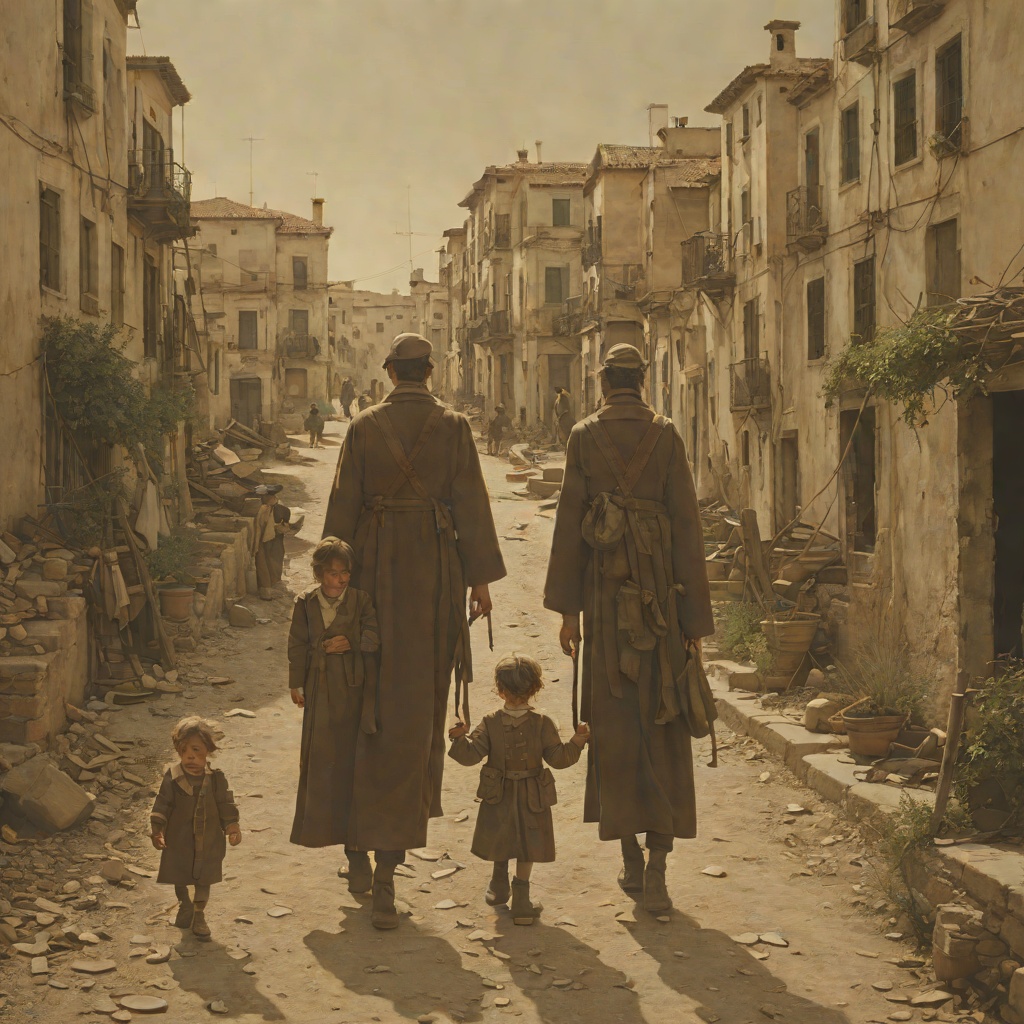
The Captain and Ann BarbaraNaturalization stands at the very center of Mary Antin's account of her family's transformation, functioning as both a legal process and a profound spiritual rebirth. In the world of Polotzk, the Antin family existed as prisoners within the Pale of Settlement, a designated area where the Czar commanded them to stay because they were Jews. This confinement was the first lesson a Jewish child had to learn, a knowledge that trickled into consciousness drop by drop until the shackles grew familiar to the flesh. The contrast between this inherited bondage and the promise of American citizenship could not be starker, and it is this contrast that gives naturalization its almost sacred quality in the narrative. For Mary Antin, the act of becoming a citizen is not a mere formality but the culmination of a journey from a world of enforced silence and superstition to one of outspoken patriotism and individual freedom.
The Father's Pursuit of Citizenship
Mary Antin's father, Joseph Antin, embodies the immigrant's hunger for citizenship with an intensity that borders on the religious. Almost his first act on landing on American soil, three years before the rest of the family arrived, was his application for naturalization. He took the remaining steps in the process with eager promptness, and at the earliest moment allowed by the law, he became a citizen of the United States. This haste was not born of mere practicality but of a deep spiritual need. Although he had left home in search of bread for his hungry family, he went blessing the necessity that drove him to America. The boasted freedom of the New World meant to him far more than the right to reside, travel, and work wherever he pleased; it meant the freedom to speak his thoughts, to throw off the shackles of superstition, and to test his own fate, unhindered by political or religious tyranny. He was only thirty-two when he landed, and most of his life he had been held in leading-strings; he was hungry for his untasted manhood. His naturalization was the formal declaration that he had finally claimed that manhood for himself.
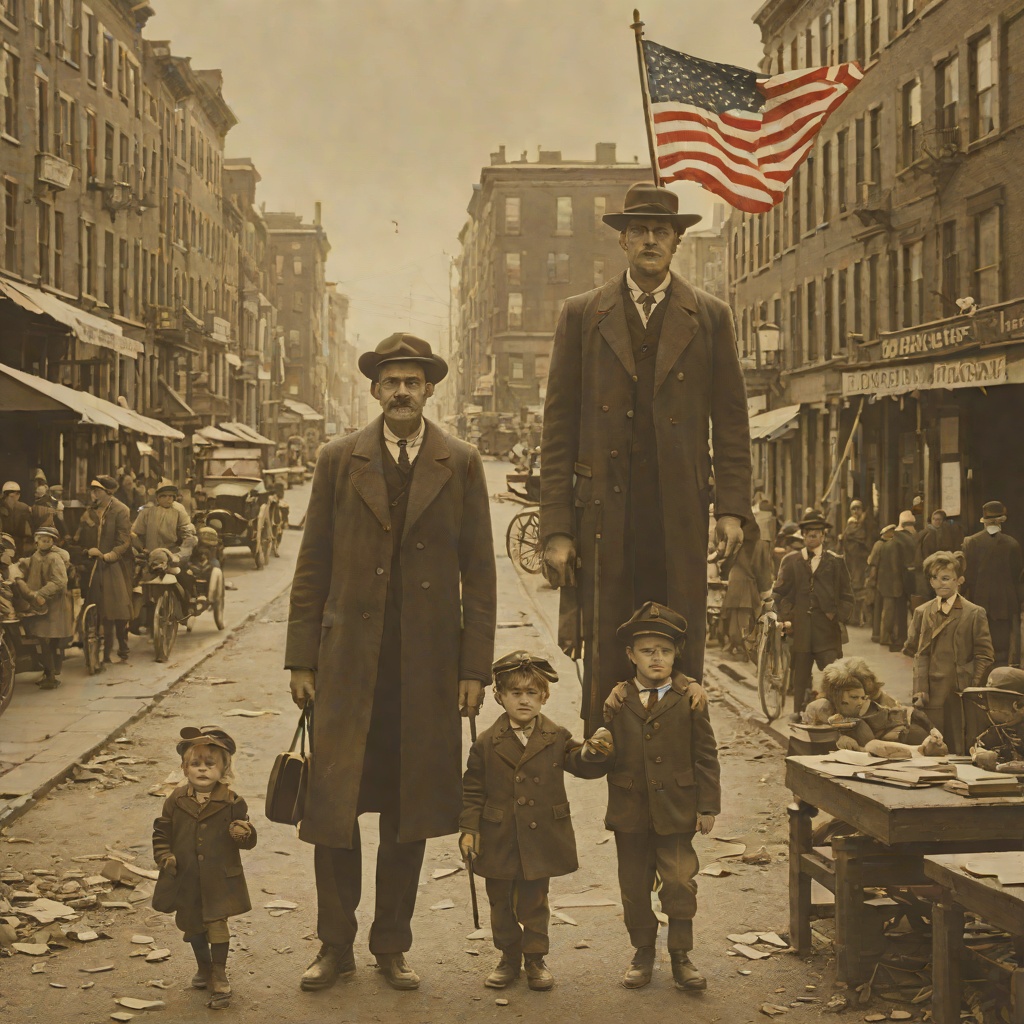
The father's citizenship was not an end in itself but a foundation for the family's Americanization. When he conducted his children to school on their first day, he would not have delegated that mission to the President of the United States. He had awaited the day with impatience equal to his daughter's, and the visions he saw as he hurried them over the sun-flecked pavements transcended all her dreams. His naturalization had made this moment possible, transforming the act of sending his children to a public school into a triumphant assertion of his new identity. The legal status he had so eagerly pursued was the key that unlocked the door to the American future for his entire family.
The Meaning of Citizenship for the Immigrant
For Mary Antin, naturalization carries a meaning that reverses the conventional understanding of the relationship between immigrant and nation. She observes that naturalization, with Russian Jews, may mean more than the adoption of the immigrant by America; it may mean the adoption of America by the immigrant. This formulation captures the reciprocal nature of the process, in which the immigrant does not merely receive a new identity but actively embraces and claims the new country as their own. A little Jewish girl in Polotzk was apt to grow up hungry-minded and empty-hearted, and if she was set down in a land of outspoken patriotism, she was likely to love her new country with a great love and to embrace its heroes in a great worship. This love was not a passive acceptance but an active, creative force, as demonstrated by the Washington's Birthday poem she composed, digging the words out of her heart and squeezing the rhymes out of her brain in a travail of the spirit.
The emotional power of citizenship is rooted in the contrast with the Old World, where the Antin family had no country and no flag to love. In Polotzk, the banner of the House of Romanoff became the emblem of their latter-day bondage, a flag they were forced to hoist above their housetops in celebration of the advent of one of their oppressors. They hated the uniform of the soldier to the last brass button; on the person of a Gentile it was the symbol of tyranny, and on the person of a Jew it was the emblem of shame. Against this background of enforced humiliation, the American flag and the rights it represented took on a transcendent value. The Constitution of the United States, which guaranteed the freedom to have any kind of God one chose, was not an abstract document but a living shield against the persecution they had known.
Citizenship in Practice: The Schoolyard and the Courtroom
The abstract rights of citizenship were tested and confirmed in the daily life of the Antin children. When Mary Antin was surprised into a dispute in the schoolyard, with Rachel and Kitty and Maggie and others pressing her with questions and mocking her, she held her ground against them all obstinately enough. She perceived that a crowd of Free Americans were disputing the right of a Fellow Citizen to have any kind of God she chose, and she knew from her father's teaching that this persecution was contrary to the Constitution of the United States. "This is a free country," she reminded them in the middle of the argument, invoking the language of citizenship as a defense against the tyranny of the majority. The teacher, Miss Bland, later initiated her into the doctrine of the separation of Church and State, and Mary felt honored by this private initiation, her alarm about the safety of the Constitution allayed by the teacher's calmness.
The courtroom provided an even more dramatic demonstration of what citizenship meant in practice. When a great, hulky colored boy, the torment of the neighborhood, treated Mary roughly while she was playing on the street, her father had him arrested and brought to court. The boy was locked up overnight and emerged with a respect for the rights and persons of his neighbors. But what interested Mary more than her revenge on a bully was what she saw of the way justice was actually administered in the United States. Here they were gathered in the little courtroom, bearded Arlington Street against wool-headed Arlington Street, accused and accuser, witnesses, sympathizers, sight-seers, and all. Nobody cringed, nobody was bullied, nobody lied who didn't want to. They were all free and all treated equally, just as it said in the Constitution. The evil-doer was actually punished, and not the victim, as might very easily happen in a similar case in Russia. "Liberty and justice for all," she exulted, giving three cheers for the Red, White, and Blue. This was citizenship made visible, the promise of the law enacted before her eyes.
The Limits of Naturalization: The Slums and the Double Life
The promise of citizenship, however, was not evenly distributed across the American landscape. The Antin family's journey through the slums of Boston revealed the gap between the ideal of equality and the reality of poverty. On Wheeler Street, in the lower South End, there were rather more Negroes than there had been on Arlington Street, and they were a neighborly folk who took the strangers in, sometimes very badly. The neighborhood was not a place where a refined young lady would care to find herself alone, even in the cheery daylight, and Mary wished that such a lady would bring a little soap and water and perfumery into Wheeler Street next time she came, for some people there may be smothering in the filth which they abhor as much as she, but from which they cannot, like her, run away. The family later moved to Dover Street, intersected near its eastern end by Harrison Avenue, the heart of the South End ghetto, where the multifarious business burst through the narrow shop doors and overran the basements, the sidewalk, and the street itself in pushcarts and open-air stands. The City Fathers provided soap and water for the slums in the form of excellent schools, kindergartens, and branch libraries, but they stopped at the curbstone of the people's life, cleansing and disciplining the children's minds while their bodies were pitched into the gutter.
Despite these hardships, naturalization remained the foundation of Mary's eventual triumph. She went to college, not to Radcliffe as she had proposed, but to Barnard College, receiving an invitation to live in New York that she did not like to refuse. There she took all the honors that she deserved, and learned at least to think in English without an accent. She earned enough to pay Mrs. Hutch the arrears and satisfy all her wants. Her favorite abode became a tent in the wilderness, where she would be happy to serve a cup of tea out of a tin kettle. She took possession of Beacon Street and learned to distinguish the lord of the manor from the butler in full dress, tracing her steps from her bare room overlooking the lumber-yard to the satin drawing-rooms of the Back Bay, where she drank afternoon tea with gentle ladies whose hands were as delicate as their porcelain cups. The shock of the contrast between the cushioned refinement of Beacon Street and the reeking slums was like a searchlight turned suddenly on her life, and she pondered over the revelation and wrote touching poems in which she figured as a heroine of two worlds. This double life, made possible by the naturalization that had transformed her from a prisoner of the Pale into a citizen of the United States, was the ultimate fulfillment of the promise that had drawn her father across the ocean.
The Price of Citizenship: The Disorganization of Family Life
The pursuit of American citizenship and the Americanization it entailed came at a cost that Mary Antin does not conceal. The price that all of them paid for this disorganization of family life has been levied on every immigrant Jewish household where the first generation clings to the traditions of the Old World while the second generation leads the life of the New. Nothing more pitiful could be written in the annals of the Jews; nothing more inevitable; nothing more hopeful. The father, in his ambition to make Americans of them, was rather headlong and strenuous in his methods. He allowed the mother to keep a Jewish kitchen as long as she pleased, but he did not want the children to refuse invitations to the table of their Gentile neighbors. On the holy days he bought the mother a ticket for the synagogue, but the children he sent to school. On Sabbath eve the mother might light the consecrated candles, but he kept the store open until Sunday morning. The mother might believe and worship as she pleased, up to the point where her orthodoxy began to interfere with the American progress of the family. The mother gradually divested herself, at the father's bidding, of the mantle of orthodox observance, but the process cost her many a pang, because the fabric of that venerable garment was interwoven with the fabric of her soul. She dropped the husk and retained the kernel of Judaism, keeping the same day of rest as her Gentile neighbors all the year round, but when the ram's horn blows on the Day of Atonement, her soul is stirred as of old, and she needs must join in the ancient service. Naturalization, in this fuller sense, was not a single legal act but a lifelong negotiation between the old world and the new, a process that would continue long after the citizenship papers were signed.