Solomon
The Captain and Ann BarbaraSolomon, the maternal uncle of Mary Antin, stands as one of the most quietly influential figures in the narrator's Russian childhood, a man whose scholarship, prosperity, and affectionate attention mark him as a model of the worldly success that the Antin family aspired to within the narrow confines of the Pale of Settlement. He appears at two decisive moments in the family's story: first as the proud young scholar who secretly teaches his sister to read and write Russian, and later as the comparatively prosperous Vitebsk uncle who takes the twelve-year-old Mary on a visit that she would count as an epoch in her Russian life. In both roles, Solomon represents the possibility of intellectual and material advancement that Polotzk itself could not offer, and his household provides Mary with her most vivid early experience of a more comfortable, cultivated existence before her emigration to America.
Identity and Family Role
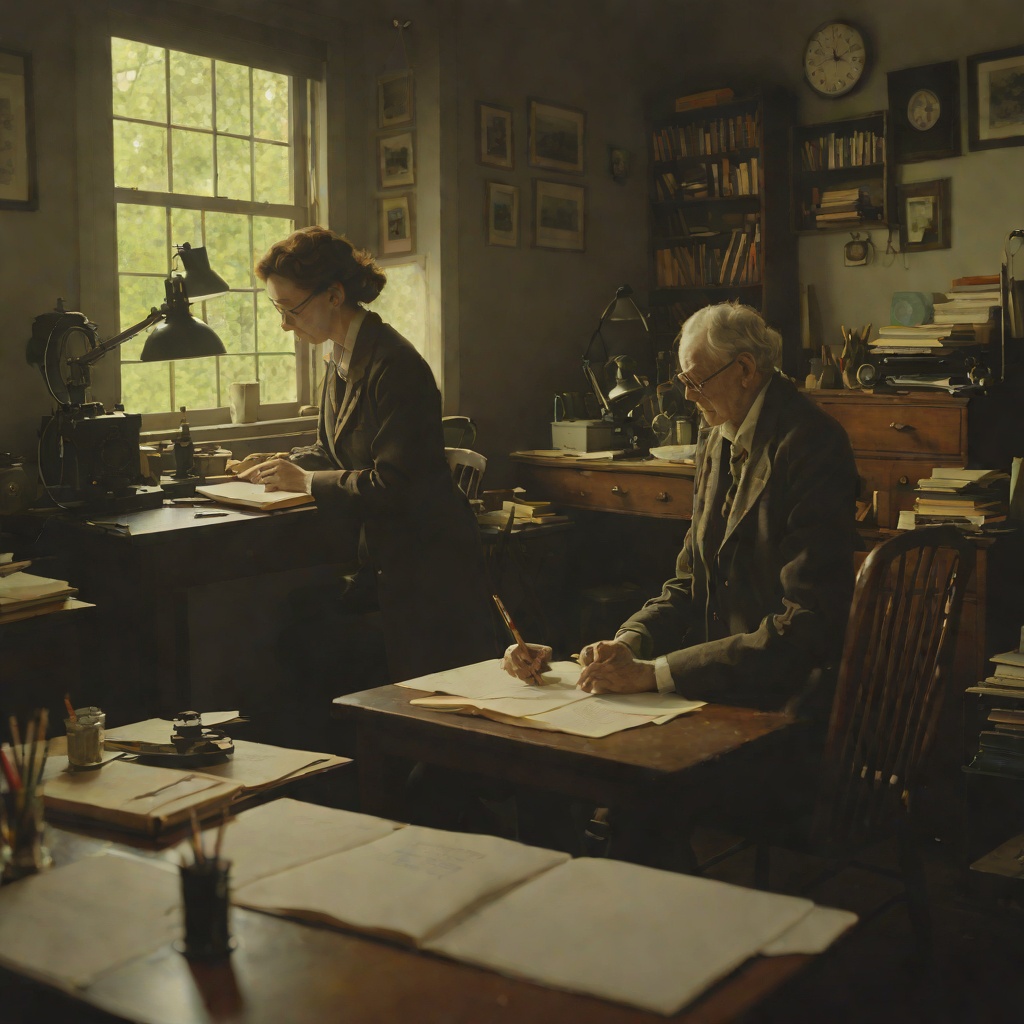
Solomon is introduced in the narrative through his relationship to Mary's mother, Hannah Hayye, as the brother who was "proud of his scholarship" and who became her secret tutor. When their mother, herself a better scholar than the hired female teacher, had taught her daughter writing in addition to the Hebrew prayers, the young Hannah expressed an ambition to study Russian. Her father, the pious grandfather, had refused to send her to a tutor, and when a sudden inflammation of the eyes blinded her temporarily on her first day at school, the distemper was taken as an omen and she was not allowed to return. It was Solomon who made her education possible: she saved up every groschen given her to buy sweets and bribed him to give her lessons in secret. The two strove earnestly with book and quill in their hiding-place under the rafters until Hannah could read and write Russian and translate a simple passage of Hebrew. This early episode establishes Solomon as a figure of learning and generosity, one who defied the family's patriarchal restrictions to share his knowledge with his sister, and it foreshadows the role he would later play in Mary's own intellectual formation.
The Vitebsk Visit
Solomon's most significant appearance in Mary's own life comes during the family's last year in Russia, when Mary was between twelve and thirteen years of age. Having failed as a milliner's apprentice, she was old enough to be ashamed of her failures, but she did not have much time to think about them because her Uncle Solomon took her with him to Vitebsk. This was not her first visit to that city; a few years before she had spent some days there in the care of her father's cousin Rachel, who journeyed periodically to the capital of the province to replenish her stock of spools and combs. On that earlier occasion, Cousin Rachel had smuggled her onto the train without a ticket, a ruse that Mary remembered with perfect happiness and admiration for her cousin's cleverness in beating the railroad company. The second visit, however, was entirely different in character, for it was spent in the household of her prosperous uncle.
Life in Uncle Solomon's Household
Mary was very much at home in her uncle's household. She was a little afraid of her aunt, who had a quick temper, but on the whole she liked her; the aunt was fair and thin and had a pretty smile in the wake of her tempers. Uncle Solomon himself was an old friend to the girl; she was fond of him and he made much of her, and his fine brown eyes were full of smiles, with always a pleasant smile for her, or a teasing one. The family lived in the better part of Vitebsk, and Mary found his place very attractive. Solomon was comparatively prosperous, so she soon forgot whatever she had known at home of sordid cares. She did not remember being haunted by the thought of her mother, who slaved to keep the family in bread, or of her sister, so little older than herself, who bent her little back to a woman's work. She took up the life around her as if there were no other life, helping her Cousin Dinke with the housework, playing lotto with her smaller cousin Mendele and letting him beat her, and serving as a good nurse to the baby Perele. The visit was marked by a long walk through magnificent avenues and past splendid shops and houses and gardens, and Mary, who was very small even without stooping, found Vitebsk a metropolis beside provincial Polotzk.
The Sabbath at Uncle Solomon's
Mary was taken to her Uncle Solomon's to spend the Sabbath during the Vitebsk visit, and the memory of that experience carries particular weight in the narrative. The Sabbath was the day of rest and spiritual renewal in the Jewish household, and spending it in her uncle's comparatively prosperous home would have been a marked contrast to the sordid cares of her own family's last year in Russia. The narrative does not describe the Sabbath observances themselves, but the fact that Mary was taken to her uncle's for this specific purpose suggests that his household maintained the religious traditions that the family had observed in Polotzk, and that Solomon, despite his worldly success, remained a pious Jew. The visit to Vitebsk as a whole affected Mary so much that she counted it as an epoch in her Russian life, and the Sabbath at her uncle's was clearly a central part of that experience.
Significance in the Narrative
Solomon's role in the narrative extends beyond his direct appearances to encompass the broader themes of education, family loyalty, and the pursuit of a better life that structure The Promised Land. As the secret tutor of his sister, he embodies the value of learning that the family prized even when it had to be pursued in defiance of patriarchal authority. As the prosperous uncle who welcomes his niece into his home, he represents the possibility of material comfort and cultural refinement that Polotzk could not offer, and his household gives Mary her first sustained experience of a life free from sordid cares. The contrast between the poverty of Mary's own home and the comparative prosperity of her uncle's household is a quiet but persistent theme, and it helps to explain the eagerness with which Mary later embraced the opportunities of America. Solomon's kindness to his niece, his teasing smiles, and his willingness to make much of her all contribute to the portrait of a man who, within the limits of the Pale, achieved the success and comfort that the family hoped to find in the New World.