South Boston Bridge
The Captain and Ann BarbaraIn the crowded, impoverished world of Boston's South End, the South Boston Bridge offered Mary Antin a rare vantage point. Spanning South Bay and the Old Colony Railroad, it was close enough to her home on Dover Street to serve as an immediate escape whenever the confusion of the tenement house drove her out or she felt the need for fresh air. For a girl who had recently arrived from the enclosed world of Polotzk, the bridge was more than a crossing; it was a threshold between the suffocating reality of the slum and the open, contemplative space of the night sky.
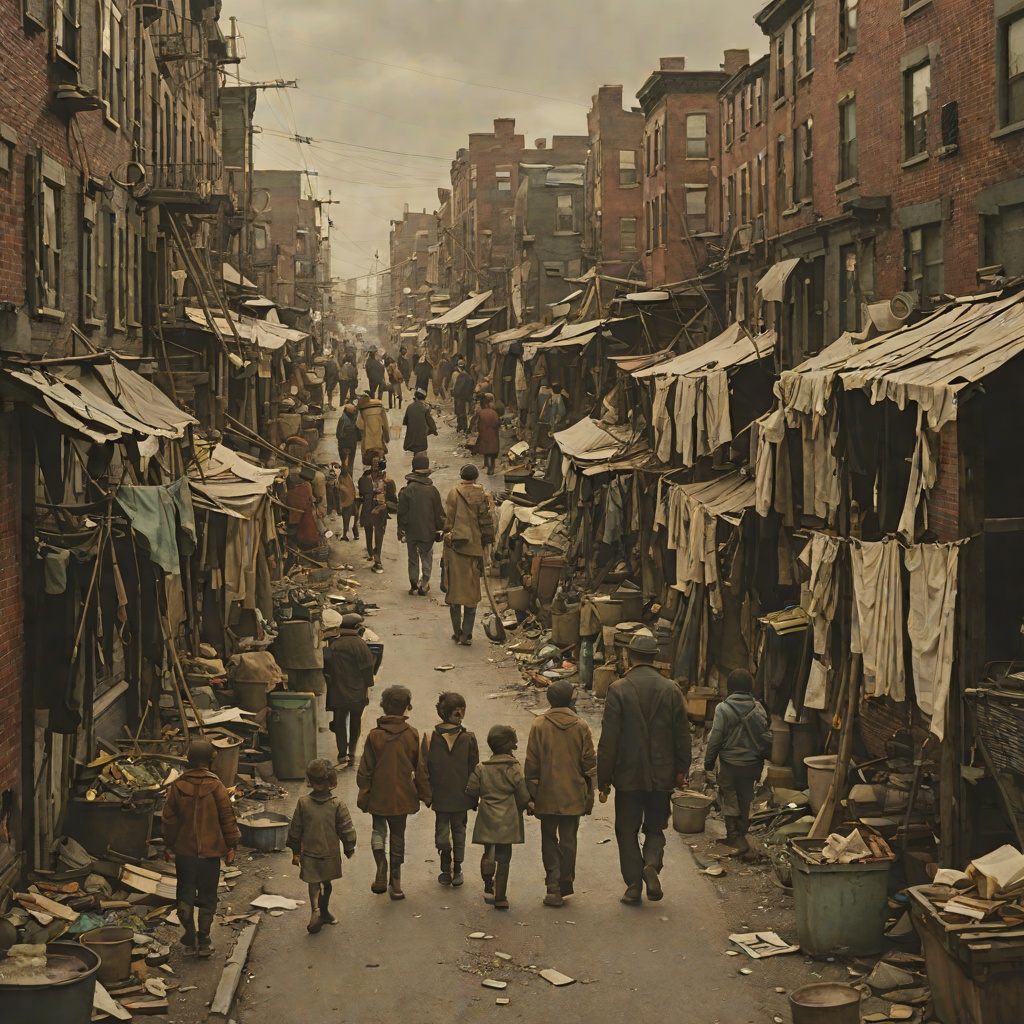
A Refuge from the Slum
The bridge became a favorite resort for Mary during moments of depression, when her whole being protested against the life of the slum. She resented the familiarity of her vulgar neighbors and felt defiled by the indecencies she was compelled to witness. In these moments, she took to running away from home, walking for hours with her blind feet leading her, not caring where she went. If she lost her way, so much the better; she never wanted to see Dover Street again. The South Boston Bridge, so near home, provided a specific destination for these twilight wanderings, a place where the grievances of the day could melt away as she fell to dreaming of things that neither hurt nor pleased.
The Symbolism of the Tracks
Standing on the bridge, leaning on the railing, Mary looked down on the dim tangle of railroad tracks below. She could barely see them branching out, elbowing, winding, and sliding out into the night in pairs. She was fascinated by the dotted lights, the significant red and green of signal lamps. These simple things stood for a complexity that made her dizzy to think of. The scene was not merely a view; it was a metaphor for her own life. The tracks represented the myriad paths, choices, and directions available in America, a stark contrast to the narrow, predetermined existence of the Pale of Settlement. The complexity of the rails mirrored the complexity of the new world she was trying to navigate, a world where, as her father would say, "America is not Polotzk."
A Vision of Power and Purpose
The passive observation of the tracks was often interrupted by a dramatic spectacle. The blackness below would be split by the fiery eye of a monster engine, its breath enveloping her in blinding clouds, its long body shooting by, rattling a hundred claws of steel. The train would be gone with an imperative shriek that shook her where she stood. This powerful image of the locomotive—swift, purposeful, and unstoppable—became an aspiration for Mary. She imagined herself being just like the train, swift on her rightful business, picking out her proper track from the million that cross it, pausing for no obstacles, and sure of her goal. The bridge, therefore, was not just a place of escape but also a place of inspiration, where the chaotic potential of her new life was transformed into a vision of personal agency and determination.
The South Boston Bridge thus stands as a powerful emblem of Mary Antin's transitional state. It was a physical structure that allowed her to rise above the squalor of her immediate surroundings and gain a perspective on her future. The contrast between the tangled, confusing tracks and the single-minded, powerful train encapsulated her own journey from a bewildered immigrant to a determined American, a transformation that was the central theme of her life and her memoir.