The Sabbath Handkerchief Experiment
The Captain and Ann BarbaraThe Sabbath Handkerchief Experiment stands as the decisive moment in Mary Antin's childhood when religious faith first collided with personal inquiry. On a Sabbath afternoon, while the household slept after dinner, the pious little girl rose from her religious meditations and stepped into the yard, carrying a pocket handkerchief. She knew the sacred admonition against carrying anything beyond the house-limits on the Sabbath as well as she knew that she was alive, yet she placed the handkerchief in her pocket and, with audacious boldness, stepped into the street. This single act of transgression was not mere mischief but a deliberate experiment: she intended to put God Himself to the proof, testing whether divine punishment would follow a known sin. The experiment's outcome was ambiguous, but its consequences were profound, marking the beginning of her transformation from a child of faith into a freethinker who would later challenge the very foundations of her inherited religion.
The Pious Child and the Impious Plan
The experiment grew directly out of the narrator's earlier habits of testing everything that could be tested. Her grandmother had warned her that handling "blind flowers" would strike her blind, but she found by test that the pretty flowers were harmless. This pattern of empirical inquiry, established through small domestic challenges to superstition, led her at last to an impious plan: to put God Himself to the proof. The child who devised this test was no rebel by temperament; she was the same girl who, when she accidentally dropped her grandmother's Bible, kissed it by way of atonement just as a proper child should. She was, in her own later assessment, a "piteously puzzled little fraud" — too young to be called an apostate, yet already unable to accept religious teaching on authority alone. The experiment was thus not a rejection of faith but a desperate attempt to verify it, born of a consciousness that could not rest in unexamined belief.
The Experiment Itself
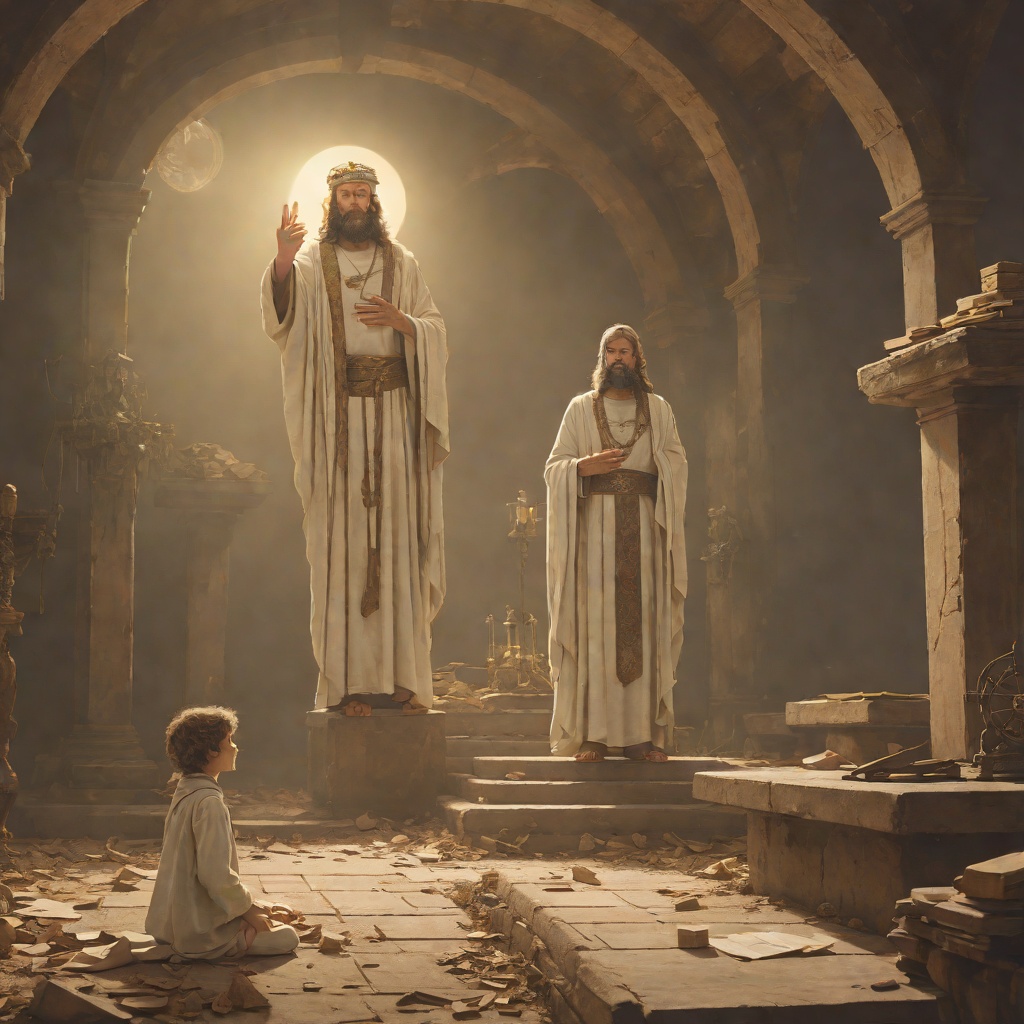
Standing at the gate with her heart beating so painfully that it hurt, the child took out her handkerchief, looked at it, and put it back into her pocket. She did not need to rehearse the sacred admonition; she knew it as she knew she was alive. With the handkerchief in her pocket, she stepped into the street and stood a moment, waiting. Nothing happened. She walked quite across the street, and the Sabbath peace still lay on everything. Feeling again the burden in her pocket, she knew she was certainly committing a sin, yet with an access of impious boldness she walked — then ran — as far as the corner, and stood still, fearfully expectant. She waited for the punishment to take form, wondering whether a storm would come or a sudden bolt would strike her. She stood breathing painfully for what felt like an eternity, unable to bring her hand to her pocket again, feeling that it bulged monstrously. No sacred word of all her long prayers came to her tongue — not even "Hear, O Israel." She felt that she was in direct communication with God, an awful thought, and that He would read her mind and send His answer. But no answer came. An age passed in blank expectancy, and still nothing happened. Where was the wrath of God? Where was God?
The Ambiguous Result and Its Aftermath
When she turned to go home, the little philosopher had her handkerchief tied around her wrist in the proper way. The experiment was over, though the result was not clear. God had not punished her, but nothing was proved by His indifference. Either the act was no sin and her preceptors were all deceivers, or it was indeed a sin in the eyes of God but He refrained from stern justice for high reasons of His own. It was not a searching experiment, and she was bitterly disappointed — perhaps that disappointment was meant as her punishment, for God refused to give her a reply. She had intended no sin for the sake of sin, so, being still in doubt, she tied her handkerchief around her wrist. Her eyes stared more than ever — this was the child with the staring eyes — but that was the only sign she gave of a consciousness suddenly expanded, of a self-consciousness intensified. When she went back into the house, she gazed with a new curiosity at her mother and grandmother dozing in their chairs; they looked different, and when they awoke and stretched themselves and adjusted wig and cap, they looked very strange.
The Seeds of Freethought
The experiment planted the first seed of what would become Mary Antin's declared freethought. The same child who had once accepted ill-usage from the Gentiles as one accepts the weather, who had been taught that the world was divided into Jews and Gentiles and that she must stay within the Pale of Settlement because she was a Jew, now began to question the very structure of her religious universe. The handkerchief experiment was the first in a series of challenges to religious authority that would culminate in her later declaration of atheism in the schoolyard and her defiant consumption of ham at Miss Dillingham's tea. The pattern was set: she would test what she was told, and when the test proved inconclusive, she would not simply accept the teaching but would carry the doubt forward. The child who could not bring herself to touch forbidden food without a terrible moment of surprise, mortification, and self-contempt was already becoming the young woman who would reduce her ham to indivisible atoms, determined to eat more of it than anybody at the table. The Sabbath handkerchief experiment was the first step on that path, the moment when the pious child discovered that God might not answer, and that she would have to find things out for herself.
The Larger Pattern of Testing and Transformation
The experiment belongs to a larger pattern in the memoir of testing boundaries and questioning authority. The same empirical spirit that led the child to test the "blind flowers" and then God Himself would later lead her to test the limits of American identity, of gender expectations, and of religious observance. The girl who was told that a girl's real schoolroom was her mother's kitchen, where she would learn to bake and cook and manage, and that a girl was born for no other purpose than to be a wife, would become the student who entered the Latin School and eventually Radcliffe College. The child who was expected to accept the family tradition that Frieda was relied upon for help and her sister for glory would become the one who accepted the arrangements made for her without much reflection, taking everything planned for her advantage as a matter of course. The Sabbath handkerchief experiment was thus not an isolated act of childish mischief but the first articulation of a questioning consciousness that would define her entire trajectory. It was the moment when she discovered that the world might not be made in a certain way after all, and that she might have to find out for herself how it was made. The experiment's ambiguity — God neither punished nor answered — left her in a state of doubt that was itself a kind of liberation, freeing her from the certainties of her inherited faith and opening the way to the new certainties of American citizenship and freethought that would come to define her life.