The Wading Adventure at Crescent Beach
The Captain and Ann BarbaraThe Wading Adventure at Crescent Beach is one of the most vividly rendered episodes of Mary Antin's childhood in America, a scene that begins as innocent seaside play and escalates into a life-threatening race against the turning tide. Set against the backdrop of the Wilner family's crowded, boisterous life and the commercial bustle of the beach, the adventure captures a moment when the young Mary Antin, still a recent immigrant, confronts both the power of nature and the sting of social humiliation. The episode is decisive not for any grand outcome but for what it reveals about Mary's character: her daring, her pride, and her fierce refusal to be diminished by a taunt.
The Setting and the Wilner Boys
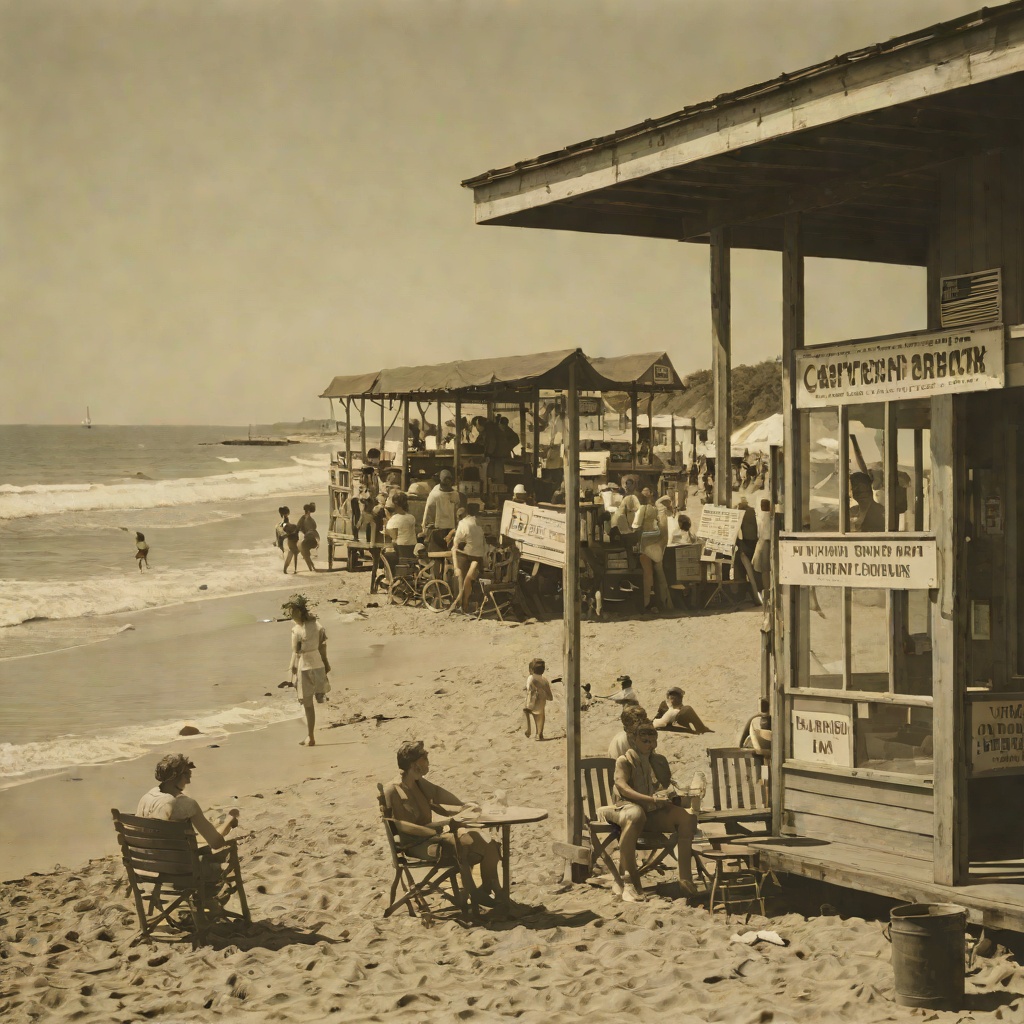
The adventure unfolds at Crescent Beach, where the Wilner family—twelve children in all—provided a constant whirlwind of activity. The Wilner boys were everywhere at once, swinging out of windows like monkeys, sliding up roofs like flies, and shooting out of trees like fowls, so that even a small person like Mary could not go anywhere without being run over by one of them. They were so perpetually in motion that she could never tell which Wilner she had encountered, and she suspected they deliberately interchanged conspicuous articles of clothing to add to the confusion. Despite the chaos, Mary managed to retain her identity in this multitude and even dared to pick and choose her friends among them. One or two of the smaller boys she liked best of all, for games of hide-and-seek or frolics on the beach, where they played in the water like ducks, never taking the trouble to get dry.
The Wading Contest and the Turning Tide
One day, Mary waded out into the sea with one of the Wilner boys to see which of them dared go farthest. The tide was extremely low, and they had not even wet their knees when they began to look back to see if familiar objects were still in sight. Mary thought they had been wading for hours, and still the water was so shallow and quiet. Her companion marched straight ahead, and she did the same. Suddenly a swell lifted them almost off their feet, and they clutched at each other simultaneously. A lesser swell followed, little waves began to run, and a sigh went up from the sea. The tide was turning—perhaps a storm was on the way—and they were miles, dreadful miles from dry land.
The Race Back to Shore
Boy and girl turned without a word, four determined bare legs ploughing through the water, four scared eyes straining toward the land. Through an eternity of toil and fear they kept dumbly on, death at their heels, pride still in their hearts. At last they reached high-water mark—six hours before full tide. The danger had passed, but the experience had left its mark on both of them. Each had seen the other afraid, and each rejoiced in the knowledge, though only the boy was sure of his tongue.
The Taunt and Mary's Vow
The aftermath of the adventure was as significant as the danger itself. The Wilner boy, emboldened by having witnessed Mary's fear, taunted her: "You was scared, warn't you?" When she did not respond, he mocked her further, claiming he could swim and then calling after her, "An' I can walk on my hands. Say, you greenhorn, why don'tcher look?" The word "greenhorn"—a term for a newly arrived immigrant—struck at the heart of Mary's identity. She kept straight on, angry and hurt, vowing that she would never walk with that rude boy again, neither by land nor sea, not even though the waters should part at his bidding. The vow, with its biblical echo of the parting of the Red Sea, reveals both her wounded pride and her characteristic determination.
The Fathers' Business on the Beach
While the children disported themselves like mermaids and mermen in the surf, their respective fathers were engaged in more serious business. The fathers dispensed cold lemonade, hot peanuts, and pink popcorn, piling up their respective fortunes nickel by nickel, penny by penny. Mary was very proud of her connection with the public life of the beach. She admired greatly the shining soda fountain, the rows of sparkling glasses, the pyramids of oranges, the sausage chains, the neat white counter, and the bright array of tin spoons. It seemed to her that none of the other refreshment stands on the beach were half so attractive as theirs. She thought her father looked very well in a long white apron and shirt sleeves, and he dished out ice cream with enthusiasm, so she supposed he was getting rich. It never occurred to her to compare his present occupation with anything that had come before.
Significance and Narrative Role
The Wading Adventure at Crescent Beach serves as a microcosm of Mary Antin's larger immigrant experience. The episode captures the dual nature of her new life: the freedom and joy of American childhood, embodied in the wild play and the beach's commercial vitality, and the vulnerability of being a greenhorn, exposed to both natural danger and social ridicule. The scene also demonstrates Mary's characteristic pride and resilience—her refusal to be cowed by fear or by taunts. The adventure is a rite of passage, a moment when the child confronts mortality and emerges with her dignity intact, even if her pride has been wounded. The episode's placement within the memoir, amid the bustling life of the Wilner family and the commercial enterprise of the beach, underscores the contrast between the carefree surface of American life and the deeper currents of danger and identity that run beneath it.