Union Place
The Captain and Ann BarbaraUnion Place, a short alley off Wall Street in the West End of Boston, is the first American address of the Antin family and the stage on which Mary Antin's transformation into an American begins. In the narrative of The Promised Land, this location carries a double identity: to the sophisticated metropolitan sight-seer it is "no place at all, but a short box of an alley," while to the little immigrant from Polotzk it appears as a glorious, imposing introduction to her new country. This contrast between the objective squalor of the slum and the subjective radiance of the immigrant's first impression is central to the memoir's account of Americanization, making Union Place not merely a setting but a symbolic threshold between the Old World and the New.
The Alley and Its Appearances
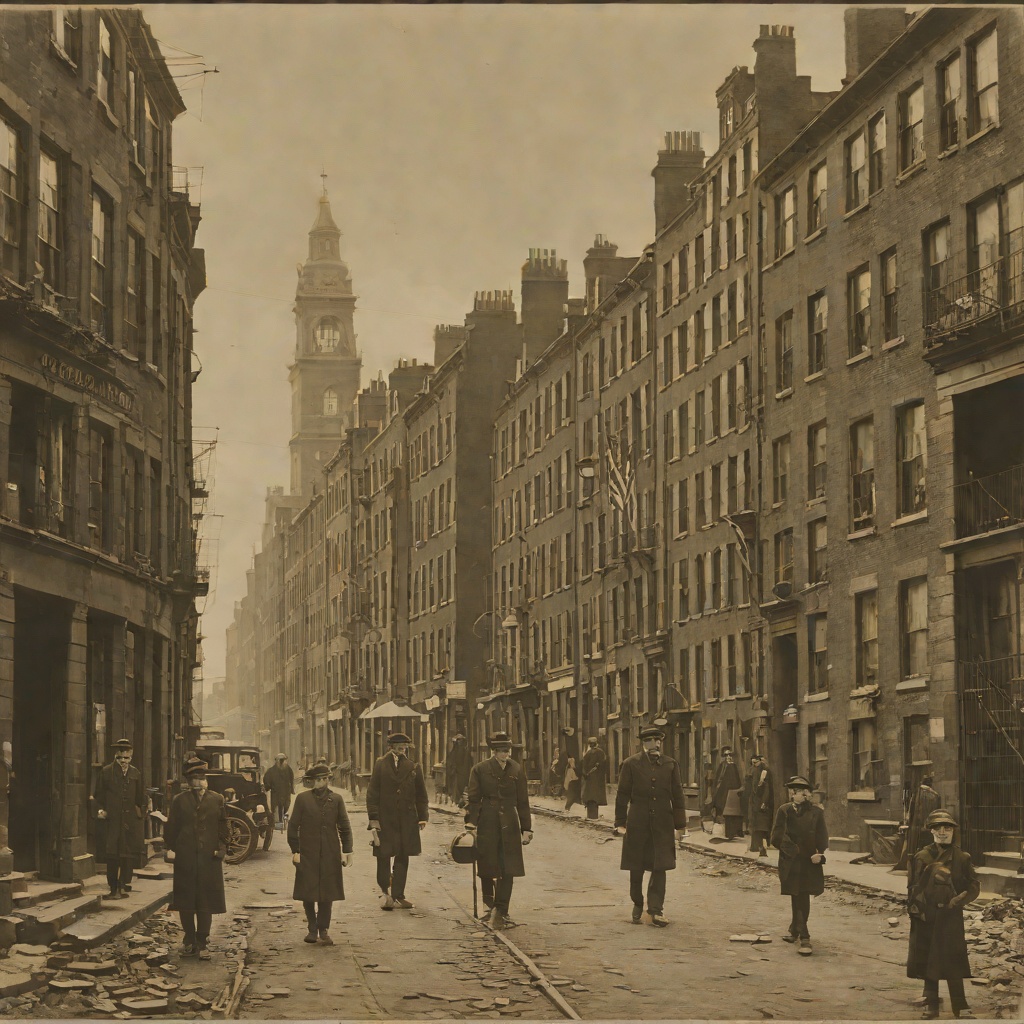
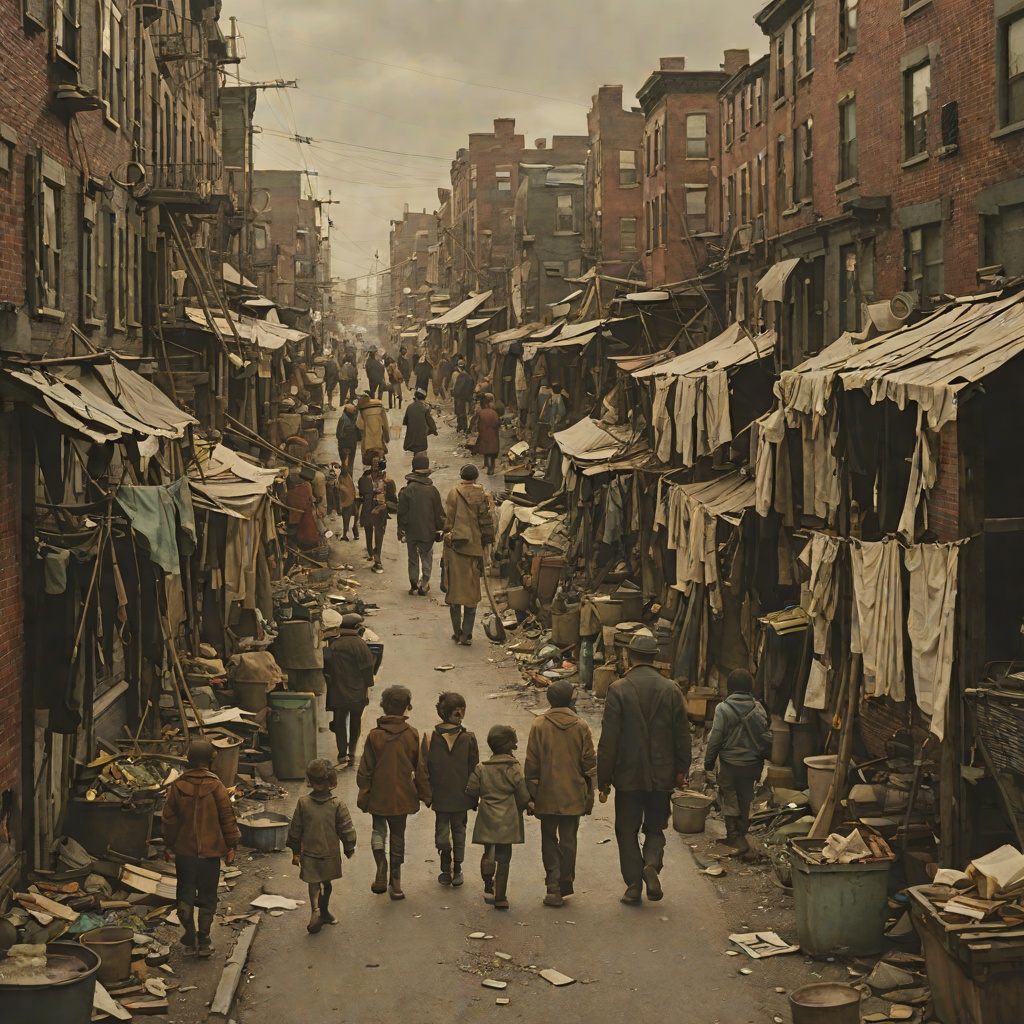
The physical description of Union Place is deliberately unflattering. The narrator notes that a sophisticated observer would describe it as a narrow alley with two rows of three-story tenements forming its sides, a "stingy strip of sky" as its lid, a littered pavement as its floor, and a narrow mouth as its exit. It is located off Wall Street, in the West End of Boston, a district the narrator identifies as one of the "wrong ends" of the city, forming part of the tenement district or slums where poor immigrants foregather. This is the neighborhood where the reunited Antin family makes its first stand in America, and the alley's cramped, box-like structure stands in stark contrast to the open spaces and grand buildings that will later define Mary's American experience.
The Immigrant's First Vision
Against this grim reality, Mary Antin's first vision of Union Place is one of wonder and delight. On her introduction to the alley, she sees "two imposing rows of brick buildings, loftier than any dwelling I had ever lived in," with brick underfoot instead of common earth or boards. The windows are filled with the uncovered heads of women and children, whom she takes to be interested in the newcomers—a neighborly gesture. Looking up to the topmost row of windows, her eyes are filled with "the May blue of an American sky." This perception transforms the alley into a place of promise, and the narrator explicitly contrasts this vision with the family's former affluence in Russia, where they had been accustomed to upholstered parlors, embroidered linen, silver spoons, and goblets of gold. The three small rooms of the Union Place apartment, furnished only with lean mattresses, wooden chairs, and a mysterious iron stove, nonetheless impress the family because these are American chairs and pans, and therefore shine glorious in their eyes.
The Beginning of Americanization
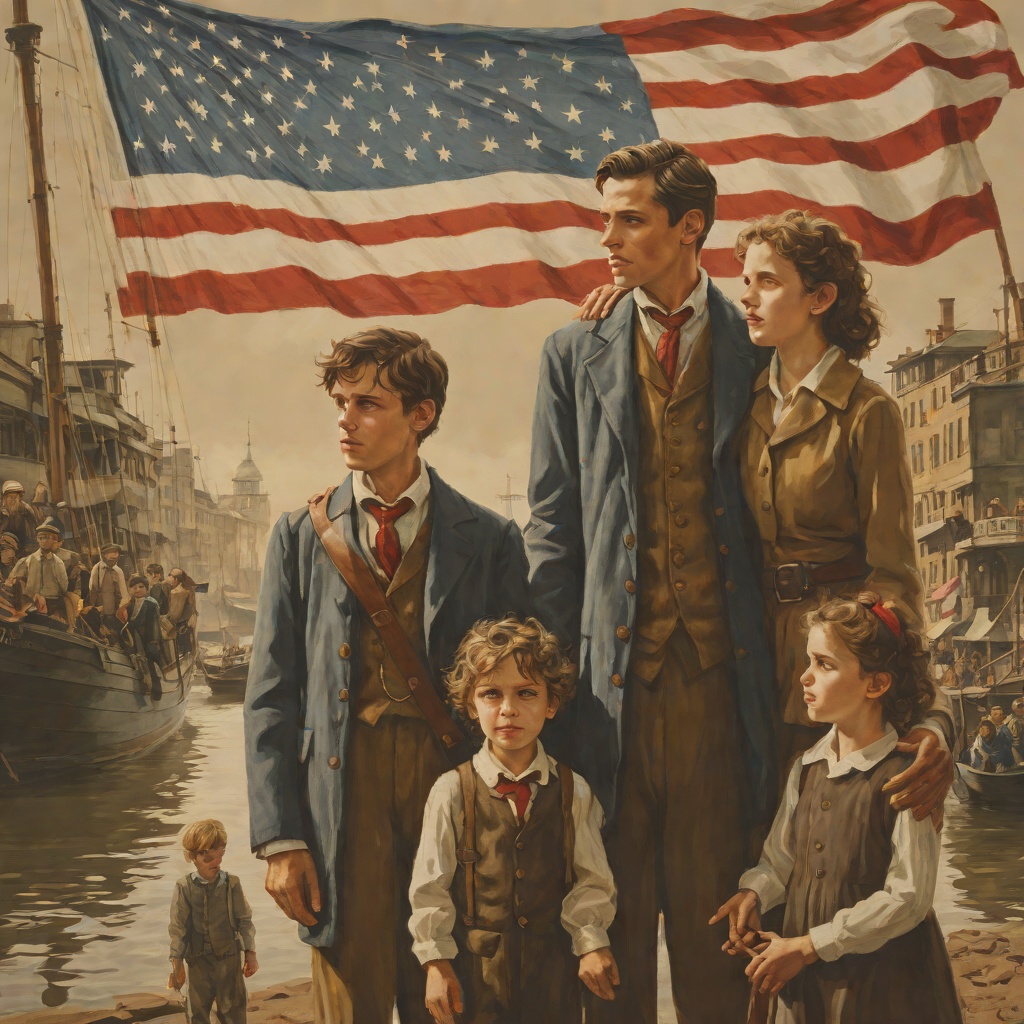
The family's initiation into American ways begins with their first step on the new soil, and Union Place is the immediate context for this education. On the journey from the pier to Wall Street, crowded together in a rickety cab, the father instructs the children not to lean out of the windows, not to point, and explains the word "greenhorn." The children, determined not to be greenhorns, give strict attention to his instructions. This moment of instruction marks the beginning of the family's deliberate adoption of American manners, and Union Place becomes the first classroom. The narrator also notes the significance of names in this new setting: on arriving, she finds that her father is "Mr. Antin" on the slightest provocation, and she herself becomes "Mary Antin," a dignified title that makes her feel very important. It is "just like America" that even plain people should wear their surnames on weekdays, and this new naming practice is part of the Americanization that begins at Union Place.
The Family's Circumstances and the Wider Context
The family's arrival at Union Place comes after a period of severe hardship in Russia, described as "seven lean years" of cooking in earthen vessels and eating black bread on holidays. The father had emigrated earlier, traveling with borrowed money to a German port and then being forwarded to Boston at the expense of an emigrant aid society. The mother, whose health was permanently impaired and whose place in the business world had been filled by others, had struggled to support the four growing children. The arrival of the steamer ticket had made the mother the "heroine of Polotzk," receiving a steady stream of visitors from every quarter of the city. Union Place is thus the destination of this long-awaited reunion, the place where the family's hopes and sacrifices finally find a physical home. The narrator notes that the mother alone, of the newcomers, appreciates the shabbiness of the little apartment and realizes that for her there is as yet no laying down of the burden of poverty.
The Journey Onward
Union Place is not the family's final destination but the first of several American homes. After about two weeks, the family makes the journey to Crescent Beach, where the father has prepared a refreshment booth in partnership with an energetic little man. The narrator notes that by this time the family has achieved so much toward their Americanization that the father has very little occasion to admonish them on the way. From Crescent Beach, the family later moves to Arlington Street in Chelsea, then to Wheeler Street in the lower South End of Boston, and finally to Dover Street, near Harrison Avenue, the heart of the South End ghetto. Each of these moves represents a further stage in the family's American experience, but Union Place retains its significance as the site of the first encounter, the place where the immigrant child first saw the May blue of an American sky and felt the stirring of a new identity. The narrator's later reflections on her double life—moving from the slums to the satin drawing-rooms of the Back Bay—trace their origin back to this first American home, where the process of becoming American was set in motion.