Wheeler Street
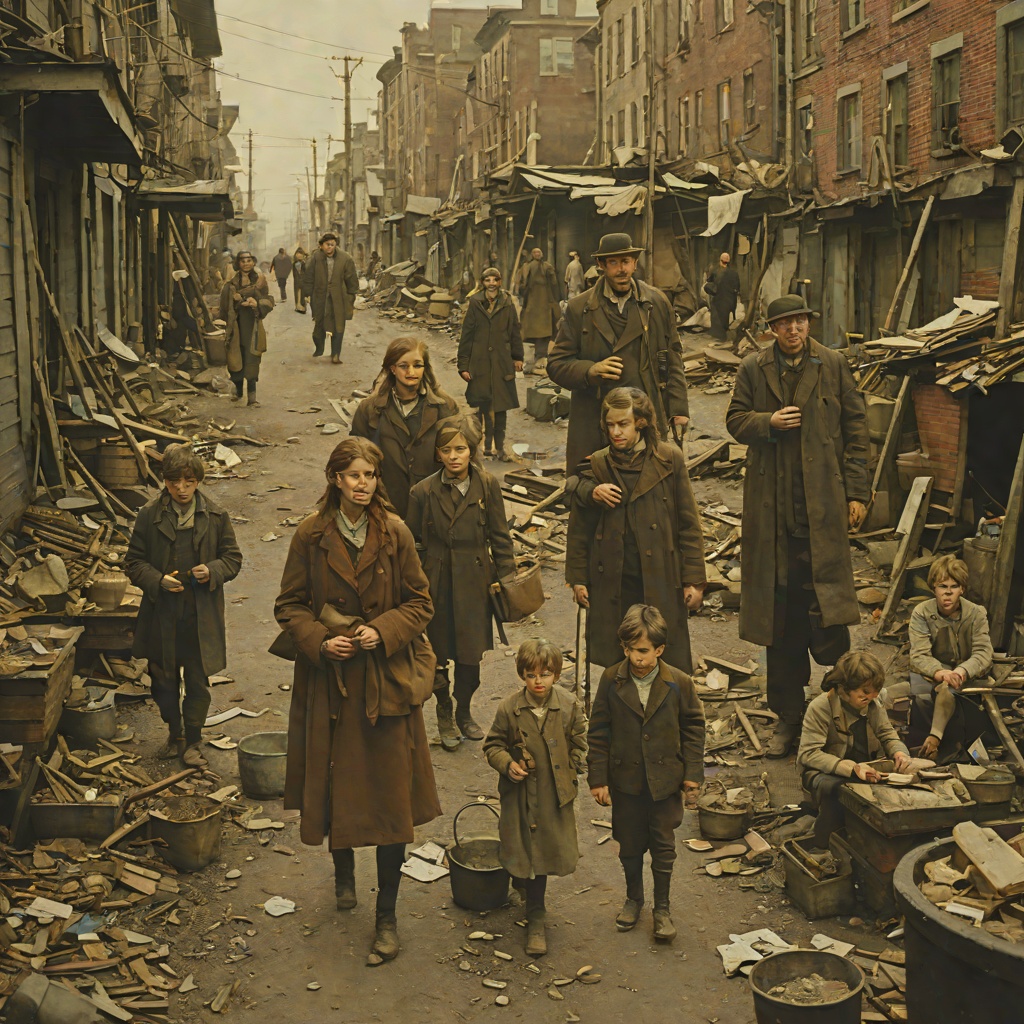
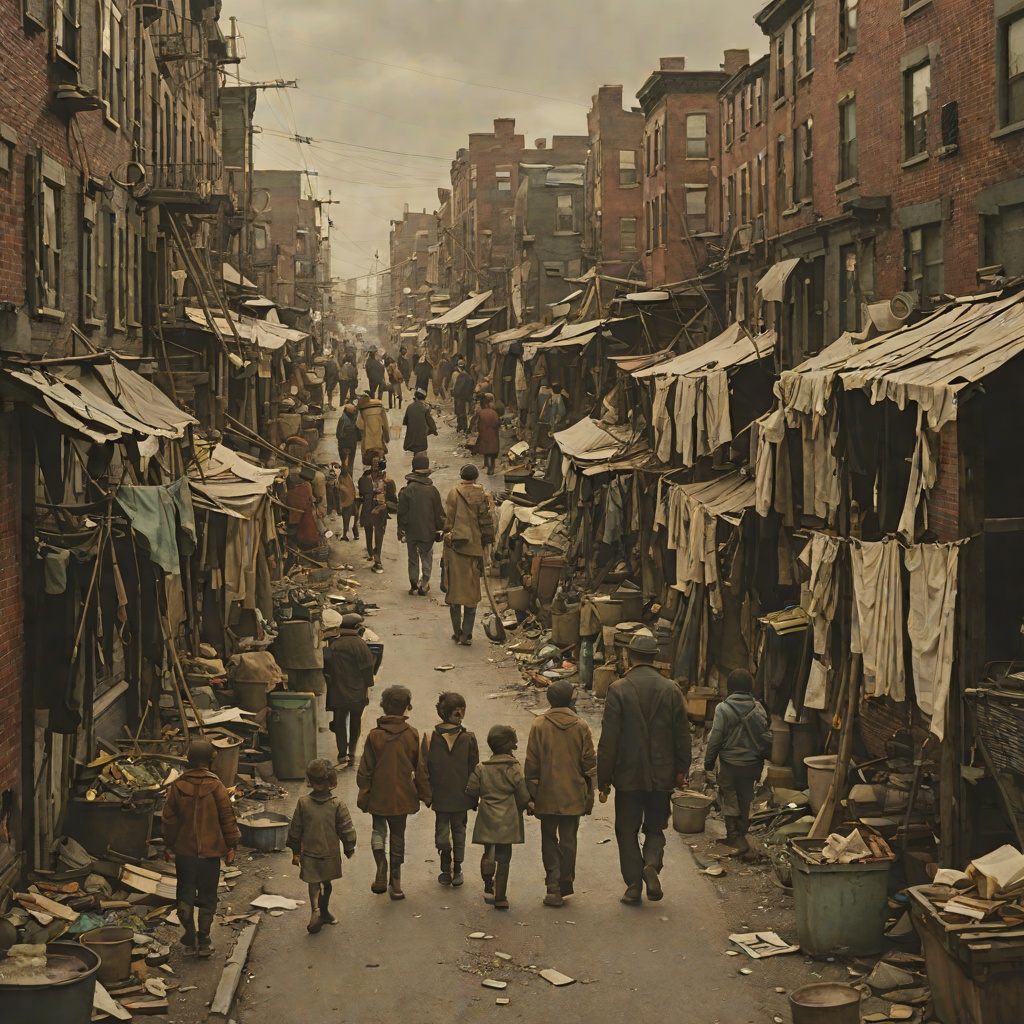
The Captain and Ann BarbaraWheeler Street, in the lower South End of Boston, was the Antin family's second American home, the place where they landed after their year or so in Chelsea when Mary Antin's father, finding a discrepancy between his assets and liabilities on the wrong side of the ledger, once more struck tent, collected his flock, and set out in search of richer pastures. It was a street that Mary would later describe as a crooked lane connecting a corner saloon on Shawmut Avenue with a block of houses of ill repute on Corning Street, a place where a refined young lady would not care to find herself alone even in cheery daylight. Yet for the fourteen-year-old Mary, newly arrived from the relative innocence of Chelsea, Wheeler Street was pronounced good, and it was here that she would encounter some of the most vivid and contradictory lessons of her Americanization.
The Family's New Home and the Grocery Store
The family's move to Wheeler Street was marked by a charming simplicity, as Mary put it. Here to-day, apparently rooted; there to-morrow, and just as much at home. Another basement grocery, with a freshly painted sign over the door; the broom in the corner, the loaf on the table—these things made home for them. The new neighborhood had rather more Negroes on Wheeler Street than there had been on Arlington Street, which promised more numerous outstanding accounts for the family's credit-based grocery business, but they were a neighborly folk, and they took the strangers in—sometimes very badly. The grocery store in the basement of Number 11 became Mary's father's old store, a fixture that would still be open for business many years later when Mary returned to inspect the street. The move also brought a new baby in a borrowed crib, and little Dora had only a few more turns to take with her battered doll carriage before a life-size vehicle with a more animated dolly was turned over to her constant care. The school three blocks away sang "America" to the same tune as in Chelsea, and geography was made as dark a mystery, making it impossible not to feel at home.
The Street's Character and Mary's Playground
Mary found no fault with Wheeler Street when she was fourteen years old. The family had never lived so near the car tracks before, and she delighted in the moonlike splendor of the arc lamp just in front of the saloon. The space illumined by this lamp and enlivened by the passage of many thirsty souls was the favorite playground for Wheeler Street youth. On their own street there was not room to turn around; here the sidewalk spread out wider as it swung around to Shawmut Avenue. Mary played with the boys by preference, as in Chelsea, and learned to cut across the tracks in front of an oncoming car, finding it great fun to see the motorman's angry face turn scared when he thought she was going to be shaved this time sure. She also found it amusing to watch the side door of the saloon, which opened right opposite the grocery store, and see a drunken man put out by the bartender. The fellow would whine so comically, and cling to the doorpost so like a damp leaf to a twig, and blubber so like a red-faced baby, that it was really funny to see him. The street was not a place where a refined young lady would care to find herself alone, and if she came at all she would be attended by a trusty escort, shrinking away in disgust and fear from a blear-eyed creature careering down the sidewalk on many-jointed legs.
Morgan Chapel and the Glimpses of a Fairer World
It was worth coming to Wheeler Street just for Morgan Chapel. All the children of the neighborhood, except the most rowdyish, flocked to Morgan Chapel at least once a week, on Saturday evening, when a free entertainment was given, consisting of music, recitations, and other parlor accomplishments. The performances were exceedingly artistic, according to the impartial judgment of juvenile Wheeler Street, and Mary could speak with authority for the crowd of them from Number 11. They hung upon the lips of the beautiful ladies who read or sang to them, and the ladies in turn did their best, recognizing the quality of their approval. They admired the miraculously clean gentlemen who sang or played, as heartily as they applauded their performance. Sometimes the beautiful ladies were accompanied by ravishing little girls who stood up in a glory of golden curls, frilled petticoats, and silk stockings, to recite pathetic or comic pieces, with trained expression and practised gestures that seemed to them the perfection of the elocutionary art. They were all a little bit stage-struck after these entertainments, but what was more, they were genuinely moved by the glimpses of a fairer world than theirs which they caught through the music and poetry—the world in which the beautiful ladies dwelt with the fairy children and the clean gentlemen. Brother Hotchkins, who managed these entertainments, knew what he was there for. His programmes were masterly, with classics of the lighter sort judiciously interspersed with the favorite street songs of the day. Nothing that savored of the chapel was there: the hour was honestly devoted to entertainment. The total effect was an exquisitely balanced compound of pleasure, wonder, and longing. Knock-kneed men with purple noses, bristling chins, and no collars, who slouched in sceptically and sat tentatively on the edge of the rear settees at the beginning of the concert, moved nearer the front as the programme went on, and openly joined in the applause at the end. Scowling fellows who came in with defiant faces occasionally slunk out shamefaced, and both the knock-kneed and the defiant sometimes remained to hear Brother Tompkins pray and preach.
The Courtroom Lesson in American Justice
It was on the streets of this neighborhood that Mary witnessed a lesson in American justice that would stay with her. Once a great, hulky colored boy, who was the torment of the neighborhood, treated her roughly while she was playing on the street. Her father, determined to teach the rascal a lesson for once, had him arrested and brought to court. The boy was locked up overnight, and he emerged from his brief imprisonment with a respect for the rights and persons of his neighbors. But the moral of this incident lay not in Mary's revenge on a bully, but in what she saw of the way in which justice was actually administered in the United States. There they were gathered in the little courtroom, bearded Arlington Street against wool-headed Arlington Street; accused and accuser, witnesses, sympathizers, sight-seers, and all. Nobody cringed, nobody was bullied, nobody lied who didn't want to. They were all free, and all treated equally, just as it said in the Constitution. The evil-doer was actually punished, and not the victim, as might very easily happen in a similar case in Russia. "Liberty and justice for all," she exulted, and gave three cheers for the Red, White, and Blue.
The Later Return and the Revelation of the Slum
Many years after her escape from Wheeler Street, Mary returned to see if the place was as bad as she remembered it. She found the narrow street grown even narrower, the sidewalk not broad enough for two to walk abreast, the gutter choked with dust and refuse, the dingy row of tenements on either side unspeakably gloomy. She discovered, what she had not realized before, that Wheeler Street was a crooked lane connecting a corner saloon on Shawmut Avenue with a block of houses of ill repute on Corning Street. It had been the same in her day, but she had not understood much, and she lived unharmed. On this later visit she walked slowly up one side of the street, and down the other, remembering many things. It was eleven o'clock in the evening, and sounds of squabbling coming through doors and windows informed her experienced ear that a part of Wheeler Street was going to bed. The grocery store in the basement of Number 11—her father's old store—was still open for business, and in the gutter in front of the store, to be sure, was a happy baby, just as there used to be. She was not alone on this tour of inspection, attended by a trusty escort, but she brought soap and water with her, and was applying them now. The street's squalor, which she had once accepted as the natural texture of life, now revealed itself as a rubbish heap of damaged humanity, a place that would take a powerful broom and an ocean of soapsuds to clean out. The contrast between her childhood perception and her adult understanding became a measure of how far she had traveled from the lower South End, and how the same street could be both a beloved playground and a symbol of the poverty she had escaped.