Yuchovitch
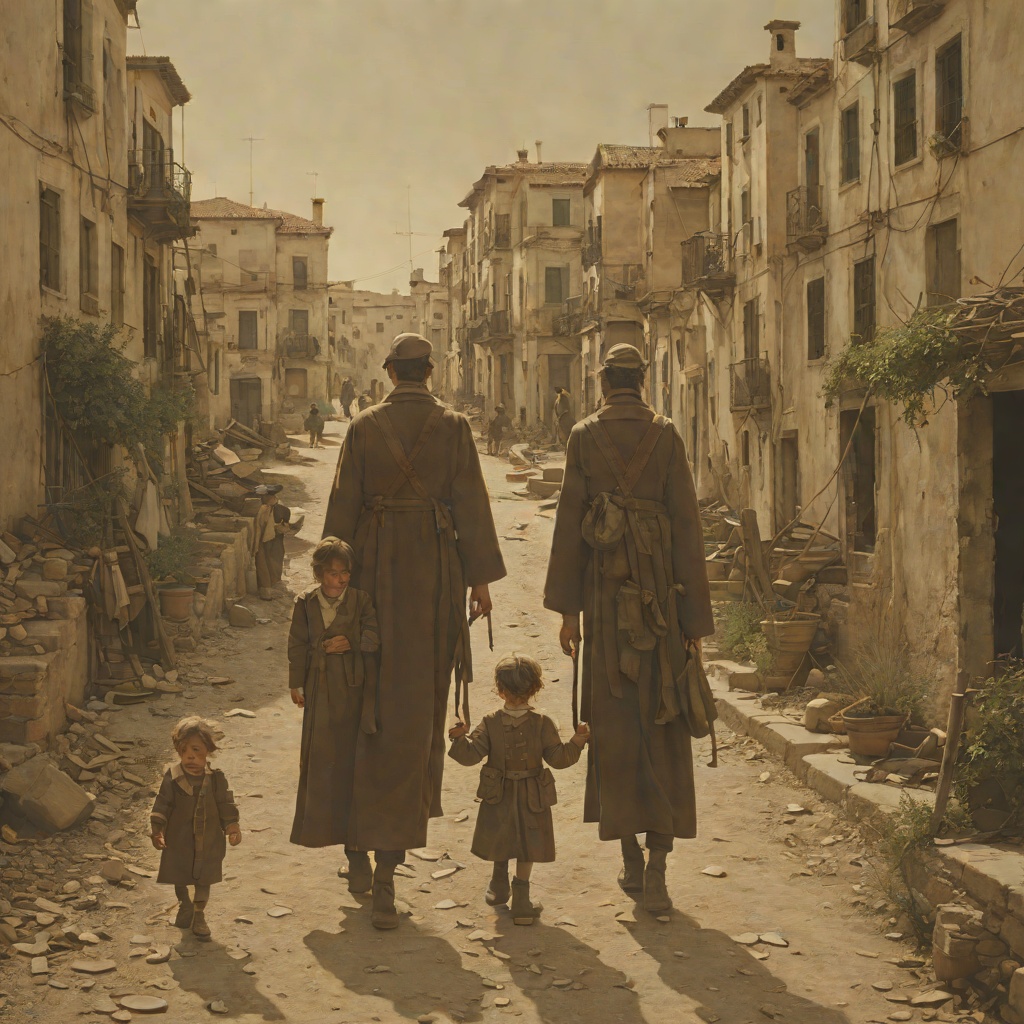
The Captain and Ann BarbaraYuchovitch is the ancestral village of the Antin family, a small settlement in the Pale of Settlement located about sixty versts above Polotzk. It is the place where Mary Antin's father, Pinchus, was born and where her paternal forebears lived for generations, and it stands in the memoir as the point of origin for the family's long journey toward America. The village is introduced not as a place of particular distinction but as a community defined by its crushing poverty, its honest trades, and the hereditary transmission of both a good name and a meagre portion from father to son. It is the soil from which the Antin family sprang, and its conditions shaped the character and ambitions that would eventually carry them across the ocean.
Geography and Setting
Yuchovitch lay about sixty versts above Polotzk, a distance that placed it firmly within the rural hinterland of the Pale of Settlement. The village was poor almost to beggary, a condition so universal that poverty conferred no distinction upon its inhabitants. The whole village shared this fate, and the Antin family was no exception; indeed, no connection of the family, not even a doubtful cousin, was known to Yuchovitch who was not steeped to the earlocks in poverty. The village economy was built on barter rather than cash, with money seldom changing hands in the transactions that sustained daily life. A glazier could not make a living in Yuchovitch, a fact that forced the men of the family to take to the road as country peddlers, trading between Polotzk and Yuchovitch and taking in all the desolate little hamlets scattered along that route.
The Antin Family in Yuchovitch
The family's presence in Yuchovitch extended back to the oldest inhabitant's memory, who still remembered Mary Antin's father's great-grandfather when Pinchus was a boy. This ancestor, known as Lebe the Innkeeper, carried no reproach with his name. His son Hayyim succeeded to the business but later took up the glazier's trade, developing a knack for all sorts of tinkering that allowed him to increase his too scanty earnings. Hayyim the Glazier was reputed to be a man of fine countenance, wise in homely counsel, and honest in all his dealings, while his wife Rachel Leah had a reputation for practical wisdom even greater than his. She was the advice giver of the village in every perplexity of life, a tall, trim, handsome old woman, active and independent, who wore the stately knupf or turban on her shaven head and went to the synagogue on Sabbaths and holidays with a long, straight mantle hanging from neck to ankle, worn with an air, on one sleeve only, the other dangling empty from her shoulder.
Hayyim begat Joseph, and Joseph begat Pinchus, Mary Antin's father. Joseph inherited the trade, good name, and meagre portion of his father, and maintained the family tradition of honesty and poverty unbroken to the day of his death. He was an indifferent workman, an indifferent scholar, and an indifferent hasid, strikingly good at only one thing: grumbling. Although not unkind, he had a temper that boiled over at small provocation, and even in his most placid mood he took very little satisfaction in the world. He reversed the proverb, looking for the sable lining of every silver cloud. As he distrusted the whole world, so Joseph distrusted himself, which made him shy and awkward in company. At the wedding of his only son, Pinchus, Joseph sat the whole night through in a corner, never as much as cracking a smile, while the wedding guests danced, laughed, and rejoiced.
Economic Life and Hardship
Joseph remained single until the advanced age of twenty-five, when he took unto himself an orphan girl as poor as he, namely Rachel, the daughter of Israel Kimanyer of pious memory. The couple's life in Yuchovitch was one of relentless economic struggle. Joseph was absent from home the greater part of the time, for a glazier, even a better workman than he, could not make a living in the village. He became a country peddler, trading between Polotzk and Yuchovitch, carrying fifteen rubles' worth of goods as a big bill out of Polotzk. His stock consisted of cheap pottery, tobacco, matches, boot grease, and axle grease, which he bartered for country produce, including grains in small quantity, bristles, rags, and bones. Money was seldom handled in these transactions.
The life was rough, on the road at all seasons and in all weathers, knocking about at smoky little inns, glad sometimes of the hospitality of some peasant's hut where the pigs slept with the family. Joseph was doing well if he got home for the holidays with a little white flour for a cake and money enough to take his best coat out of pawn. The best coat, and the candlesticks too, would be repawned promptly on the first workday, for it was not for the like of Joseph of Yuchovitch to live with idle riches around him. For the credit of the village, however, Joseph never had to stay away from the synagogue for want of his one decent coat, because his neighbor Isaac, the village money lender, never refused to give up the pledged articles on a Sabbath eve, even if the money due was not forthcoming. Many Sabbath coats besides Joseph's, and many candlesticks besides his wife's, passed most of their existence under Isaac's roof, waiting to be redeemed, but on the eve of Sabbath or holiday Isaac delivered them to their respective owners, came they empty-handed or otherwise, and at the expiration of the festival the grateful owners brought them promptly back for another season of retirement.
Legacy and Departure
The poverty and limited prospects of Yuchovitch formed the backdrop against which the family's ambitions were measured. It was from this village that Pinchus, Mary Antin's father, eventually departed, carried away by the westward movement, glad of his own deliverance but sore at heart for those he left behind. The family was so far reduced in circumstances that he had to travel with borrowed money to a German port, whence he was forwarded to Boston with a host of others at the expense of an emigrant aid society. Yuchovitch thus represents the old world that the family left behind, a place of hereditary poverty and honest toil that stood in stark contrast to the promise of America. The village's name recurs in the memoir as a marker of origin, a reminder of the conditions that made emigration necessary and of the family's determination to escape the cycle of poverty that had bound their ancestors for generations. It is the baseline against which the family's American transformation is measured, the place where the Antin name carried no distinction beyond its reputation for honesty and poverty, and the starting point of the journey that would lead Mary Antin to become a writer and a citizen of her adopted country.