Barnabas's house
The CastleBarnabas's house is the family home of the messenger Barnabas, his sisters Olga and Amalia, and their aged, ailing parents. It is a large, dimly lit room, almost dark save for a single tiny oil-lamp hanging over a table at the back, and it is here that K. is brought on his first night in the village, expecting to be led to the castle. The house stands in stark contrast to the official spaces of the Castle Inn and the castle itself, representing the private, excluded, and human side of the village that K. both seeks and recoils from. Its significance lies not in any physical grandeur but in its role as the stage for the revelation of the Barnabas family's secret history and their fraught relationship with the castle authorities.
A Misguided Arrival and the Shattering of Illusion
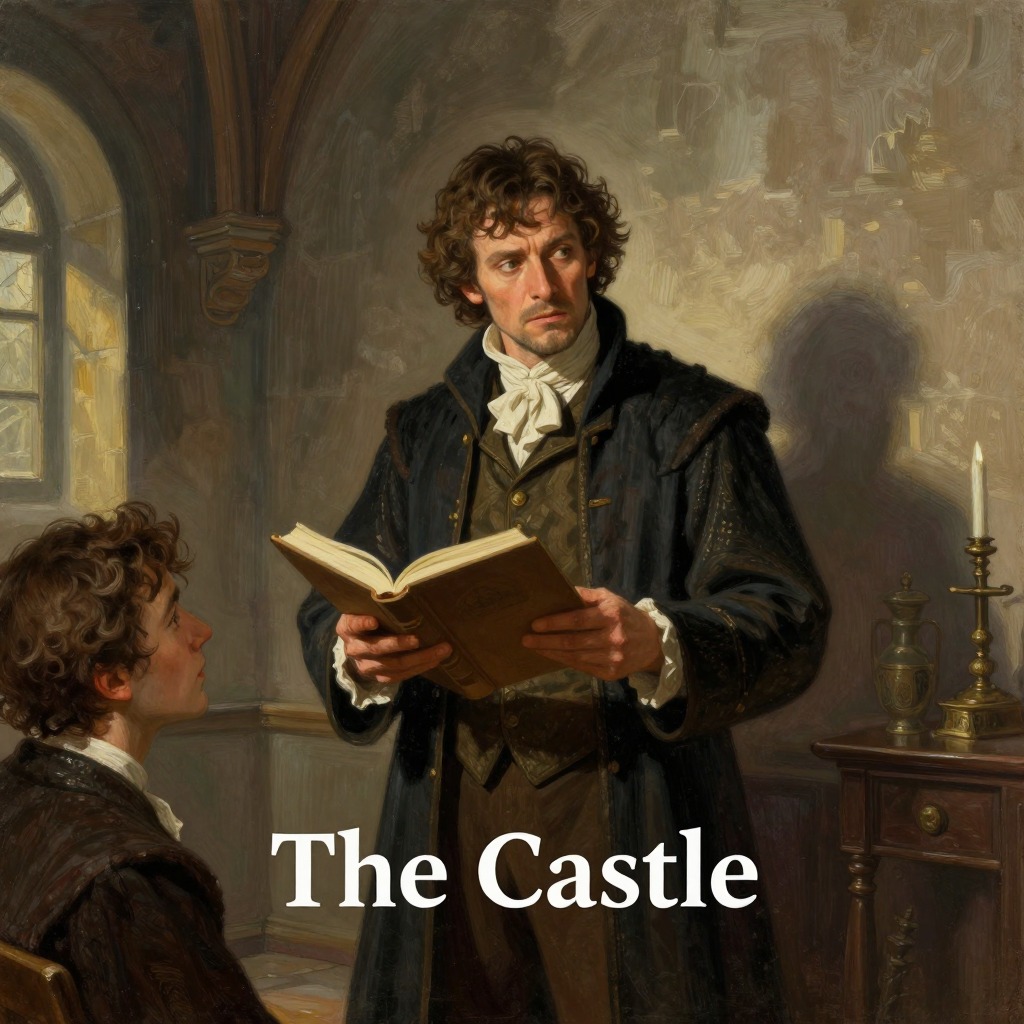
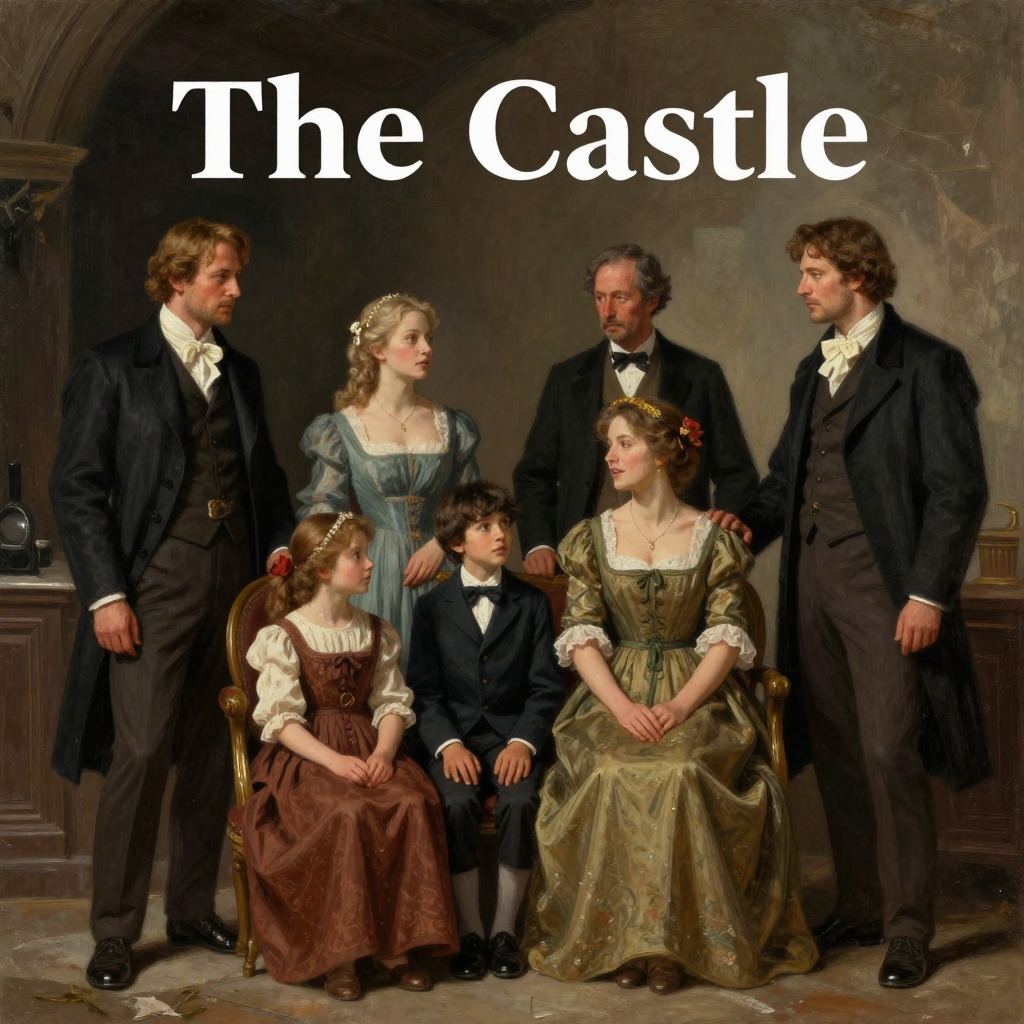
K.'s first visit to Barnabas's house is the result of a profound misunderstanding. After meeting the messenger Barnabas at the Bridge Inn and receiving the first letter from Klamm, K. follows him into the night, believing he is being led to the castle. He clings to Barnabas's arm, feeling a sense of purpose and companionship, but when Barnabas stops and knocks at a door, K. is bewildered. The door is opened by a girl, and K. finds himself in the family's living room, introduced to Barnabas's parents and his sisters, Olga and Amalia. The realization that Barnabas was merely going home, not to the castle, is a crushing blow to K., who feels his smile grow wearier and himself more insignificant. He had been captivated by the silken gleam of Barnabas's jacket, only to see it unbuttoned to reveal a coarse, grey, much-mended shirt over a powerful broad chest like a labourer's. The house, with its gouty old father and stout mother, becomes the emblem of Barnabas's ordinariness, shattering K.'s fantasy of a privileged connection to the castle. K. is so disillusioned that he refuses the family's hospitality, sitting on a window-seat and determined to spend the night there, accepting no further favours.
The Family's Excluded World and Its Connection to the Castle
The house is also the setting where K. learns the full extent of the family's social ostracism. The villagers refer to them only as "the family of Barnabas," and their home has fallen into disrepute. Even the placement of the oil-lamp above the table is seen as intolerable by visitors, who look down their noses at everything the family possesses. This disdain is a direct consequence of Amalia's refusal to obey the official Sortini's summons, an act that doomed the entire family. The house, once a place of relative prosperity, has become a hovel to which they were forced to move, bringing their belongings on a handcart. It is within these walls that Olga recounts the family's tragic history to K., explaining how their father's futile petitioning and her own desperate attempts to find the insulted messenger have left them in their current state. The house thus becomes a physical manifestation of their punishment, a space of confinement and shame.
The Stage for Amalia's Secret and the Family's Burden
It is in Barnabas's house that K. hears the story of Amalia and Sortini, a tale that redefines his understanding of the family and the castle's power. Olga tells K. how, at a fire-brigade festival three years prior, the official Sortini had been struck by Amalia's beauty and sent her a crude, commanding letter, summoning her to the Castle Inn. Amalia tore the letter up and threw it in the messenger's face, an act of defiance that led to the family's ruin. The house is where Amalia now tends to her parents with superhuman effort, her cold, clear gaze a constant presence. K. observes her feeding her arthritic mother and trying to calm her querulous father, a scene of grim domesticity that underscores the family's burden. The house is also where Olga reveals her own sacrifices, spending nights with the servants in the stables of the Castle Inn in a futile attempt to find the messenger and lift the family's disgrace. The home is thus not merely a dwelling but a repository of the family's collective suffering and their desperate, ongoing struggle for redemption.
A Place of Hope and Disappointment for K.
For K., Barnabas's house becomes a place of contradictory significance. He is drawn to it because of his hopes for Barnabas's messages from the castle, yet he is also repelled by the family's misery and the way it distracts him from his own goals. When he visits to ask about Barnabas, he finds only Amalia, who speaks to him with a strange, unsettling frankness, suggesting that his visits are really for Olga. The house is where K. waits for Barnabas, only to be disappointed, and where he learns from Olga that the messenger's work is fraught with doubt and uncertainty. It is also the place where Frieda's jealousy is inflamed, as she accuses K. of being drawn to the family and their "wretched" ways. The house thus serves as a counterweight to K.'s official ambitions, pulling him into the messy, human, and tragic world of the village, a world that both fascinates and threatens to engulf him. In the end, it is a place of profound ambiguity, representing the elusive and often painful connection between the village and the castle that K. can never quite grasp.