Castle Mount
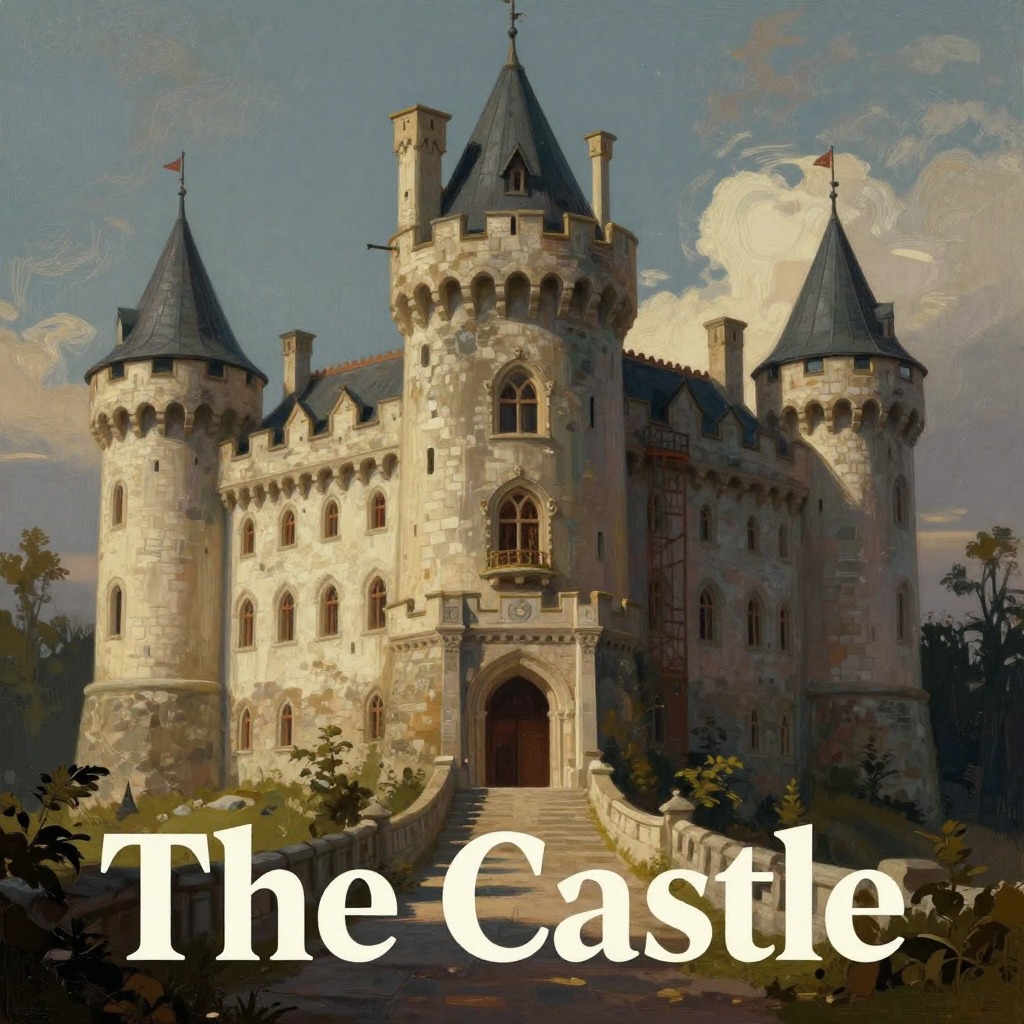
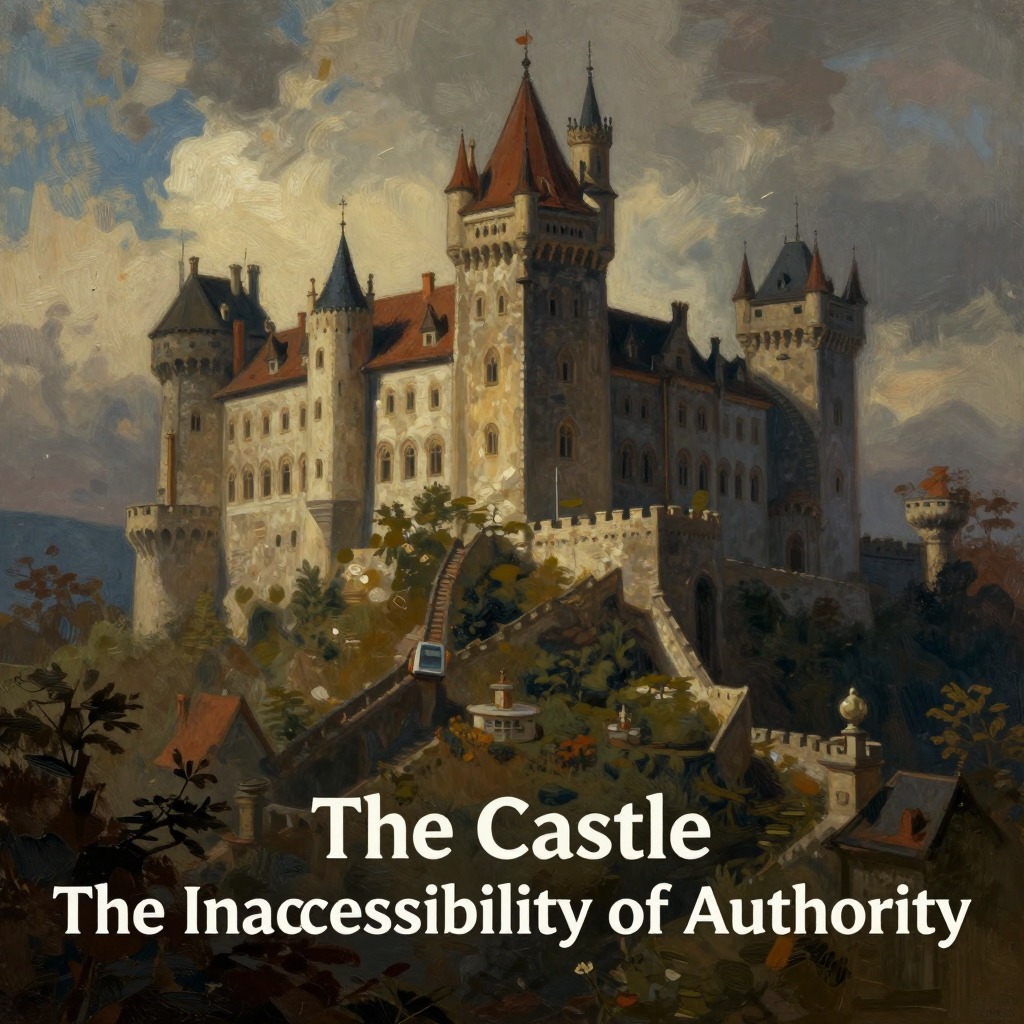
The CastleCastle Mount is the hill that rises above the village in Franz Kafka's novel The Castle, and upon it stands the castle—the seat of Count Westwest's authority and the ultimate, unattainable goal of the land surveyor K. From the moment of K.'s arrival, the mountain is shrouded in mist and darkness, and it remains throughout the novel a place of profound inaccessibility, the source of all official power and the object of K.'s relentless, frustrated quest for recognition. The mountain's physical and symbolic presence shapes the entire narrative, embodying the unbridgeable gap between the individual and an unfathomable bureaucracy.
The Mountain as First Seen: Inaccessibility and Illusion
K.'s first impression of Castle Mount is one of absence and obscurity. On the evening of his arrival, "there was nothing to be seen of Castle Mount, for mist and darkness surrounded it, and not the faintest glimmer of light showed where the great castle lay." The mountain is thus introduced as a void, a negative space that resists perception. The next morning, however, the castle appears "distinctly outlined in the clear air," standing out against the thin covering of snow. Yet this clarity is deceptive. As K. approaches, the castle proves disappointing: it is "only a poor kind of collection of cottages assembled into a little town," with flaking paint and crumbling stone. The mountain's grandeur is an illusion, and its reality is a shabby, almost pathetic collection of buildings. This contrast between the distant promise and the near reality establishes the central theme of the castle's inaccessibility—not merely physical, but also perceptual and bureaucratic.
The castle's tower, the only visible one, is described as "a simple, round building, partly covered with ivy," with "insecure, irregular battlements, crumbling as if drawn by an anxious or careless child." K. imagines that "some melancholy inhabitant of the place, who should really have stayed locked up in the most remote room in the house, had broken through the roof and was standing erect to show himself to the world." This image of a broken, melancholy figure suggests the castle's inner disorder and its inhabitants' alienation, foreshadowing the bureaucratic chaos that K. will encounter.
The Mountain as the Seat of Authority and the Source of Rules
The castle on Castle Mount is the origin of all the rules that govern the village. As Schwarzer, the son of a deputy warden, tells K. on his first night, "This village belongs to the castle, so anyone who stays or spends the night here is, so to speak, staying or spending the night at the castle. And no one's allowed to do that without a permit from the count." The mountain thus represents the absolute, arbitrary authority that demands permits for even the most basic human needs. The castle's power is exercised through a vast, incomprehensible bureaucracy, as exemplified by the telephone call that confirms K.'s appointment as land surveyor—a call that is later revealed to be unreliable, a mere "joke" played by a tired official. The mountain is the source of the letters K. receives from Klamm, the chief executive of Office X, which are themselves ambiguous and contradictory, offering both recognition and subordination.
The castle's authority is also manifested in the figure of Klamm, who is described as "a stout, ponderous man of middle height" with a "long, black moustache" and pince-nez. Klamm is the object of K.'s obsessive desire to speak with him, a desire that is repeatedly thwarted. The mountain is Klamm's residence, and his inaccessibility mirrors the mountain's own. The landlady of the Bridge Inn, who was once Klamm's mistress, compares him to an eagle, a creature that soars above the world, "free from any interference by the likes of K. down below." This comparison reinforces the mountain's symbolic role as the realm of the powerful and the unreachable.
The Mountain as a Place of Waiting and Exclusion
Castle Mount is also the site of K.'s most humiliating experiences of waiting and exclusion. On his first day, he attempts to walk to the castle, but the main street of the village "did not lead to Castle Mount but merely passed close to it before turning aside, as if on purpose." The road never brings him closer, and he eventually gives up, exhausted. Later, he waits for Klamm outside the Castle Inn, and when he climbs into Klamm's sleigh, he is discovered and driven away. The mountain remains a distant, unattainable goal, and K.'s attempts to reach it are always thwarted.
The mountain is also the place where the villagers' fear and deference are most evident. When K. asks the carrier Gerstäcker to take him to the castle, Gerstäcker refuses, saying, "Oh, then I'm not going." Even the messenger Barnabas, who is supposed to have access to the castle, is uncertain of his own position, and his sister Olga reveals that Barnabas's work is "service to the castle, after all, a kind of service to the castle, or at least that's what people are meant to think." The mountain thus represents not only the seat of power but also the source of the villagers' anxiety and their complex, often self-deceiving relationship with authority.
The Mountain's Changing Appearance and Symbolic Significance
Throughout the novel, Castle Mount's appearance changes with the light and the observer's mood. When K. first sees it in the clear morning air, it seems "free and light," but as he approaches, it becomes "disappointing" and "crumbling." Later, when he waits for Klamm, the castle is "curiously dark" and "retreating into the distance." The mountain's appearance is thus subjective, reflecting K.'s own hopes and frustrations. It is a place that can never be truly seen or understood, only glimpsed and misinterpreted.
The mountain's symbolic significance extends beyond the personal to the cosmic. It represents the inscrutable, all-powerful force that governs human destiny, a force that is both arbitrary and indifferent. The village mayor's explanation of the bureaucratic confusion surrounding K.'s appointment—the lost files, the mistaken departments, the supervisory authorities that "only supervising authorities"—reveals a system that is both omnipotent and chaotic. The mountain is the emblem of this system, a place where "official decisions are as elusive as young girls," as Olga puts it. It is the ultimate symbol of the novel's central theme: the individual's futile struggle against an incomprehensible and unassailable authority.