Church
The CastleThe Church, though described as little more than a chapel extended like a barn to hold the whole congregation, stands as one of the few named landmarks in the village, a place where K.'s path and the village's social order intersect. It is not the castle's tower, which K. initially mistakes for a church spire, but a low, earthly building that nonetheless anchors the village's communal life and provides a stage for K.'s early, uneasy encounters with its inhabitants. Its presence in the narrative underscores the village's distinct, almost claustrophobic character, where even sacred space is subordinated to the practicalities of a community defined by its relationship to the unseen castle.
Setting and Appearance
The Church is situated in the village, near the school, and is described as a long, low building that combines the character of something temporary and something very old. It stands in a fenced garden covered with snow, and its architecture is functional rather than imposing, a contrast to the castle's single, crumbling tower that K. observes from a distance. The Church's unassuming nature reflects the village's own humility and its separation from the castle's authority, which is embodied in the tower that K. finds both crazed and melancholy. The Church is a place where the villagers gather, but it is also a point of passage for K., who walks past it on his way to the castle and later uses it as a reference point in his wanderings.
K.'s Encounters and Observations
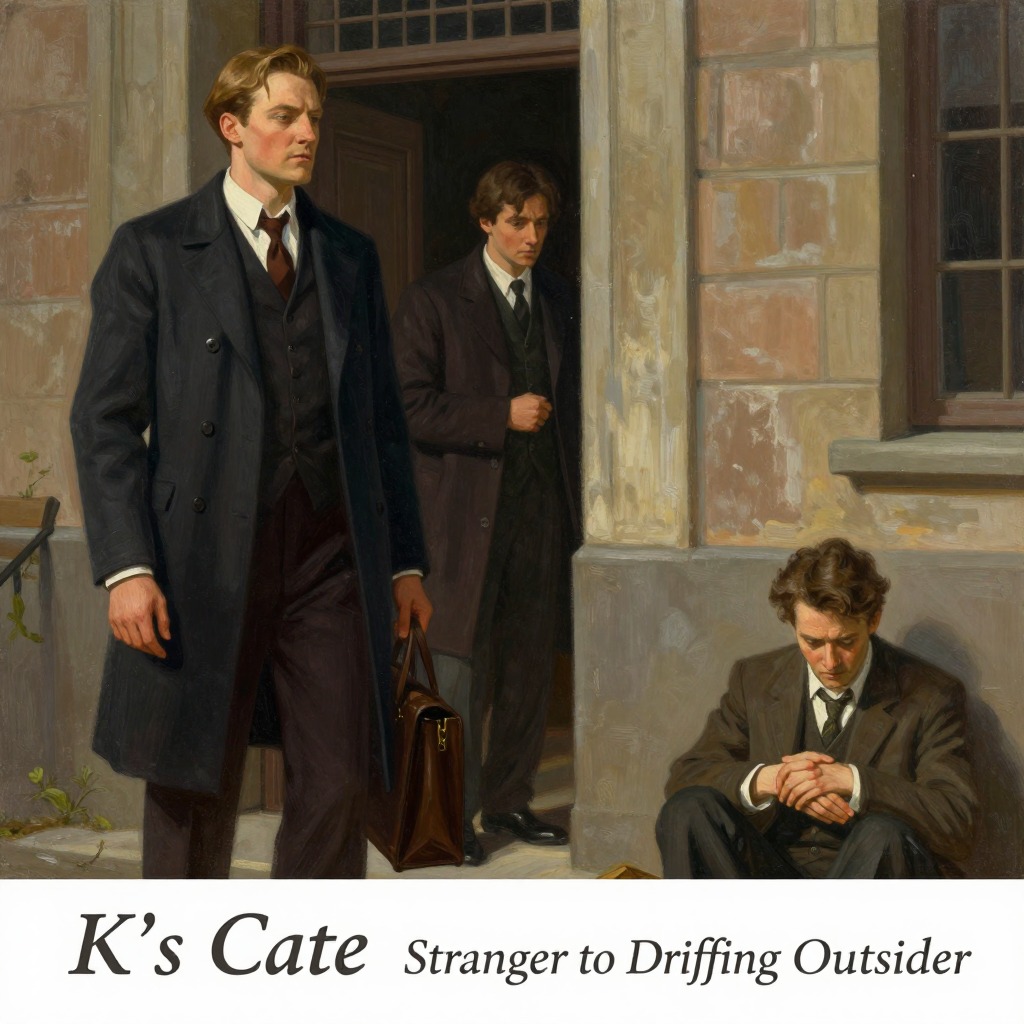
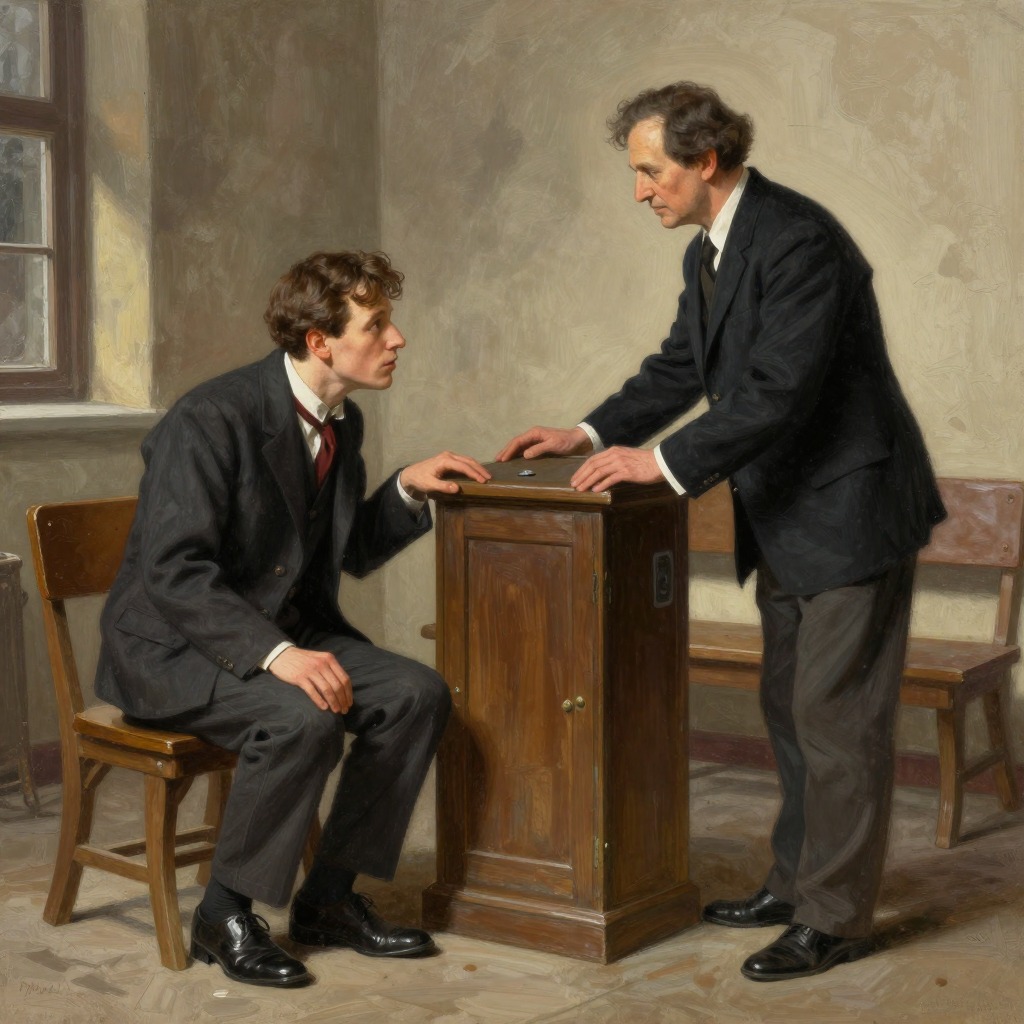
K.'s first significant encounter near the Church occurs on his initial walk through the village, when he meets the teacher, who is leaving the school with his pupils. The teacher, a small, narrow-shouldered young man, is the first villager to engage K. in a substantive conversation, and their exchange takes place in the shadow of the Church. The teacher's question, "Don't you like the castle?" and his assertion that "Strangers never do," reveal the village's defensive attitude toward outsiders and its complex relationship with the castle. This conversation, which takes place near the Church, establishes the teacher as a figure of authority and sets the tone for K.'s subsequent interactions with the village's institutions. Later, K. passes the Church again on his way to the Castle Inn, noting its presence as he navigates the village's winding streets, and it serves as a silent witness to his growing frustration and isolation.
The Church as a Symbol of the Village's Relationship to the Castle
The Church's modest scale and its location in the village, as opposed to the castle's tower on Castle Mount, symbolize the village's subordinate position in the hierarchy of the castle's authority. The Church is a place of communal worship, but it is also a reminder of the village's earthly concerns, in contrast to the castle's remote and inscrutable power. K.'s observation of the Church, with its barn-like extension, highlights the village's practicality and its focus on survival, while the castle's tower, with its crumbling battlements, suggests decay and inaccessibility. The Church thus becomes a spatial marker of the village's identity, one that is defined by its proximity to the castle but also by its separation from it. This dynamic is further emphasized by the fact that the Church is one of the few places in the village where K. is not explicitly challenged, yet it remains a site of social observation and judgment, as seen in his encounter with the teacher.
Narrative Significance
The Church functions as a recurring point of reference in K.'s journey, marking his progress through the village and his encounters with its inhabitants. It is a place where the village's social norms are made visible, as when the teacher reminds K. to be mindful of the children's presence, and where K.'s status as an outsider is reinforced. The Church's presence in the narrative also contributes to the novel's exploration of space and power, as K. moves between the village's earthly institutions and the castle's inaccessible heights. In this way, the Church is not merely a setting but an active element in the story, shaping K.'s perceptions and interactions, and reflecting the novel's central themes of alienation, authority, and the search for meaning in a world governed by obscure forces.