Department B
The CastleDepartment B is a minor but pivotal administrative unit within the castle's vast and labyrinthine bureaucracy in Franz Kafka's novel The Castle. Though it appears only in the village mayor's retrospective account, its accidental involvement in a misfiled decree regarding the appointment of a land surveyor is the root cause of the entire bureaucratic confusion that ensnares K. The department's role exemplifies the novel's central themes of administrative chaos, the principle of authority infallibility, and the profound inaccessibility of the castle's power structure.
Role in the Bureaucratic Error
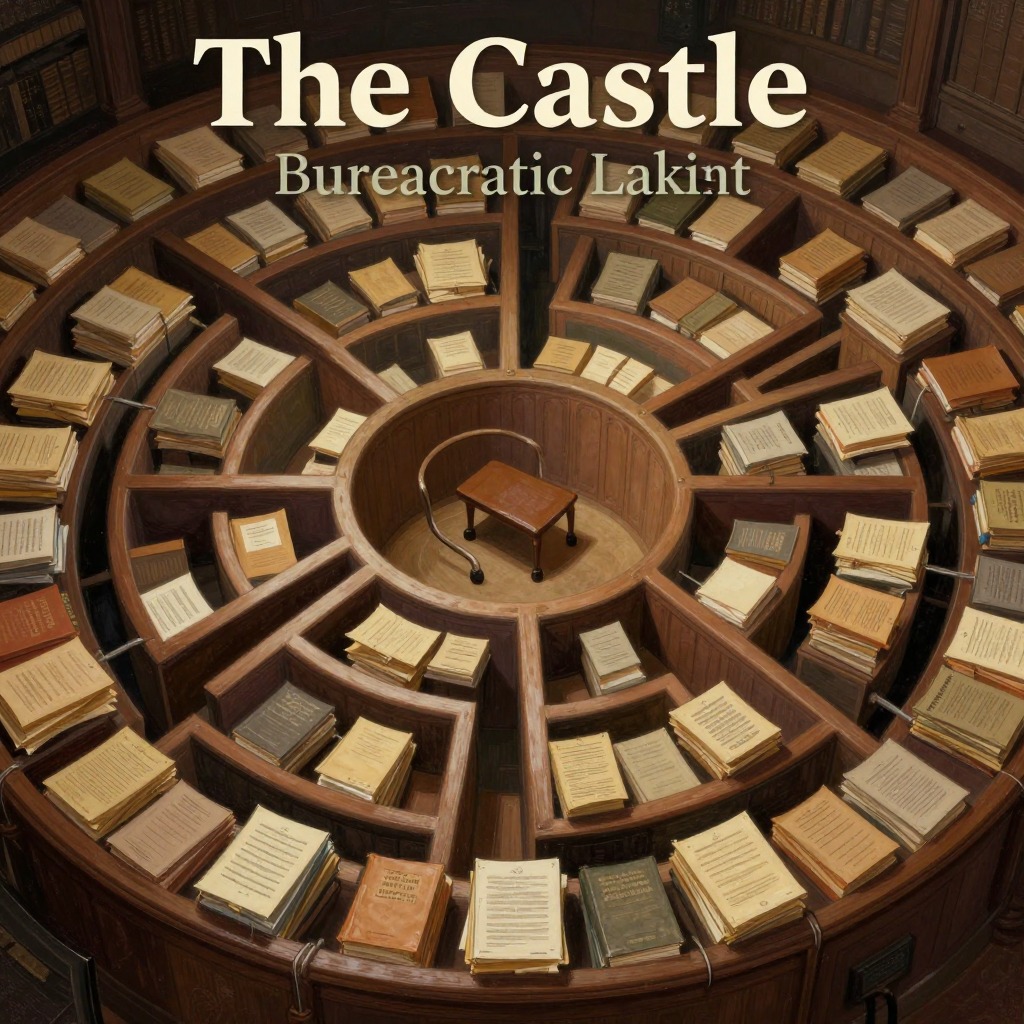
The village mayor explains to K. that the whole misunderstanding began when the village replied to an old decree from Department A, stating that no land surveyor was needed. This reply, however, never reached its intended destination. Instead, it went by mistake to Department B. Consequently, Department A received no answer and let the matter lapse, while Department B received only the cover of a file, bearing a remark that the enclosed file—which was, in fact, not enclosed—dealt with the appointment of a land surveyor. This misfiling set in motion a chain of events that would ultimately lead to K.'s summons and his arrival in the village.
The Conscientious Official Sordini
The file cover from Department B reached an official renowned for his conscientiousness, an Italian named Sordini. The mayor describes Sordini as a man of great abilities who, inexplicably, languishes in one of the lowest-ranking positions. Sordini, distrusting the village's vague replies, initiated a long and arduous correspondence. He demanded to know why the village had suddenly decided against appointing a land surveyor, and when the mayor mentioned an official letter, Sordini insisted the letter did not exist. This led to a protracted investigation, with Sordini's officials holding daily hearings at the Castle Inn and taking down records. The mayor notes that Sordini's distrust is a working principle of the authorities, who do not even consider the possibility of mistakes being made. This principle, justified by the excellent organization of the whole, means that Sordini could not enquire in other departments, as they would have refused to respond to questions about a possible error.
The Principle of Infallibility and Supervisory Authorities
The mayor's account of Department B's role reveals a core paradox of the castle's administration. While the authorities are organized to be infallible, the very system that prevents them from acknowledging mistakes also allows errors to propagate. The mayor explains that there are only supervising authorities, but they are not intended to detect mistakes in the vulgar sense, since there are no mistakes. Even if a mistake exists, as in K.'s case, no one can say whether it is really a mistake in the long run. This principle, embodied by Department B's accidental involvement, ensures that the bureaucratic machine continues to function, albeit chaotically, without ever admitting fault. The mayor's story illustrates how a minor clerical error can become a major case, not because of its intrinsic importance, but because of the zeal of officials like Sordini, who devote the same attention to the smallest cases as to the largest.
Significance in the Narrative
The story of Department B serves as a microcosm of the entire novel's critique of bureaucracy. It demonstrates how the castle's power operates through a system that is both hyper-rational and profoundly irrational, where communication is unreliable and authority is unaccountable. The department's role is not to be a major actor but to be a cog in a machine that produces confusion and despair. The mayor's tale, with its intricate details of misfiled documents and diligent but misguided officials, reinforces K.'s growing realization that his struggle is not against a single adversary but against an impersonal, labyrinthine system. The very existence of Department B, and its accidental role in K.'s fate, underscores the theme that chance and misunderstanding, rather than deliberate design, often determine the course of a man's life within the castle's orbit.