K.
The CastleK. is the central figure of Franz Kafka's unfinished novel The Castle, a man who arrives in a village deep in snow, claiming to be a land surveyor summoned by the count. From the moment of his arrival, he is entangled in a web of bureaucratic confusion and social exclusion, as he attempts to reach the castle that looms above the village but remains perpetually inaccessible. His character is defined by his relentless, often futile, pursuit of recognition and his struggle to establish a place for himself in a community that regards him as an outsider. K.'s journey is not a heroic quest but a descent into the absurdities of authority, where every step forward seems to lead to further entanglement and disappointment.
Identity and Background
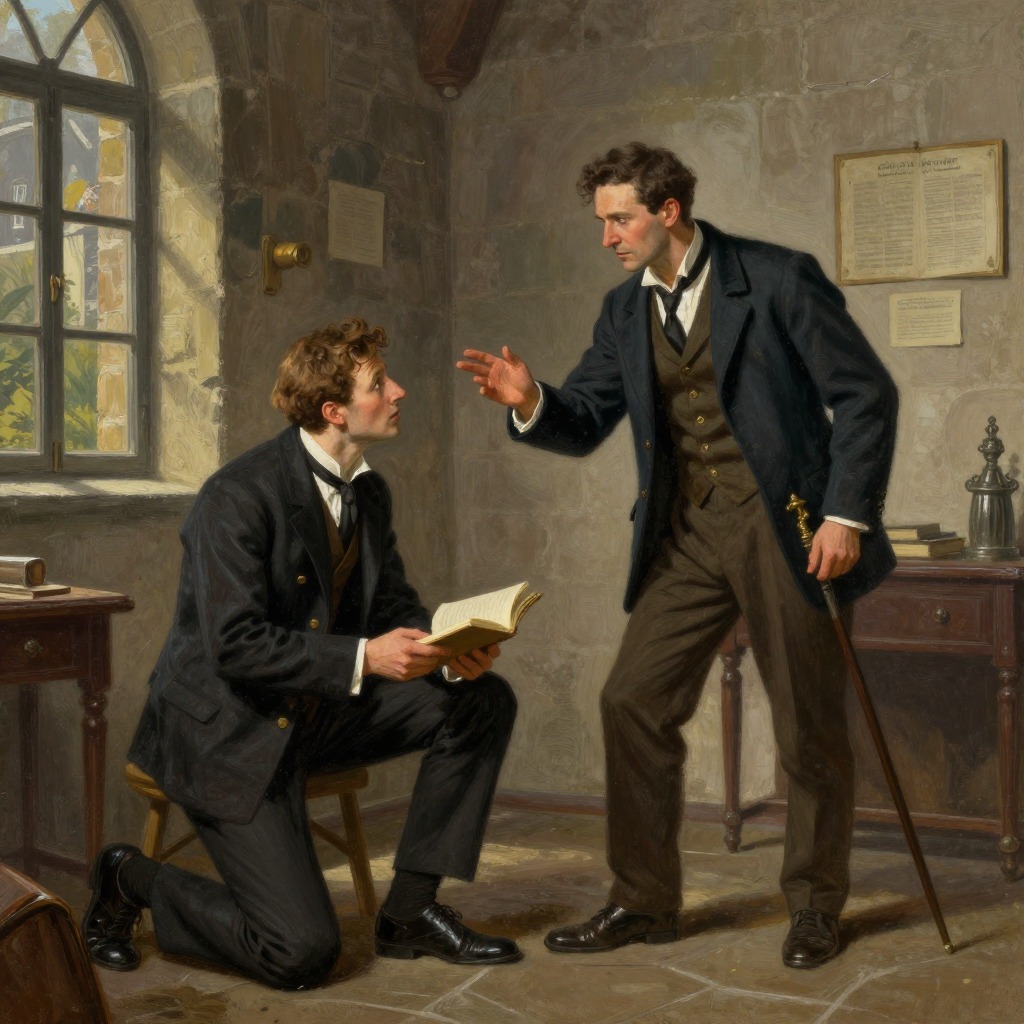
K. arrives in the village late in the evening, having walked for days through the snow, and immediately asserts his identity as a land surveyor, claiming that the count sent for him. He carries only a tiny rucksack and a gnarled walking-stick, and his appearance is described as "very ragged" by Schwarzer, the son of a deputy warden who challenges his right to stay overnight. K. is in his thirties, and his background is largely obscure; he mentions leaving his wife and child behind, but this is never elaborated. His profession as a land surveyor is central to his identity, yet it becomes clear that the village has no need for one, and his appointment is the result of a bureaucratic error. K. is a stranger in every sense: he does not know the village, the castle, or the customs, and his attempts to understand them are met with suspicion and resistance.
The Quest for the Castle
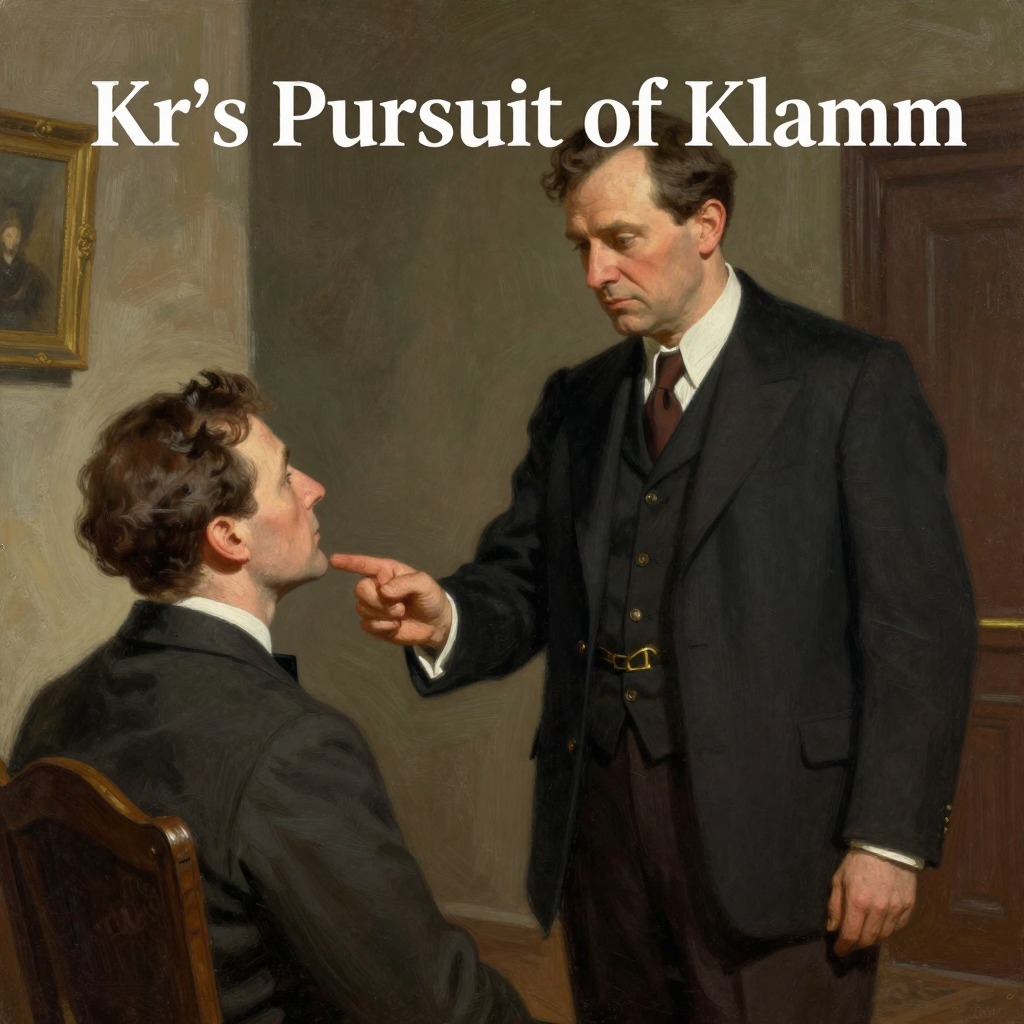
K.'s primary objective is to gain access to the castle, which he believes will validate his existence and his work. However, the castle is not a physical place he can reach; it is an elusive, almost metaphysical entity that governs the village through an incomprehensible bureaucracy. K.'s first attempt to walk to the castle ends in failure, as the main street of the village does not lead to it but merely passes close by, and he becomes lost in the snow. He later learns that no one can enter the castle without a permit, and that the telephone connections to it are unreliable, often producing only a humming sound or the voices of lower officials. K. receives two letters from Klamm, the chief executive of Office X, which seem to acknowledge his appointment but also reduce him to the status of a common laborer. The letters are ambiguous, and the village mayor interprets them as private communications rather than official documents, leaving K. with no clear standing. Despite these obstacles, K. persists in his attempts to meet Klamm, waiting for him outside the Castle Inn and even climbing into his sleigh, but he never succeeds in speaking to him directly.
Relationships and Conflicts
K.'s relationships with the villagers are marked by a mixture of suspicion, pity, and occasional alliance. He is initially challenged by Schwarzer, who telephones the castle to verify his identity, and later by the teacher, who offers him the humiliating post of school janitor. K. forms a close bond with Frieda, a barmaid at the Castle Inn who claims to be Klamm's lover, and they become lovers themselves, but their relationship is fraught with jealousy and misunderstanding. Frieda eventually leaves K. for Jeremias, one of his assistants, after accusing K. of neglecting her and being unfaithful with Barnabas's sisters. K. also develops a complex relationship with Barnabas, a messenger who brings him letters from Klamm but whose reliability is questionable. K. is drawn to Barnabas's family, particularly Olga, who tells him the tragic story of her sister Amalia's rejection of the official Sortini, which led to the family's ostracism. K. sees in their suffering a parallel to his own struggles, but he also uses them for his own purposes, hoping to gain access to the castle through them.
Change and Ending
Throughout the novel, K. undergoes a gradual transformation from a confident, assertive man to one who is increasingly weary and resigned. His initial determination to confront the authorities gives way to a sense of hopelessness, as he realizes that his efforts are futile. He becomes entangled in the lives of the villagers, taking on the role of school janitor, and his relationship with Frieda deteriorates. The novel ends abruptly, with K. being led away by Gerstäcker, a carrier who hopes K. can influence Erlanger on his behalf. K. is exhausted, having slept for twelve hours, and his future is uncertain. The unfinished nature of the novel leaves K.'s fate unresolved, but his trajectory suggests a descent into the very obscurity and insignificance he sought to escape.
Thematic Significance
K. embodies the themes of alienation, the absurdity of bureaucracy, and the human desire for recognition and belonging. His struggle against the castle represents the individual's confrontation with an incomprehensible and indifferent authority, a central motif in Kafka's work. K.'s identity as a land surveyor is itself symbolic: he is a measurer of boundaries, yet he cannot find his own place in the world. His relationships with the villagers reflect the social dynamics of inclusion and exclusion, as he is both a stranger and a potential ally. K.'s character is a study in the futility of striving against forces that are beyond human understanding, and his story serves as a critique of the dehumanizing effects of modern bureaucracy. Through K., Kafka explores the paradoxes of power, the elusiveness of truth, and the impossibility of ever truly belonging.