Nightcap
The CastleThe nightcap is a small, lace-trimmed head covering worn by the landlady of the Bridge Inn, Gardena. It is one of her three cherished mementos of Klamm, the castle official, alongside a photograph of a messenger and a shawl. The nightcap, like the other mementos, is a tangible link to a pivotal period in her life over twenty years ago when she was Klamm's mistress. It represents her enduring fidelity to Klamm and the social distinction she gained from that brief relationship, a distinction she believes she can never lose. The nightcap's presence in her bedroom, where she lies ill, underscores how her past with Klamm continues to dominate her present, shaping her attitudes toward K. and Frieda.
The Nightcap as a Memento
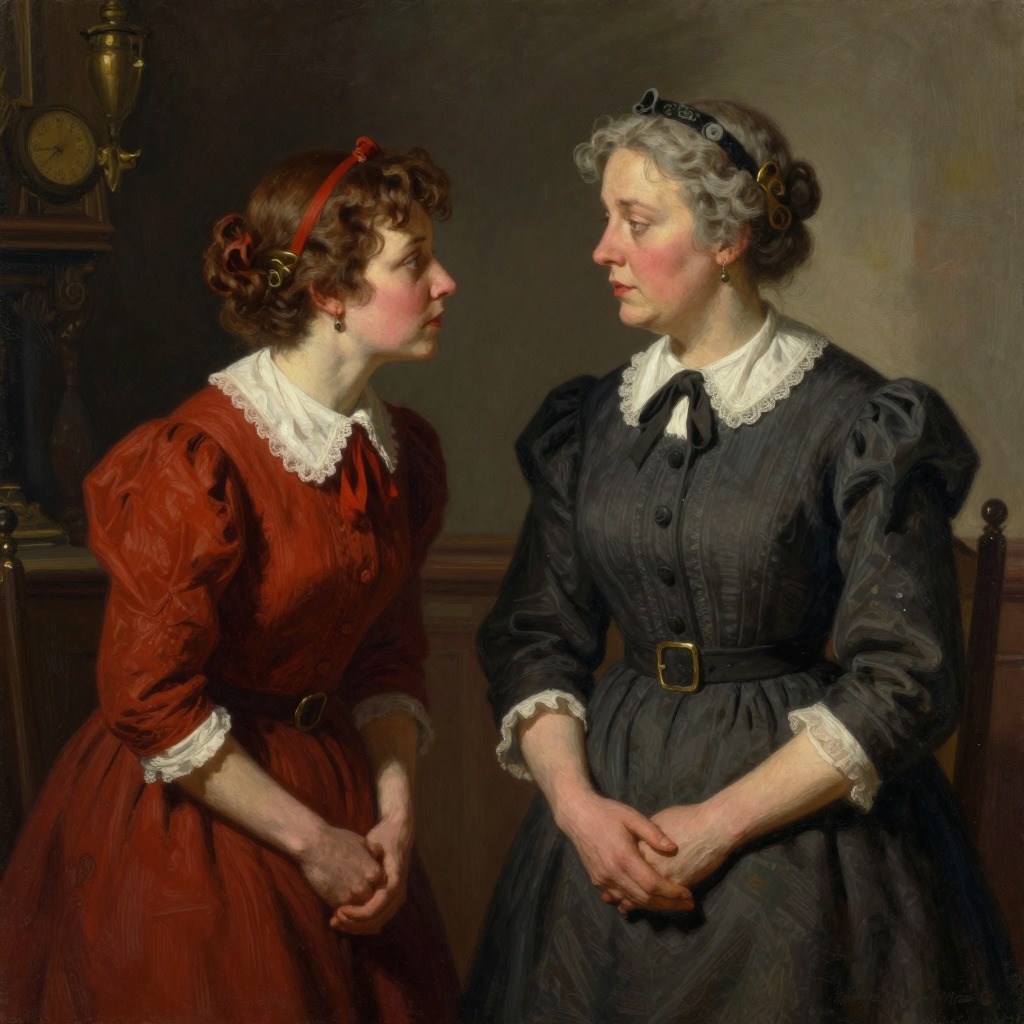
The nightcap is introduced during K.'s second conversation with the landlady, who is confined to bed with a heart condition. When K. visits her, she asks him to fetch a shawl from the wardrobe, and then reveals that the shawl, along with the nightcap and a photograph, are her three mementos of Klamm. She explains that these objects are essential to her survival in the village: "without those three things I could probably never have borne it here for so long, probably not even for a day." The nightcap, in particular, is described as "too small" for her head, perched "unsteadily" and making her "worn face look pitiable." This detail highlights the incongruity between the youthful romance the nightcap represents and the landlady's aged, ailing present. The nightcap is not merely a piece of clothing but a relic of a time when she was chosen by Klamm, a time that ended abruptly after only three summonses.
Symbolism of Fidelity and Loss
The nightcap embodies the landlady's lifelong fidelity to Klamm, a fidelity that borders on obsession. She admits that she and her husband spent years discussing why Klamm stopped summoning her, and she still wonders about it. The nightcap, along with the other mementos, serves as a substitute for the intimacy she once had. It is a physical reminder of her rank as Klamm's former mistress, a rank she believes elevates her above other women, even though Klamm has forgotten her. When K. asks if she has been faithful to Klamm for so long, she responds with a question: "Is it fidelity? I am faithful to my husband, but Klamm? Klamm once made me his mistress, can I ever lose that rank?" This reveals that her fidelity is not to Klamm as a person but to the identity and status he conferred upon her. The nightcap, therefore, is a symbol of that lost but never relinquished rank.
Contrast with Frieda's Relationship
The nightcap also serves to contrast the landlady's experience with that of Frieda, K.'s fiancée. While Frieda was also Klamm's lover, she left him voluntarily for K., and she possesses no mementos of Klamm. The landlady notes this difference: "Frieda was intimate with Klamm for so long, but she has no memento of him at all." This contrast highlights the landlady's view that Frieda's abandonment of Klamm is a form of ingratitude or foolishness, whereas her own clinging to mementos is a mark of proper reverence. The nightcap, along with the other objects, represents a passive acceptance of Klamm's power, while Frieda's actions represent a defiant break from it. The landlady's attachment to the nightcap thus underscores her inability to move beyond her past, a trait that K. finds both pitiable and frustrating.
The Nightcap in the Context of the Inn
The nightcap is also a marker of the landlady's domestic authority and her role as the keeper of the Bridge Inn. When K. first arrives at the inn, he is challenged by Schwarzer, the son of a castle warden, who demands a permit to stay overnight. The landlady, though not present at that moment, is later revealed to be a formidable figure who controls the inn's operations. The nightcap, worn in her private quarters, contrasts with her public persona as a shrewd businesswoman. It reveals a private, vulnerable side that she rarely shows. In her conversation with K., she uses the nightcap and other mementos to assert her connection to Klamm, thereby positioning herself as someone with insider knowledge of the castle, even though she is not from the castle herself. This assertion of authority is part of her larger attempt to influence K.'s actions, particularly his desire to speak with Klamm.
The Nightcap's Role in K.'s Perception
For K., the nightcap and the landlady's other mementos are evidence of the castle's pervasive influence over the villagers' lives. He is struck by the landlady's confession that she has kept these objects for over twenty years, and he sees in her fidelity a warning about Frieda's potential future. He asks, "how am I to bear this terrible fidelity to Klamm in my own marriage, always supposing that Frieda is like you in this point?" The nightcap thus becomes a symbol of the emotional entanglements that bind the villagers to the castle, entanglements that K. finds both incomprehensible and threatening. The landlady's attachment to the nightcap, and her willingness to share its story with K., is part of her attempt to educate him about the realities of life in the village, even as she remains hostile to his ambitions.