Shawl
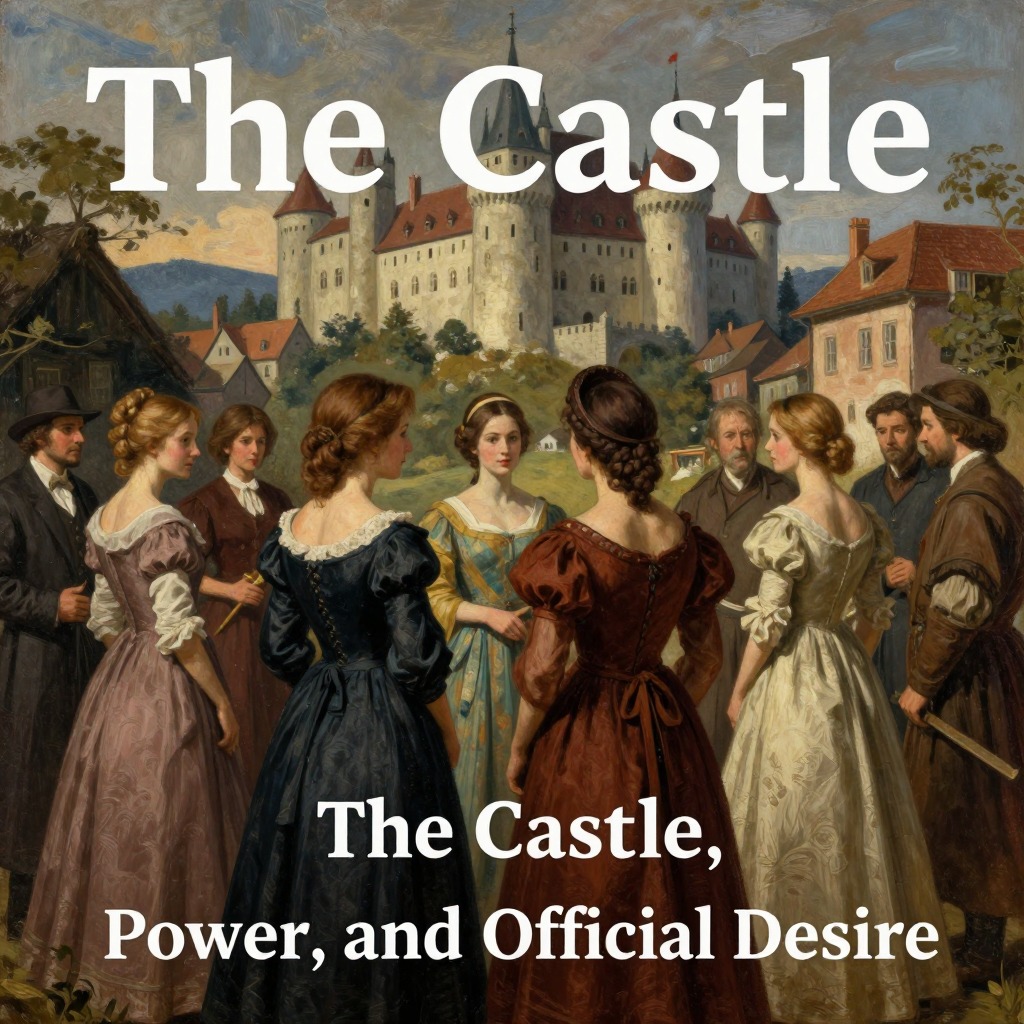
The CastleThe shawl is a recurring object in Franz Kafka's The Castle, most prominently as one of the landlady's three cherished mementos of Klamm, the castle official. It is a piece of fine fabric that the landlady keeps as a tangible link to her brief but transformative relationship with Klamm, and it serves as a symbol of her enduring fidelity and the painful memory of her lost status. The shawl also appears in other contexts, such as on Frieda's straw mattress and in the landlady's bedroom, where it becomes a focal point for K.'s observations and the landlady's confessions, deepening the novel's exploration of memory, desire, and the inscrutable power of the castle.
The Shawl as a Memento of Klamm
The shawl is first explicitly identified as a memento in the landlady's second conversation with K., when she shows him a photograph of a messenger and then reveals that the shawl, along with a nightcap, came from Klamm. She says, "This shawl came from Klamm too. And so did this nightcap. The photograph, the shawl, and the nightcap, they're my three mementoes of him." This declaration establishes the shawl as one of the few physical objects that connect the landlady to her past as Klamm's mistress, a role she held only three times before he stopped summoning her. The shawl is thus not merely a piece of clothing but a relic that embodies her lost intimacy with Klamm and her lifelong devotion to him, a devotion that she admits has been a source of both pride and suffering.
The landlady's attachment to the shawl is so profound that she claims she could not have endured her life in the village without these mementos. She tells K., "I have to confess that without those three things I could probably never have borne it here for so long, probably not even for a day." This confession underscores the shawl's role as a psychological anchor, providing the landlady with a sense of identity and purpose that transcends her mundane existence as an innkeeper. It also highlights the contrast between her and Frieda, who, despite being Klamm's lover for a longer period, has no memento of him, a difference that the landlady points out with a mixture of pride and pity.
The Shawl in the Landlady's Bedroom
The shawl appears again in a more intimate setting when K. visits the landlady in her bedroom. She asks K. to fetch it from the wardrobe, saying, "there's a shawl hanging at the front of the wardrobe. Please will you give it to me? I want to cover myself with it, I can't bear the weight of this eiderdown, I'm breathing with such difficulty." This request reveals the shawl's practical use as a lighter covering, but also its emotional significance, as the landlady wraps herself in it while she recounts her history with Klamm. The shawl becomes a protective layer that shields her from the physical discomfort of her illness and, symbolically, from the painful memories she is about to share.
As the landlady speaks, she plays with the fringe of the shawl, a gesture that betrays her deep emotional involvement with the past. The shawl, with its fine fabric, is a tangible reminder of Klamm's favor, and the landlady's handling of it suggests a lingering attachment that she cannot fully relinquish. This scene also reinforces the shawl's role as a marker of social distinction, as the landlady's possession of such a fine item sets her apart from the other villagers, who are largely excluded from the castle's world.
The Shawl as a Symbol of Fidelity and Loss
The shawl's symbolic weight is further emphasized in the landlady's comparison of her own fidelity to Klamm with Frieda's relationship with him. The landlady, who was with Klamm only three times, has kept the shawl as a testament to her enduring faithfulness, while Frieda, who was Klamm's lover for a longer period, has no such memento. This contrast highlights the different ways the two women have processed their relationships with Klamm: the landlady has clung to the past, while Frieda has moved on, albeit with a sense of loss. The shawl thus becomes a symbol of the landlady's inability to let go, her fidelity bordering on obsession, as she admits to having spent years discussing Klamm with her husband and wondering why he never summoned her again.
The shawl also serves as a reminder of the castle's inaccessibility and the fleeting nature of its favors. The landlady's possession of the shawl is a rare token of Klamm's attention, but it is also a source of pain, as it reminds her of what she has lost. In this sense, the shawl embodies the novel's central theme of the elusive, arbitrary power of the castle, which grants and withdraws its favors without explanation. The landlady's clinging to the shawl is a microcosm of the villagers' desperate attempts to hold onto any connection to the castle, however tenuous.
The Shawl in Other Contexts
Beyond its role as a memento, the shawl appears in other moments of the novel, often as a detail that underscores the characters' circumstances. When K. and Frieda move to the school, Frieda covers their straw mattress with a woollen shawl, which is described as "neatly covered with a woollen shawl of Frieda's in a way that did her credit." This use of the shawl as a makeshift bed covering highlights the poverty and precariousness of their new life, contrasting with the landlady's fine shawl from Klamm. It also suggests Frieda's resourcefulness and her attempt to create a semblance of domesticity in the bleak schoolhouse.
Additionally, the shawl is mentioned in the context of the Castle Inn, where the landlady's shawl is part of her attire, and in the description of the landlady's bedroom, where it hangs in the wardrobe. These appearances reinforce the shawl's association with the landlady and her past, making it a recurring motif that ties together different strands of the narrative. The shawl's presence in these varied contexts—as a memento, a practical item, and a symbol—demonstrates its significance as a multifaceted object that carries emotional, social, and thematic weight.
The Shawl's Narrative Significance
In the broader narrative, the shawl functions as a device that reveals character and advances the theme of memory and loss. Through the shawl, the landlady's past is brought to life, and her character is deepened, showing her as a woman shaped by a single, transformative relationship. The shawl also serves as a point of comparison between the landlady and Frieda, highlighting the different ways women navigate their relationships with powerful men. Moreover, the shawl's association with Klamm reinforces the castle's aura of mystery and inaccessibility, as even a simple piece of fabric becomes imbued with significance when it comes from the castle.
The shawl's role as a memento also connects to the novel's exploration of the nature of memory and the past. The landlady's clinging to the shawl suggests a desire to preserve a moment of happiness that has long since passed, a theme that resonates with K.'s own struggles to establish a place for himself in the village. The shawl, like the photograph and the nightcap, is a tangible link to a past that can never be recovered, and its presence serves as a poignant reminder of the transient nature of human connections and the enduring power of memory.