Telephone
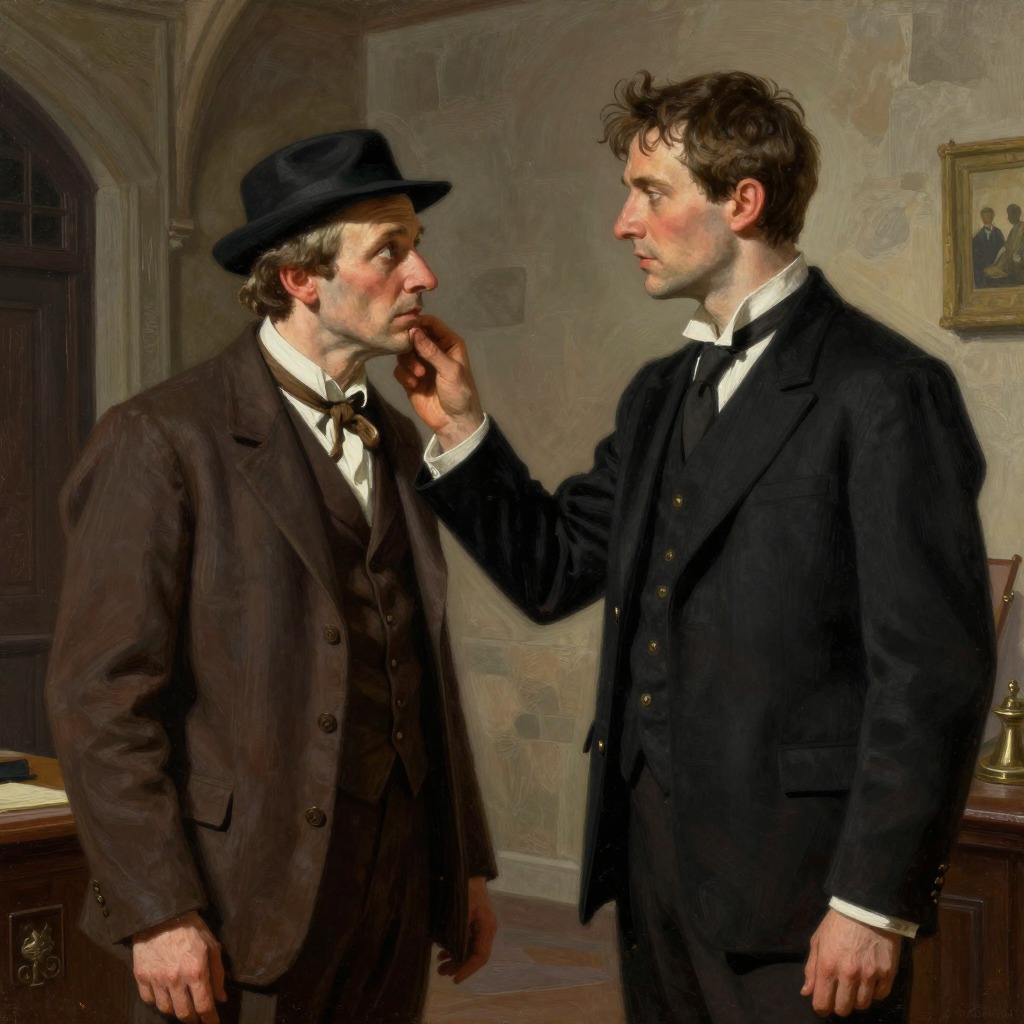
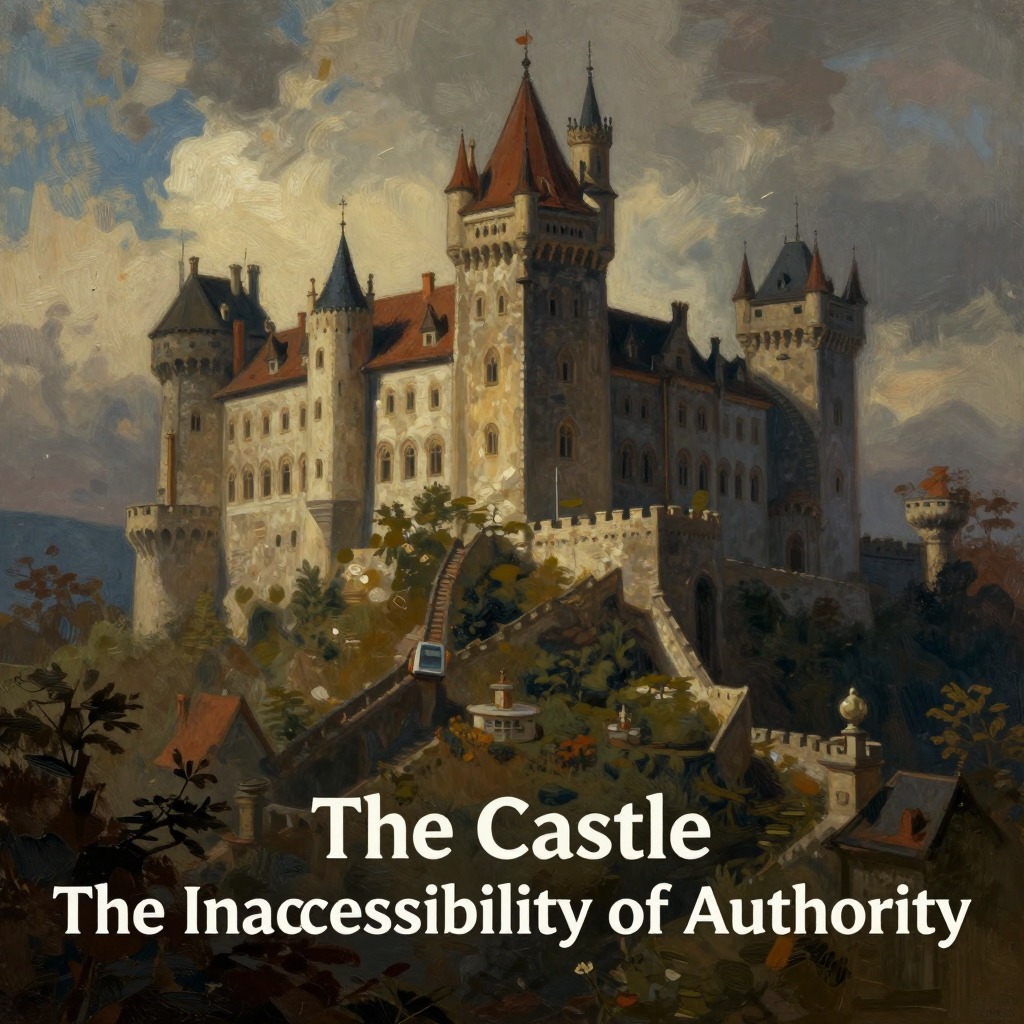
The CastleThe telephone in Franz Kafka's The Castle is a deceptively mundane object that becomes a central symbol of the village's fraught relationship with the castle. It first appears in the inn on the night of K.'s arrival, when Schwarzer uses it to verify K.'s claim to be a land surveyor. The telephone is installed almost directly above K.'s head, a detail that surprises him, yet he had expected such equipment. The call to Central Office yields a brief, dismissive answer—"There's no record of any land surveyor"—but a second call, seemingly about K., reverses the verdict, and Schwarzer is told, "A mistake, then? This is very awkward for me." This early episode establishes the telephone as a conduit for official decisions that are both arbitrary and reversible, and it introduces the humming sound that will later be theorized as the only trustworthy element of telephonic communication.
The Telephone's Role in K.'s First Encounters
K.'s own use of the telephone occurs the next day, when he attempts to secure permission to enter the castle. He calls the castle warden's office, and the response is a flat refusal: "Not tomorrow nor any other time either." Undeterred, K. telephones himself, and the receiver emits a strange humming, "as if the murmur of countless childish voices—not that it was really a murmur, it was more like the singing of voices, very very far away—as if that sound were forming, unlikely as that might be, into a single high, strong voice." This sound, which K. finds both mesmerizing and unsettling, is the first hint of the telephone's true nature. When he finally gets through to an official, he identifies himself as "the land surveyor's assistant" and gives a false name, "Josef," but the official corrects him, revealing that the assistants are called Artur and Jeremias. The conversation ends with K. learning that his boss can never come to the castle, and he hangs up, feeling that the telephone has only confirmed his powerlessness.
The Mayor's Theory of the Telephone
K.'s later conversation with the village mayor provides the most explicit explanation of the telephone's unreliability. The mayor tells K. that there is no real telephone connection to the castle; calls from the village ring in the lower departments, but the sound is usually turned off. "Now and then a tired official feels the need to amuse himself a little—especially in the evening or at night—and switches the sound back on, and then we get an answer, but an answer that is only a joke." The mayor compares the telephone to a musical box, and he insists that the only genuine information it conveys is the rushing, singing sound on the line. This theory retroactively explains K.'s earlier experiences: the telephone is not a means of communication but a source of illusion, and any answer it gives is either a joke or a mistake. The mayor's words also cast doubt on the very idea of official communication, suggesting that the castle's authority is maintained not through clear messages but through the ambiguity and inaccessibility of its instruments.
The Telephone as a Tool of the Castle
Despite its unreliability, the telephone remains a tool of the castle's power. It is used to summon K. to hearings, as when Barnabas brings a message from Erlanger, who is "very anxious to speak to him." The telephone also serves as a means of surveillance and control, as when the castle's officials use it to issue commands that K. cannot ignore. In the corridor of the Castle Inn, K. observes the distribution of files, a process that is conducted through doors that are almost closed, and he reflects on the impossibility of direct communication between the gentlemen. The telephone, like the files, is part of an official apparatus that operates above K.'s head, and his attempts to use it only expose his lowly status. The landlady, in her second conversation with K., reinforces this view by describing the telephone as a means of contact that is "only apparent," and she warns him that his ignorance of such matters is a sign of his outsider status.
The Telephone's Symbolic Significance
The telephone ultimately symbolizes the paradox of the castle's authority: it appears to offer a connection, but it only deepens the sense of isolation and confusion. K.'s initial hope that the telephone might provide a way to reach Klamm is dashed, and he comes to understand that the only real contact with the castle is through personal, unofficial channels, such as Barnabas's messages. The telephone's humming sound, which K. hears as a chorus of distant voices, becomes a metaphor for the castle's inscrutable presence—always audible, never comprehensible. In this way, the telephone is not merely a prop but a key to the novel's exploration of bureaucracy, power, and the impossibility of genuine communication in a world governed by opaque and arbitrary rules.