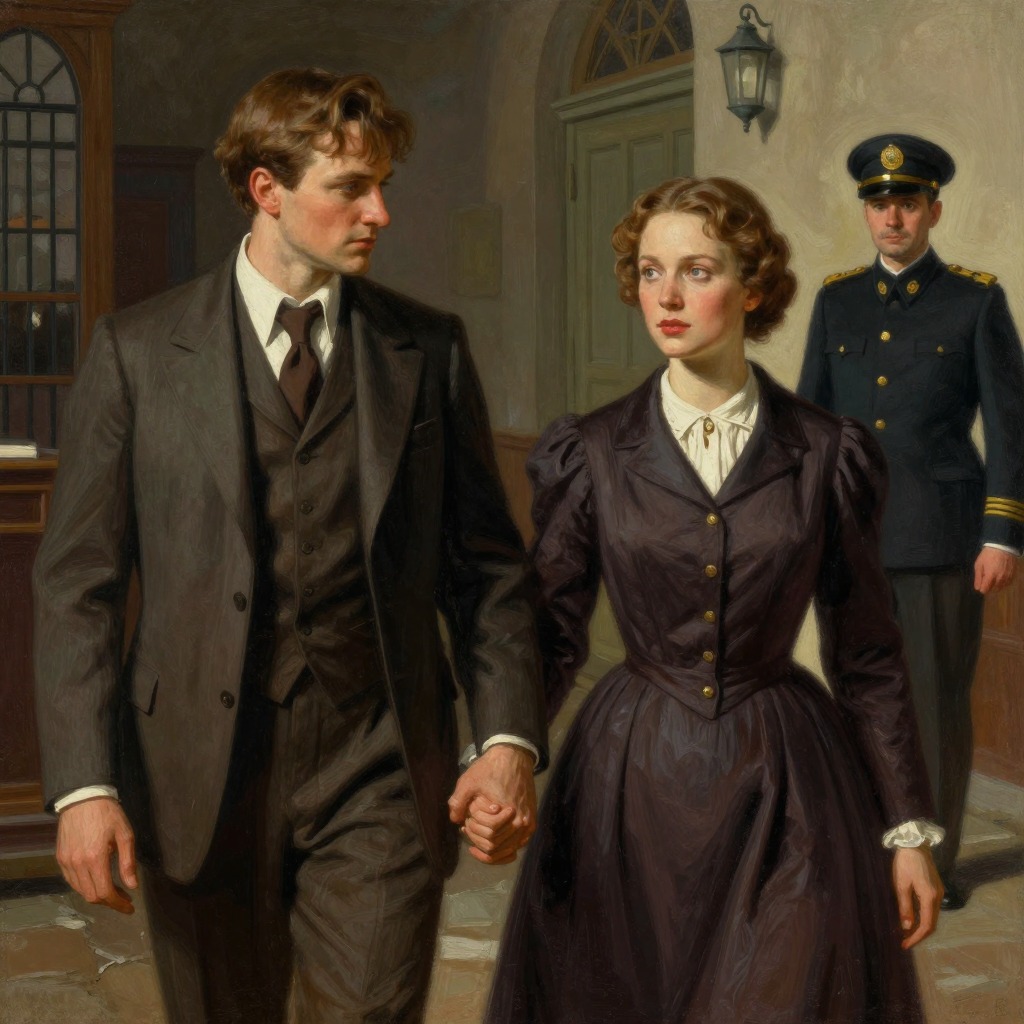
The bar
The CastleThe bar of the Castle Inn is the novel's pivotal interior space, a threshold where the village's social order and the castle's authority intersect. It is here that K. first learns of the castle's jurisdiction, meets Frieda, and becomes entangled in the village's intricate web of rules and hierarchies. The bar is not merely a place of refreshment but a microcosm of the village's relationship with the castle, a site of both welcome and exclusion, where the boundaries between public and private, official and personal, are constantly negotiated.
The Bar as a Threshold of Authority
From the moment of K.'s arrival, the bar is associated with the castle's authority. In the Bridge Inn's saloon bar, Schwarzer, the son of a deputy warden, confronts K. about his lack of a permit, declaring that "This village belongs to the castle, so anyone who stays or spends the night here is, so to speak, staying or spending the night at the castle." This early scene establishes the bar as a place where the castle's rules are enforced and where K.'s status as an outsider is immediately challenged. The bar is also where K. first telephones the castle, a conversation that reveals the castle's omniscience and its willingness to play with K.'s expectations. The telephone, installed almost above K.'s head, becomes a symbol of the castle's distant yet pervasive power, and the bar is the stage for this initial, disorienting contact.
The Castle Inn's bar, in particular, is a space of strict regulation. The landlord informs K. that the inn is "exclusively for the use of the gentlemen from the castle," and that K. is "not allowed anywhere but the bar." This restriction underscores the bar's role as a liminal space, a place where villagers and castle officials can coexist, but only under the castle's terms. The bar is also where K. first sees Klamm through a peephole, a moment that crystallizes the castle's inaccessibility. Klamm sits in the next room, visible but unreachable, and the bar becomes the vantage point from which K. can observe but never approach the object of his desire.
The Bar as a Site of Intimacy and Conflict
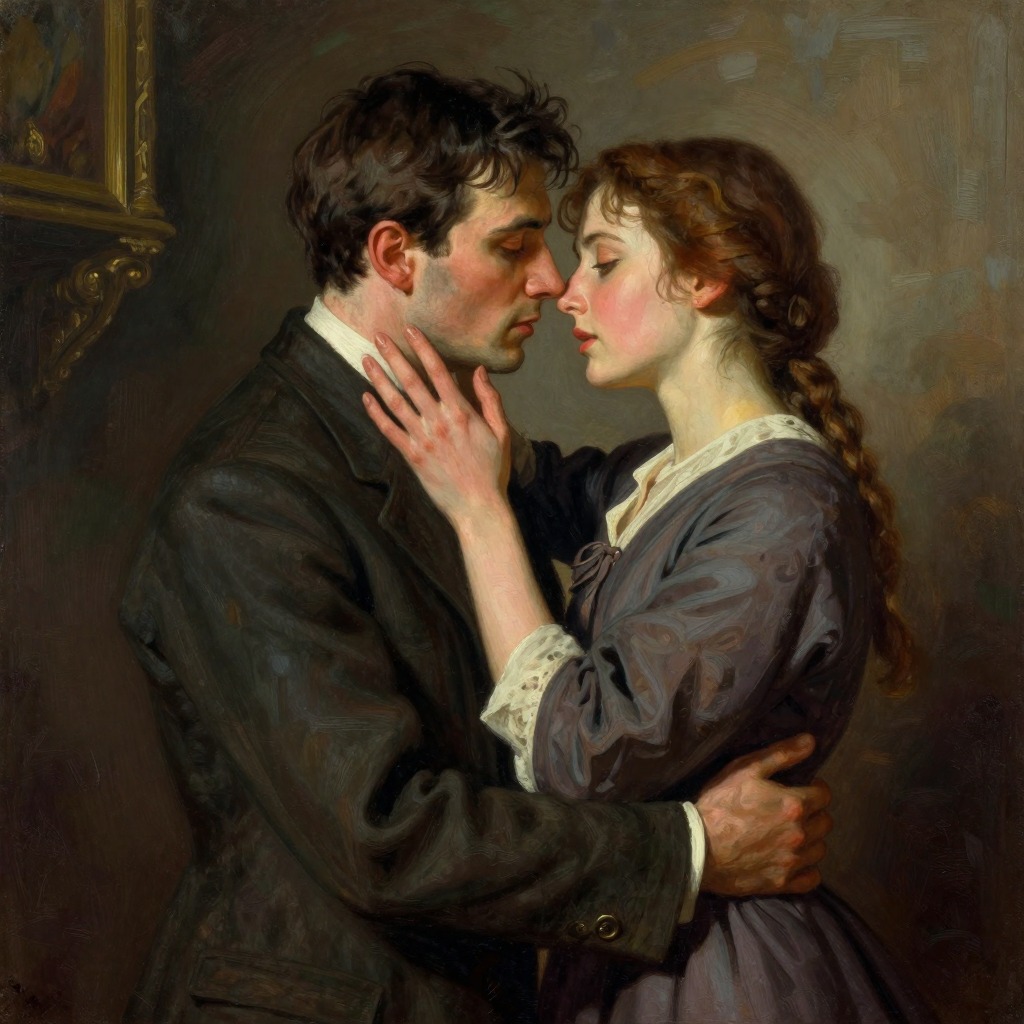
The bar is the setting for K.'s most intimate and consequential encounter: his meeting with Frieda. It is here that Frieda reveals herself as Klamm's lover, and here that K. and Frieda become lovers themselves, lying together under the bar counter while Klamm sleeps in the next room. This scene transforms the bar from a public space of regulation into a private space of transgression. The bar's physical layout—the counter, the peephole, the door to Klamm's room—becomes the stage for a clandestine affair that defies the castle's authority. Frieda's declaration, "I'm with the land surveyor!" is a direct challenge to Klamm, and the bar is the site of this rebellion.
The bar is also a place of conflict and confrontation. It is where Momus, Klamm's village secretary, attempts to question K., and where K. defiantly refuses to answer. The bar becomes a battleground for K.'s struggle against the castle's bureaucratic machinery. The landlady's presence in the bar, with her warnings and her attempts to control K., further complicates the space, making it a site of psychological as well as official maneuvering. The bar's atmosphere—the smell of stale beer, the presence of Klamm's servants, the constant coming and going of officials—creates a sense of unease and tension that mirrors K.'s own disorientation.
The Bar as a Space of Exclusion and Change
The bar is also a space of exclusion, where the village's social hierarchies are enforced. When K. first enters the Castle Inn's bar, he is surrounded by Klamm's servants, who are "small men, very like each other at first sight, with flat, bony, and yet round-cheeked faces." These servants, who are both part of the castle's apparatus and yet separate from it, embody the bar's ambiguous status. The bar is where Frieda, as barmaid, holds a position of relative power, but it is also where she is subject to the whims of the gentlemen and the pestering of the servants. The bar's social dynamics reflect the larger power structures of the village, where access to the castle is mediated by rank and connection.
The bar undergoes significant changes over the course of the novel. After Frieda leaves the Castle Inn to be with K., she is replaced by Pepi, a chambermaid who is ill-suited to the role. Pepi's tenure in the bar is marked by her desperate attempts to maintain her position, and her eventual downfall is a testament to the bar's unforgiving nature. The bar is also where K. learns of Frieda's return to her old job, a development that signals the failure of his relationship with her. The bar, which was once the site of K.'s most intimate connection, becomes a place of loss and disappointment.
The Bar as a Symbol of the Castle's Reach
The bar's significance extends beyond its physical function. It is a symbol of the castle's pervasive influence over the village. The bar is where official business is conducted, where hearings are held, and where the castle's representatives interact with the villagers. It is also a place where the castle's rules are both enforced and subverted. The bar's liminality—its position between the public and the private, the official and the personal—makes it a fitting metaphor for the novel's central themes of access, power, and exclusion. The bar is a space where K. can observe the castle's workings but never fully participate in them, a space that both welcomes and rejects him. In this sense, the bar is a microcosm of K.'s entire experience in the village: a place of hope and frustration, of intimacy and alienation, of progress and stagnation.