The stables
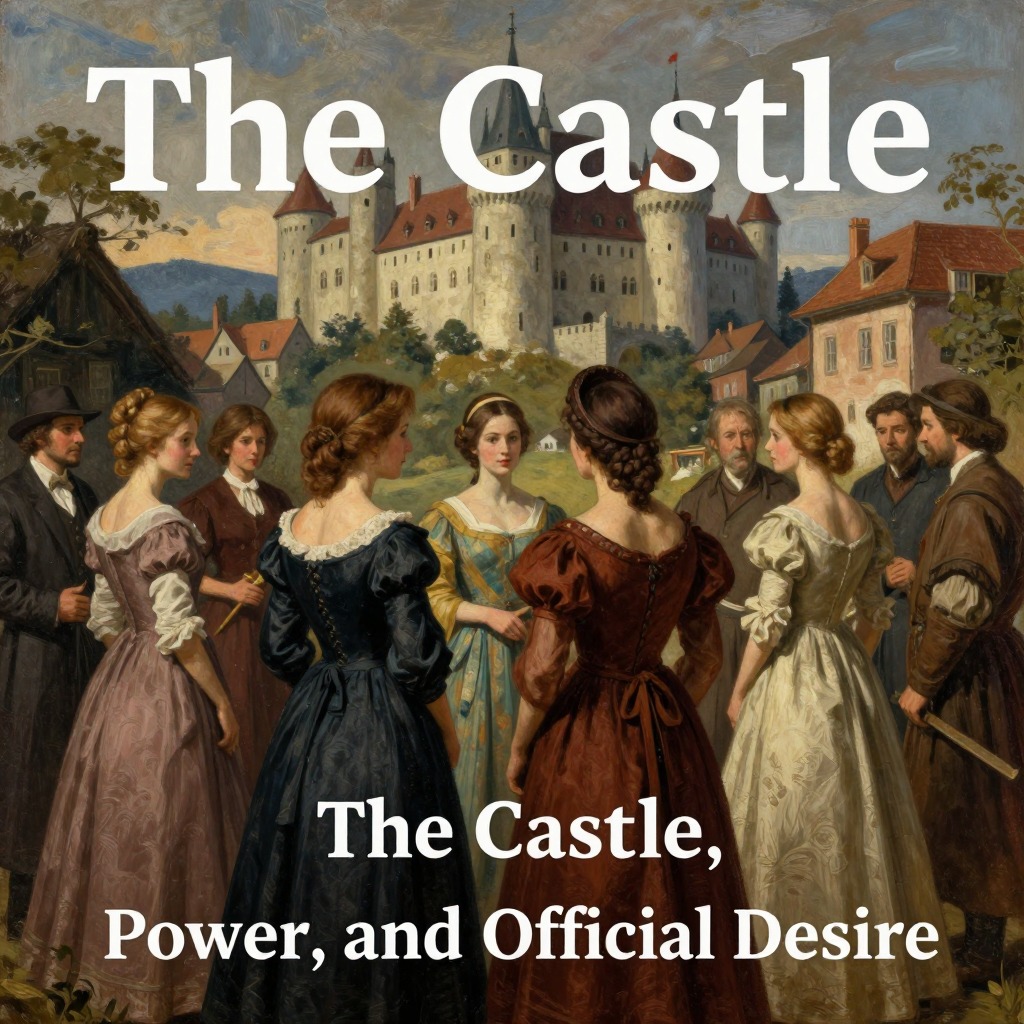
The CastleThe stables of the Castle Inn are the most degraded and revealing space in the village—a place where the castle's servants, freed from the discipline that governs them up on Castle Mount, give rein to their wildest appetites, and where a disgraced family's daughter, Olga, submits to their company in a desperate, years-long bid to win back her family's lost standing. More than any other location in the novel, the stables expose the brutal asymmetry between the village and the castle: the servants who are mere functionaries up above become petty tyrants down below, and the price of even the faintest hope of reconciliation is paid in nightly humiliation. It is here that the novel's central drama of exclusion and supplication is played out in its most naked form, far from the bureaucratic corridors where K. wages his own battle for recognition.
Setting and Character of the Stables
The stables belong to the Castle Inn, the establishment reserved exclusively for gentlemen from the castle, who eat and sometimes spend the night there when they have business in the village. The inn itself is outwardly similar to the Bridge Inn where K. first lodges, but it is distinguished by small signs of privilege: a handrail on the front steps, a handsome lantern over the door, and a banner in the count's colors fluttering overhead. The stables lie across the yard from the main building, behind a large gate that opens onto the side wing where the carriages and horses are kept. When Frieda, then the barmaid, drives Klamm's servants out of the bar with a whip, she chases them across the yard to these stables, which are their proper quarters—the place where, as she puts it, they belong. The space is thus defined from the outset as the servants' domain, a holding pen for the castle's unruly retainers when they descend into the village.
The servants themselves are a transformed breed when they reach the stables. In the castle they are quiet and dignified, living by its rules, but in the village they become "a wild, unruly set, ruled not by the castle regulations but by their own insatiable desires." Their shameless conduct knows no bounds, and the village is fortunate that they may leave the Castle Inn only when told to. The stables are where this transformation reaches its fullest expression—a place of darkness, noise, and license, where the servants boast, exaggerate, and invent stories about the castle, and where a woman who enters their company is treated as a toy to be broken.
Olga's Vigil and the Servants' Stories
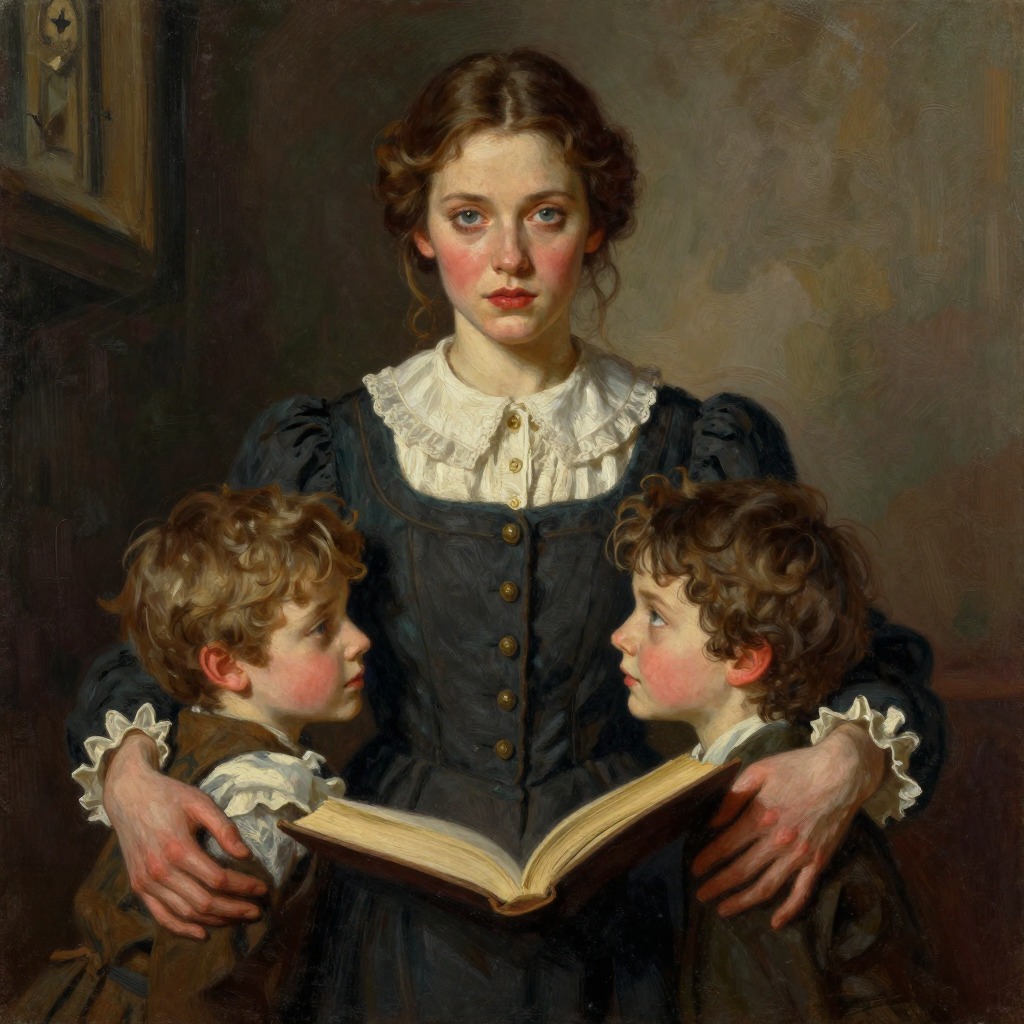
Olga, the sister of Barnabas, begins spending the night with the servants in the stables at least twice a week, and she continues this for more than two years. Her purpose is to find the messenger whom her sister Amalia insulted by tearing up Sortini's letter and throwing the pieces in his face—the act that doomed their family. She hopes that by making amends with the messenger, she can lift at least part of the blame from her family, even if only on the surface. But the search fails: the messenger is said to be still in Sortini's service, and when Sortini withdraws to more remote offices, the messenger goes with him, and the servants claim to have seen him no more than Olga has. Despite this failure, Olga's nights in the stables give her a certain connection with the castle, though she is careful to acknowledge its limits. She comes to know many of the servants—the servants of almost all the gentlemen who have visited the village over the years—and she believes that if she were ever to get into the castle, she would not feel a stranger there. Yet she knows that the servants in the castle are quite different and probably would not deign to recognize anyone they consorted with in the village, even if they had sworn a hundred times in the stable that they would be glad to see her again.
The servants' stories, which Olga gathers in the darkness of the stable and passes on to Barnabas, are a mixture of truth and lies, boasting and invention. She knows she cannot rely on them, but she wheedles every word out of the servants, who are reluctant to talk about the castle and change the subject whenever she presses them. When they do let rip, they talk nonsense and outdo each other in exaggerations, so that at best there are only "some few indications of the truth" amid the shouting. Yet Olga passes it all on to Barnabas, who, unable to distinguish truth from lies and almost dying of longing because of his family's situation, drinks it all in and is eager for more. It is from these stories that Olga conceives her plan to have Barnabas enter the castle's service as a replacement for the insulted messenger—a plan that leads to his two years of monotonous, oppressive service in the castle's offices, where he stands for hours or days waiting for Klamm's glance to fall on him.
The Stables as a Site of Moral Compromise
Olga's presence in the stables is a deliberate moral compromise, one she defends even as she acknowledges its cost. She is not sorry for what she did, she tells K., because it established a connection with the castle, however tenuous. She hopes that someone up there is observing her and what she does, and that whoever is watching may judge her more leniently than others do, recognizing that she is fighting for her family and continuing her father's efforts, if only in a pathetic way. She even hopes to be forgiven for taking money from the servants and using it for her family. But the reality is harsher: she is "only a toy to the servants at the Castle Inn, one that they furiously tried to break," and in two years she never speaks a single word with any of them in friendship—everything is underhand or lies or false. The stables thus become the site of her degradation, a place where she sacrifices her dignity for the faintest hope of redemption, and where the castle's power is felt not through official decrees but through the casual cruelty of its servants.
The stables also serve as a contrast to the official spaces of the castle that K. encounters. Where the corridors of the Castle Inn are clean, whitewashed, and neatly delineated, the stables are dark and disorderly, the realm of the servants' insatiable desires. Where the officials conduct their nocturnal hearings with careful formality, the servants in the stables shout and boast without restraint. The stables thus represent the hidden underside of the castle's authority—the raw, unregulated power that the officials keep in check up above but that erupts in the village, and the place where those who are excluded from the castle's favor must go to seek even the illusion of connection.