And they lived happily today
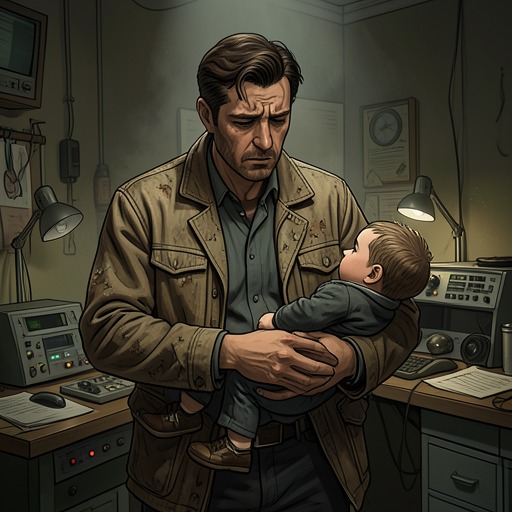
The ChangelingAnd they lived happily today is the novel’s present-tense revision of the conventional fairy-tale ending, spoken between Apollo Kagwa and Emma Valentine as they stand with Brian Kagwa beside an approaching Q11 bus. Its decisive significance lies in the final word: instead of promising permanent happiness, the phrase names a day they can try to live through together. The exchange closes on a small, practical movement toward care, not on proof that hardship has ended.
Form and wording
The phrase emerges from the familiar formula And they lived happily ever after. Apollo whispers that version as the bus approaches; Emma answers by changing its temporal promise: And they lived happily today. The alteration is brief but consequential. “Ever after” projects happiness across an indefinite future, while “today” confines the claim to a span that can be faced and inhabited now. Emma does not reject the fairy-tale cadence; she keeps its language of happiness and changes the scale of what it can honestly promise.
The exchange therefore makes its ending conditional without making it empty. A single day cannot guarantee an untroubled life, and the passage offers no such guarantee. But today is not merely a diminished substitute for forever: it gives the characters a real, immediate measure of what they can hold. The wording leaves the future open while allowing the present moment to count as happiness.
The bus-stop scene
That distinction is grounded in the circumstances of the closing scene. Brian Kagwa and Emma have been exposed to the elements for months, and they need to board the incoming Q11 and reach professional care. Apollo initially imagines speeches to explain why they cannot pay the fare, then remembers how he arrived at the bus stop the previous night. The MetroCard is still in his pocket; he takes it out and shows it to Emma, calling it “A gift from the NYPD.”
The bus’s arrival turns this practical problem into a possible passage to safety. Its interior lights are blazing, and the narrator presents it as the brightest thing in the world, almost a chariot pulling the sun across the sky. That image gives the vehicle a fairy-tale radiance, but its function remains concrete: it is the Q11 they need to board to reach care. The ordinary means of transport and the heightened image work together. The scene does not replace material need with enchantment; it makes the prospect of getting help feel momentous.
The shared answer
Apollo speaks the traditional ending quietly, and Emma leans into him before offering her revision. The gesture and the reply place the phrase within their relationship: this is not a narrator’s declaration that all difficulties have been resolved, but a shared response to the immediate situation. Apollo then asks whether that is enough, looking at Brian Kagwa and Emma. His question connects the proposed happiness to the people beside him and tests whether the limited promise can sustain them.
Emma answers, “That’s everything, my love.” Her response affirms the present-day formulation rather than extending it into an assurance about the rest of their lives. The exchange moves from Apollo’s invocation of an inherited ending, through Emma’s correction, to a mutual recognition of what matters now. The future remains unspecified; the next stated action is to board the bus.
Narrative significance
As the final exchange, the phrase gives the fairy-tale pattern a deliberately modest conclusion. The bus resembles a sunlit chariot, but the characters’ immediate hope depends on a MetroCard, transportation, and professional care. Against that material urgency, “today” makes happiness neither a magical resolution nor a claim that suffering has vanished. It is a measure suited to the moment they have reached.
The phrase’s force comes from holding two registers together: the recognizable language of “happily ever after” and the limited, urgent reality of this particular day. Emma’s revision preserves the possibility of happiness while refusing to make the ending answer for an unknown future. The book closes its central exchange not with certainty about forever, but with the characters together, looking toward a way to reach help and affirming that this day can be enough.