Apollo Kagwa and Brian West
The ChangelingApollo Kagwa and Brian West are father and son, but their relationship reaches Apollo through a belated and painful contradiction: Brian loved him and tried to take his life. Lillian’s account of the family crisis overturns Apollo’s earlier reading of Brian’s keepsakes, especially the storybook he had wanted to share. The book remains evidence of Brian’s longing for his son; it cannot make that longing harmless or undo the danger he created.
Identity and the family crisis
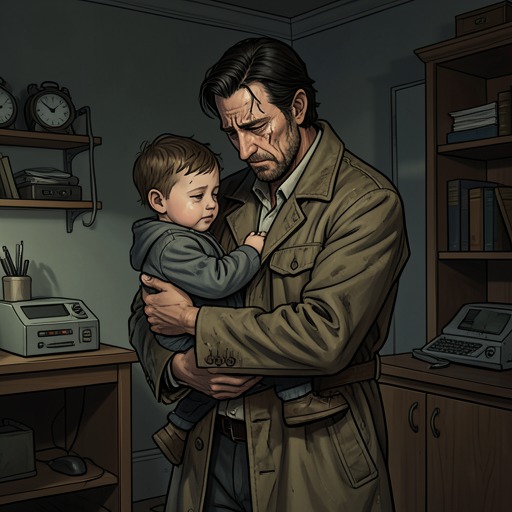
Brian West is Apollo’s father. His relationship with Apollo is disclosed most fully through Lillian’s recollection of the day she returned from work intending to end their marriage and take their child with her. She had brought McDonald’s, including French fries Apollo liked. At home, she found the front door unlocked and heard the bath running. Her first fear was that Apollo might have got into the bath alone; when she entered, she discovered Brian had undressed him and placed him in the tub. Lillian later told Apollo that the water was hot and that Brian was holding him beneath it while he cried and struggled. This account makes Brian’s threat concrete without making it the whole of their history.
Lillian said Brian intended to kill her as well and then himself. She connected his actions to the imminent divorce: she had served him with papers and planned to leave with Apollo. Brian had wanted a family intensely, she explained, but had formed his expectations as a child and failed to adapt them to adult life. His own parents had treated him badly, and he had been imagining since the age of twelve what family life would be. The account gives a cause for his desperation as Lillian understood it, not an excuse for the violence or a claim that his intentions were benign.
The storybook and Brian’s love
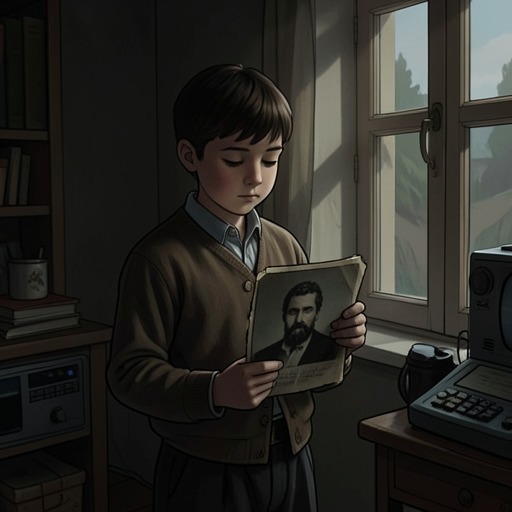
Before Lillian’s disclosure, Apollo had interpreted the book and other objects in the box as signs of his father’s love. He raises them as evidence that seems difficult to reconcile with her account. Lillian explains that Brian had feared losing his son and that the book’s story of a child rescued by Ida spoke to his own sense of childhood abandonment. Brian had not had an Ida come to save him; he felt, in the terms of the story, as if goblins had taken him and no one had come to bring him back. He wanted to read the book to Apollo and imagined he would come for his son.
That explanation preserves the tenderness Apollo had recognized in the keepsake while changing its meaning. The book was not proof that Brian was safe, nor does the revelation reduce it to a lie. It carried Brian’s fear of separation and his wish to become the rescuer he had never had. The same father who wanted to reclaim Apollo from imagined danger became a real danger to him. Lillian insists that love and the attempt on Apollo’s life are both true; the relationship’s defining fact is their coexistence, not a resolution that makes either one disappear.
Apollo’s belated knowledge
Apollo receives this history during a call with Lillian, while he is at the Knudsen house. The disclosure comes as he is confronting another dead man he has killed, and he braces himself against the door rather than continue pacing toward the kitchen. The setting does not change what happened between Brian and Apollo, but it places the revelation amid Apollo’s own encounter with violence. Lillian pauses before she can explain what she found, and Apollo asks to hear the truth even though he is not sure he is ready for it. When she tells him, he slides down to the floor and asks why.
His response shows how thoroughly the account unsettles his inherited understanding of his father. Apollo had held on to the book and the contents of the box as a way of making sense of Brian; now those objects remain meaningful, but cannot settle the question of who Brian was. Lillian also acknowledges that a person’s account of the past can become more flattering with time and distance. She worries that by telling Apollo nothing about his father, she may have been doing something similar for both of them. Her decision to tell him everything gives Apollo grounds to form his own judgment rather than inherit a simplified version of either parent.
The relationship’s continuing echo
Later, as Apollo and Emma Valentine descend into the earthen amphitheater, the memory returns to him as a memory rather than a dream. He thinks of Kinder Garten’s conviction that he had cared for his family, then considers whether Brian might likewise have understood his own actions as love. Apollo does not treat that imagined justification as an answer. Instead, the memory turns his attention to the distance between a person’s self-image and the harm that person can do while trying to preserve it.
The comparison also implicates Apollo. He recalls becoming impatient and cruel with Emma and asks himself how he justified that behavior while trying to be a father unlike the one he had. Brian’s history therefore shapes Apollo’s understanding not only of his childhood but of his own conduct as a parent. The relationship leaves him with no clean inheritance: the storybook’s longing to save a child persists beside the memory of a father who endangered his son. What Apollo can carry forward is the recognition that love does not cancel harm, and that believing oneself a good father cannot by itself make one’s actions protective.