Apollo Kagwa and William Wheeler’s relationship
The ChangelingApollo Kagwa and William Wheeler’s relationship turns a rare-book transaction into an alliance built on unforced conversation and practical care. Wheeler first approaches Apollo as a buyer, but his unselfconscious manner and later decision to help find Emma make him something more: a near-stranger who chooses to act when Apollo’s own search has stalled.
A Transaction Opens into Conversation
Wheeler has paid an enormous sum for a book from Apollo, yet their exchange does not remain confined to price and provenance. At a Dunkin’ Donuts, Wheeler asks Apollo to explain where the book came from and how the discovery unfolded. Apollo tells him about the house in Riverdale. Wheeler responds with wonder at the persistence it took to continue after examining six boxes, treating Apollo’s work not merely as a successful purchase but as a story worth hearing.
The conversation has already acquired a modest intimacy: Wheeler says that having a drink together is a sign of trust. Apollo, meanwhile, watches the other men in the restaurant as Wheeler speaks loudly and without much self-consciousness. Worried that Wheeler might look like an easy target, Apollo makes a point of letting the men see him watching them. The gesture is protective but quiet. Their trust is not declared through a dramatic confession; it is beginning to show in how Apollo takes responsibility for Wheeler’s safety.
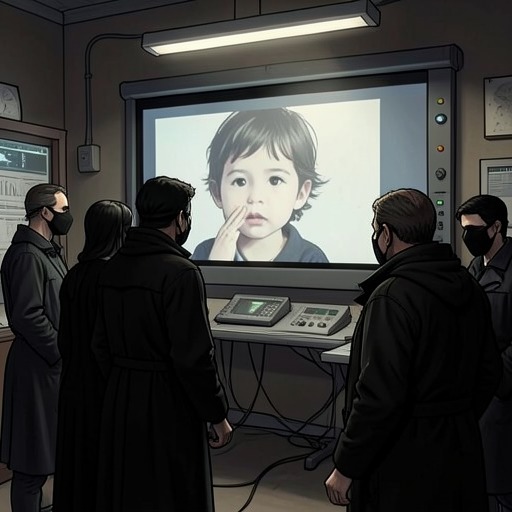
Wheeler’s candor also makes room for awkwardness. When he says he has two daughters, he reaches for his phone intending to show Apollo photographs of them. Instead, he opens a newly made video of a picture of his baby daughter in a park with her grandparents. The moment exposes how little Wheeler understands about Apollo’s losses and how easily ordinary parental pride can collide with another person’s grief. Apollo realizes that Wheeler may not know his public story, including what happened to his child. That ignorance does not alienate him. Apollo likes that Wheeler is not approaching him as a tragedy or a headline: he wants to buy a rare book, hear how it was found, and share something of his own life.
Concern Becomes a Decision to Help
The relationship changes after Wheeler learns more about Apollo’s circumstances. At a later meeting, Apollo is surprised to find Wheeler waiting by a large fountain; he had expected Kim, Patrice, or Lillian, not this recent acquaintance. The surprise registers the distance between them, but Wheeler has come because he wants to help Apollo find Emma. He explains that he did not know the relevant facts when they had spoken earlier, and that his decision followed meeting and talking with Apollo.
Wheeler’s motive is specific rather than abstract. Apollo attends group meetings to deal with what happened to him, and a woman there has confronted him with disturbing claims. Wheeler considers it wrong to leave Apollo to manage that situation alone. He spreads his hands to show that he carries neither weapons nor malice, then explains that he thought he could do what he could to help. His manner is tentative, but the offer marks a substantial shift: a buyer who had listened to Apollo’s account of a book now responds to the painful circumstances beyond the sale.
Apollo points out that the police have been unable to find Emma. Wheeler does not dismiss that failure; he argues that searching need no longer depend on the police alone. A hundred people using a hundred computers can cover considerable ground, he says, especially if they care enough to keep looking day and night. Wheeler has told trusted friends about Apollo’s situation and enlisted them in the search. His response turns concern into a collective effort, extending a relationship between two men into a network of people willing to help.
Finding Emma and Crossing the Water
Wheeler’s search yields a startlingly precise answer: Emma is on an island in the East River. Apollo is so unprepared for the news, or for her being so close, that he suddenly finds himself sitting on the sidewalk. Wheeler helps him back up. The discovery does not erase the distance or danger represented by Emma’s absence, but it replaces an open-ended search with a place Apollo can try to reach. Apollo immediately asks how to get there.
Wheeler accompanies him toward that next step, despite having little experience operating a boat. On board, he pauses a boating-instruction video on an iPad and admits that he has spent the day teaching himself to drive. The detail makes his help tangible: he has not simply supplied information or sent Apollo onward, but has taken on the unfamiliar task required to carry them toward the island. He guides the sloop out through Hammond Creek, past SUNY Maritime College, around the Bronx, and under the Throgs Neck Bridge to enter the East River. Apollo thanks him quietly; Wheeler waves the thanks away, sheepish but also proud.
At the island, Apollo climbs down from the boat and wades through cold water. He tells Wheeler that he need not come farther and that he has already done more for Apollo than anyone. Wheeler answers that he is more afraid of waiting alone on the boat. The exchange neither turns Wheeler into a fearless rescuer nor makes Apollo’s gratitude ornamental. Wheeler admits his fear and comes anyway; Apollo acknowledges the scale of what Wheeler has done, then accepts his company. Apollo looks at the red string on his left hand before they set off together.
The Shape and Significance of Their Bond
The relationship develops through a contrast between what Wheeler does not know and what he chooses to do once he learns enough. At first, he mistakes Apollo’s situation and speaks with the unaffected ease of someone unaware of its painful context. Apollo’s recognition that Wheeler does not know his story becomes a point of connection rather than a demand that Wheeler perform sympathy. Wheeler’s willingness to listen to the book story, and later his decision to mobilize friends, offers Apollo attention that is not organized around the public version of his suffering.
Their bond is therefore made legible through acts of attention and labor: Apollo watches over Wheeler in the restaurant; Wheeler listens to Apollo’s account, recruits people he trusts, teaches himself to operate a boat, and accompanies Apollo toward Emma. The progression does not establish that every danger has passed or define what their relationship will become afterward. It shows something narrower and more immediate: a commercial acquaintance can become a trusted companion when listening is followed by concrete help, and when both men allow the other to be imperfect, frightened, or grieving without withdrawing.