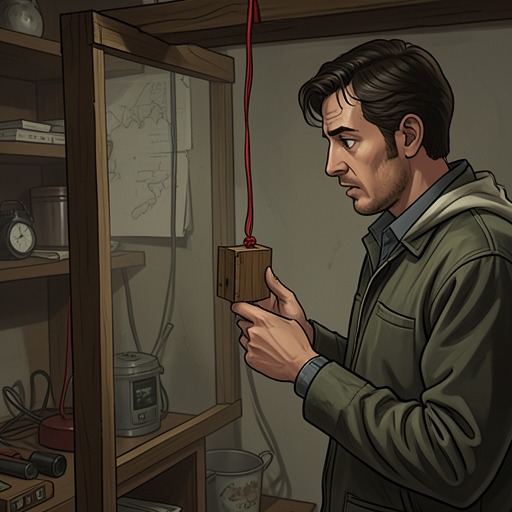
Apollo cuts Emma’s wish string
The ChangelingApollo cuts Emma’s wish string during her return from Brazil, transforming an object tied to a private ritual into a decisive gesture in their relationship. The scene brings together Emma’s belief that the string must fall away naturally, Apollo’s impulse to take action on her behalf, and the unresolved choice of how she will understand that intervention.
Background and the String’s Meaning
Emma explains that after arriving in Salvador she stayed with a family in Itapuã. Nearby was Lagoa do Abaete, a lagoon she associated with a story Apollo had once told her about an old married couple who were Satanists. There she came to know a washerwoman as her Portuguese improved. Emma’s host family warned her away, calling the woman a witch, but Emma was drawn to her rather than frightened. The woman reminded her of the mother Emma had lost: tough, funny, and unconcerned with other people’s opinions.
Emma began slipping out of the house to sit by the lagoon while the washerwoman did her laundry. Before Emma left for Manaus, the woman told her to make three wishes for her life and tied a red string around her wrist. The string was not simply a souvenir of travel: its continued presence marked Emma’s commitment to the rule she had been given. It could not be cut; the wishes would come true only when the string came apart and fell off by itself.
By the time Emma tells Apollo about it, she has worn it for more than six months. She turns her hand back and forth to examine the fabric, which has become stiff and dirty. She admits that she had first treated the ritual as a bit of fun, but the string’s persistence has made her want the wishes to come true. Her account holds playful mysticism and genuine attachment together: she knows how ratty it looks, yet does not want to remove it by breaking the rule.
The Cutting
Apollo has been watching Emma since she returned after a year away. At the meal, the string makes him stiffen; he wonders whether it signals an attachment formed in Brazil and whether her smaller amount of luggage means she plans to return there. As Emma eats, he pushes his own egg-and-cheese sandwich around without appetite. Her explanation gives the object a history, but it does not quiet the anxiety that its presence has stirred in him.
After Emma describes the ritual, Apollo takes her hand and pulls it toward him. He silently repeats the thought that he is the god Apollo, then picks up the plastic knife from the table and cuts the string in one motion. It falls onto the plastic tabletop. The action is deliberately at odds with the washerwoman’s instruction: Apollo does not wait for the string to wear away, and he does not ask Emma to release it. He uses an ordinary table knife to end a practice Emma has preserved through months of wear.
Emma shivers. Apollo continues holding her hand and promises that, with him, all three of her wishes will come true. The promise answers the ritual on its own terms, but the means are different. The washerwoman’s rule depended on waiting for the string to fall naturally; Apollo substitutes his own intervention and offers himself as the assurance that the wishes will be fulfilled.
Choice and Significance
The scene does not establish whether Emma’s wishes come true, or whether Apollo’s promise can fulfill them. Its immediate consequence is instead a choice about how to read his act. Emma can take the cutting as proof that Apollo is arrogant, or see it as boldness and worthiness. The narration leaves that judgment with her: Apollo has made his move, but the meaning of the gesture depends on her response.
The red string concentrates the scene’s tension between belief and agency. Emma’s account gives the object a specific origin, a prohibition, and a hoped-for future; Apollo’s knife abruptly changes its condition without resolving those hopes. His promise makes the cut intimate, but does not erase its presumption. The moment therefore turns on more than whether magic is real: it tests whether an act presented as devotion can also override another person’s chosen terms. Emma’s decision remains open at the scene’s end.