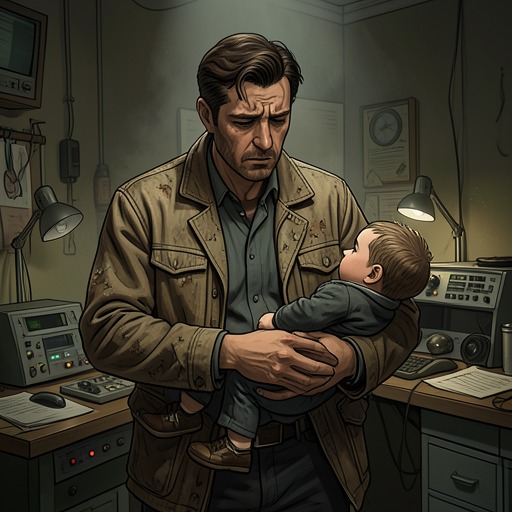
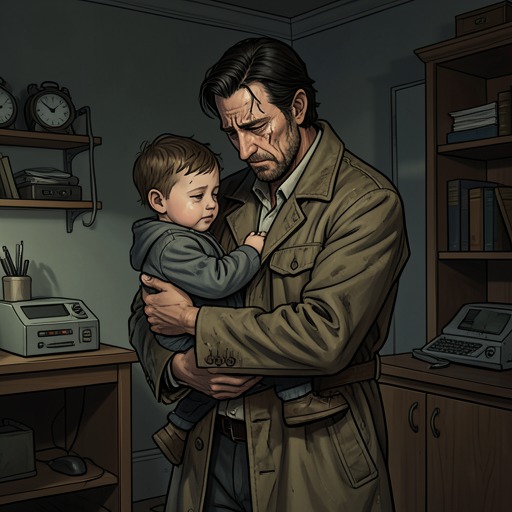
Apollo’s trauma from his father’s absence
The ChangelingApollo’s trauma from his father’s absence begins in childhood, but it does not become fully legible to him until Lillian Kagwa tells him that Brian West tried to kill him. The revelation overturns Apollo’s long pursuit of an absent father without resolving it into a simple story of rejection: Brian had loved and feared losing his son, yet had also tried to take his life. Apollo’s eventual encounter with the troll’s stone head gives that unresolved wound a different ending. He understands that what he can bury is not his father, but the fatherlessness that has haunted him.
Childhood, Silence, and the Delayed Truth
Apollo’s childhood understanding is marked by something missing: an explanation for why his father did not come back for him. When Apollo asks Lillian why she pretended his father had not returned, she answers that he was very young and that she prayed he would forget. The conversation also connects the concealed history to Apollo’s nightmares. He says they began; Lillian confirms that she had treated them as if they were only nightmares. Her response suggests that silence was not a resolution of the past but a way of keeping its meaning out of reach, even as its effects continued to surface.
The truth arrives later through a phone conversation, and its force is sharpened by the contrast between Apollo’s understanding and Lillian’s knowledge. She tells him that Brian tried to kill him and intended to kill her, then himself, after she decided to leave and take Apollo with her. She explains that Brian’s own childhood had been terrible and that he had imagined the family he wanted from the age of twelve. In her account, he could not adapt his childhood expectations to adult life. This explanation supplies context for his actions, but does not excuse them; the disclosure makes the history more complicated, not less painful.
Brian West: Love and Violence
Apollo initially associates his father with the book left in the box and with the prospect of a father who would come for his child. Lillian tells him that Brian lived in terror of losing him and that this fear was bound up with the story of Ida. Brian had felt, as a child, that goblins had stolen him and that nobody had come to bring him back. He wanted to read the book to Apollo, and, in Lillian’s account, he had always intended to come for him. The book therefore carries two incompatible meanings: it is evidence of Brian’s love and of his attempt to imagine rescue, but it cannot undo what he did.
Lillian states the contradiction plainly: Brian loved Apollo with all his heart and tried to take his life. Apollo’s response is not to choose one truth over the other. He sits against the den door and presses a hand over his eyes, then remarks on how astonishing it is that anyone survives childhood. The remark widens the disclosure beyond a verdict on one father. Childhood emerges as a vulnerable period whose consequences may persist into adult life, even when the people who caused harm also had histories of their own.
The Mother Who Stayed
The revelation changes Apollo’s understanding not only of Brian’s absence but also of Lillian’s presence. Lillian tells him that, whatever his father became, Apollo is not him, and that she is proud of the man her son has become. Apollo answers that he spent his life chasing his father but that Lillian was always there. She replies that she was where she wanted to be. Their exchange gives Apollo a form of recognition that the pursuit of Brian could not provide: the person who remained had been present by choice.
That recognition does not erase Lillian’s earlier silence. She had prayed that Apollo would forget and had pretended his nightmares were only nightmares; now she insists that he has the right to think what he likes about both parents, but that knowing the truth is necessary to understand anything. Her position makes disclosure an act of witness rather than a demand for forgiveness. Apollo can acknowledge her presence while still reckoning with the years in which the truth was withheld.
Fatherlessness and the Final Burial
The wound returns in a transformed image after the troll is destroyed by daylight. Apollo approaches the stones and finds the one that had been its head. He touches the depressions where its blind eyes had been and rests his forehead against the stone. The gesture is directed toward the monster, but Apollo understands its meaning through his own childhood: he feels that he is finally burying what has haunted him since he was a child.
The distinction he makes is decisive. The funeral is not for Brian West; it is for Apollo’s fatherlessness. The ending does not claim that the past has been undone or that the contradictions in Brian’s character have been settled. Instead, the earlier revelation and this final gesture frame trauma as something that returns before it can be named: first through nightmares and a long pursuit, then through the truth Lillian tells, and finally through an act of mourning that separates the absent father from the lasting absence he left behind. Apollo’s encounter with the stone offers not a recovered childhood, but a way to recognize what he has been carrying and to let the monster rest.