Brian West
The ChangelingBrian West is Apollo Kagwa’s father and Lillian Kagwa’s husband, remembered first as a devoted-seeming parent who vanishes from his family and later as the man who tried to kill his son. The revelation of his past makes him neither a simple villain nor a recovered ideal father: he longed to create the family he had missed, but his childhood expectations of family hardened into an inability to adapt, and ultimately into lethal violence.
Identity and Background
Brian grew up as the only child of two heavy-drinking parents. When he was twelve, he earned money selling candy at the Elmwood Theatre and proudly showed his wages to his father, Frank. Rather than praise him, Frank took the money and spent it on beer. The episode gives Brian an early lesson in how a parent could betray a child’s trust, and later becomes part of the history Lillian offers to explain his desperate longing for a family. The narrative does not present his childhood as an excuse for what he does; it shows the hurt he carried without making that hurt erase his responsibility.
Brian met Lillian during the week of the 1968 New York City garbage strike, when both were twenty-five. They did not go on a date until late 1976, by which time they were thirty-three. In Lillian’s later assessment, he stood out among the men she had known because he worked hard, did not drink, saved money, and paid his debts. Those practical habits made him seem dependable, in sharp contrast with the household in which he had grown up.
Courtship and the Family He Imagined
On their first date, Brian spoke openly about wanting children and the chance to be a husband and father. He had already imagined Lillian as a wonderful mother. When she gently reminded him that this was only their first date, he laughed rather than taking offense; that response was when Lillian truly fell for him. His eagerness could be charming, but it also pointed to how completely he had invested in an imagined future before they had begun building it together.
Brian took Lillian to see Rocky in a Times Square theater. The film was not her choice at first, but she came to recognize herself in its portrait of a fierce dreamer. They had each told the other about painful histories: Brian about his father taking his earnings, and Lillian about Arthur being shot. In the darkness, holding hands, they became a pair of survivors and began, in the novel’s framing, to imagine parenthood together. Their son was born in September 1977. Brian and Lillian named him Apollo, rather than Rocky, because Brian thought Rocky would be an odd name for a biracial child.
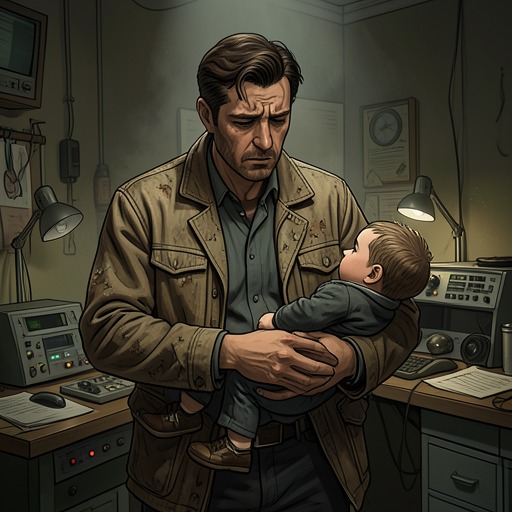
Brian’s affection for the newborn is preserved in his habit of carrying Apollo in the crook of one arm and addressing him as a god and a little sun. For a few years, their life appears to fulfill the happy family story Brian had wanted. Yet the novel places this tenderness beside the later collapse of that story: the early happiness is real, but it does not guarantee that Brian can manage the demands of being a partner and parent.
Domestic Failure and Disappearance
Lillian eventually explains why she sought a divorce. She had to return to work after placing Apollo in daycare at two months old. When she came home, Brian would be sitting on the couch watching television and asking when dinner would be ready; she says the same pattern continued at breakfast. After he lost his job, he remained at home but still did not help. Lillian felt she was living with two children rather than a partner and refused to accept a marriage in which she had become a servant. Her account complicates the image of Brian as an uncomplicated romantic: keeping mementos and wanting a family did not translate into sharing the work of one.
By Apollo’s fourth birthday, Brian had disappeared. The account emphasizes that he did not simply leave with another woman or move back to Syracuse. He left no discoverable trail, and his absence became an unanswered rupture in the family’s history. The absence also shapes Apollo’s sense of his father: he can no longer remember Brian’s features, even while the loss remains active in his childhood fears.
After Brian went missing, Apollo began having a recurring nightmare. A man came to the apartment door, entered, and revealed Brian’s face beneath another face. Fog spread through the rooms; Brian carried the child away, and Apollo woke in terror. The dream repeated for weeks, leaving Apollo afraid to sleep and Lillian dreading the nights when she knew he would wake screaming. At the time, Lillian could not make sense of the child’s account. Much later, Apollo repeats the dream’s words while looking at Outside Over There, the worn children’s book found among the belongings left for him. He tells Lillian that the words were the last thing he ever said to Brian, linking the childhood nightmare to a real memory he had not understood.
The Box and the Truth About Brian
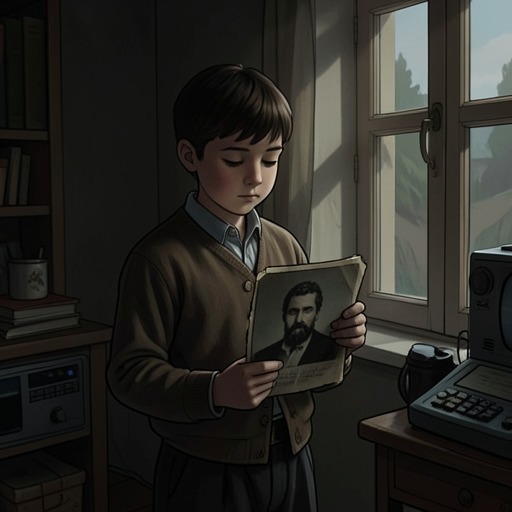
Years later, a box labeled Improbabilia appears on Apollo’s doorstep. Its contents include movie tickets, a woman’s headshot, the Jackson Heights apartment rental agreement, a hotel bill near Times Square, food receipts, Brian and Lillian’s marriage certificate, and a children’s book. Lillian recognizes the significance of the collection and takes the hotel receipt with her. Apollo studies what remains, trying to connect the objects to the stories he knows about his parents.
The copy of Outside Over There is worn from repeated reading, with smudged page corners and a cracked spine. Apollo imagines Brian reading it aloud, but the book does not contain a dedication or handwriting that proves this happened. Lillian later explains that Brian kept it because the story spoke to his fear that his child might be taken away, and because he wanted to read it to Apollo. In the book, a child is stolen and rescued; for Brian, that tale gave shape to his own feeling that no one had come to retrieve him from his childhood. The object therefore carries both genuine evidence of Brian’s attachment to his son and the imagined rescue he believed he could provide.
Lillian eventually confirms that Brian had returned to the apartment. She found him there and sent him away because she had filed for divorce and was leaving him. When she explains what happened afterward, she tells Apollo that Brian tried to kill him and intended to kill her when she came home, then kill himself. Brian had been terrified of losing Apollo. Lillian says he had wanted a family so badly that, from the age of twelve, he had been telling himself stories about what adulthood would be. But the imagined story did not prepare him to change or accept the divorce. His attachment to his son and his attempt on the child’s life remain, as Lillian insists, simultaneously true.
Narrative Role and Significance
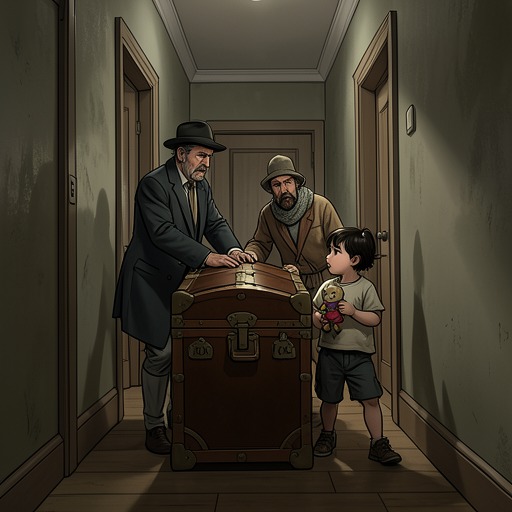
Brian’s story is disclosed in stages: first through the disappearance, then the child’s nightmare, the objects in the box, and finally Lillian’s account of the violence. That sequence makes the recurring dream more than a symbol of abandonment. Its uncanny image of Brian returning with another face and carrying Apollo away echoes a danger that Apollo cannot consciously explain as a child. In the later recollection, the scene is associated with Brian returning to the apartment, calling for Lillian, and taking Apollo toward the bathroom. The childhood dream has transformed a frightening memory into a story Apollo can survive before he knows what it means.
Brian’s history also becomes a measure against which Apollo examines his own conduct as a father. In a later dangerous passage, Apollo thinks about Brian’s belief that he acted out of love and asks himself how people persuade themselves that they remain good. The question links Brian to other fathers in the novel who frame harm as protection or devotion, without making their actions equivalent. Brian’s lasting significance lies in that painful contradiction: he loved Apollo, feared losing him, and tried to take his life. The box’s book and papers cannot resolve that contradiction into a comforting family story. Instead, they preserve evidence of affection alongside the truth of abandonment and attempted murder, leaving Apollo to understand his father without reducing him to either the loving parent he once imagined or the monster he later recognizes.