Brian West’s attempted murder of Apollo
The ChangelingBrian West’s attempted murder of Apollo Kagwa is disclosed years afterward, when Lillian Kagwa explains what she found after coming home and why Brian had acted. The account overturns Apollo’s understanding of his father and of the book Brian left behind: Brian’s love for his son was real, but so was his attempt to kill him. The event is therefore both a childhood act of violence and a belated revelation that makes an inherited story newly legible.
Discovery and attempted killing
Lillian says she returned from work at one carrying McDonald’s food for the household, including French fries Apollo liked. The front door was unlocked, which immediately struck her as strange. Hearing the bath running, she feared that Apollo had somehow gotten into trouble in the bathroom. She dropped what she was carrying and hurried to check on him. What she found, she later tells him, was not an accident: Brian had undressed the child and put him in the bath.
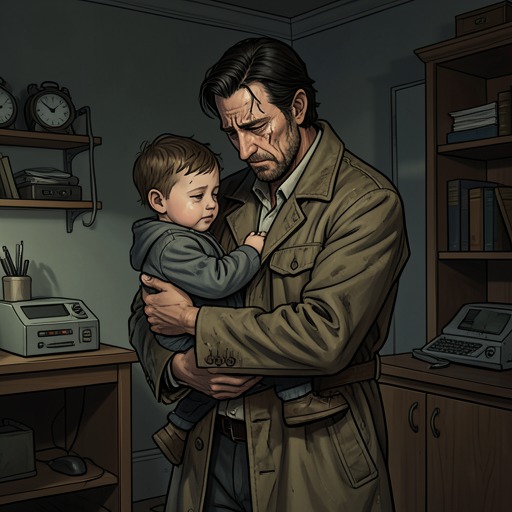
The water was hot, and Brian was holding Apollo under it. Apollo was kicking and crying because the water was burning his skin. Lillian’s account establishes the act as an attempt on his life, not a misjudgment or an episode that Apollo had misunderstood. When she states plainly that his father tried to kill him, Apollo slides down to the floor in shock. The discovery changes the meaning of the story he had lived with: a father remembered through traces and objects is revealed as both the person who endangered him and the person whose intentions he had not been able to know.
Divorce and Brian West’s motive
Lillian connects the attack to the decision that preceded it. She had served Brian with divorce papers and intended to take Apollo with her. Brian, she says, had planned to kill her as well, and then himself. The attempted killing of Apollo was thus part of a threatened family rupture, not an isolated act whose cause lay only in the bath. Lillian’s account places the child at the center of Brian’s response to losing the family he believed he was entitled to keep.
Her explanation reaches further back, to Brian’s own childhood. His parents had treated him badly, and he had wanted a family intensely, imagining from the age of twelve what family life would be. But, in Lillian’s understanding, that childhood vision did not mature with him. Even as an adult, he continued to think as the child who had formed it; he could not adapt when his marriage was ending. The attempted murder emerges from the destructive gap between his ideal of family and the reality of Lillian’s decision to leave. This explanation gives the act a history without excusing it: his deprivation and fear help account for his actions, but do not undo what he did to Apollo or planned to do to Lillian.
The book and the contradiction of love
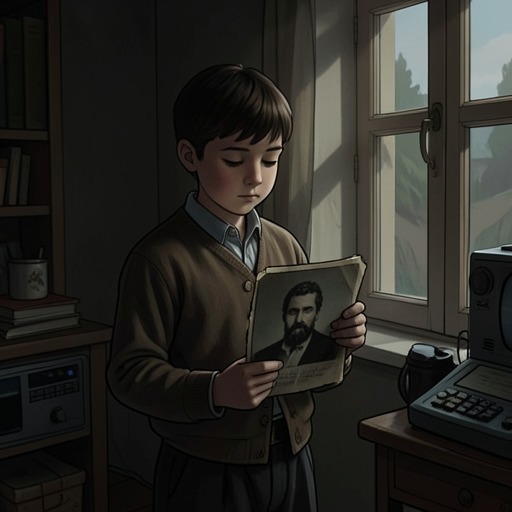
Apollo’s first response turns toward the objects Brian left behind: the box and the book. Lillian explains that Brian had lived in terror of losing his son. In the book’s story, a child is taken by goblins and no Ida comes to rescue him. Brian recognized something of his own sense of childhood abandonment in that story: when he was young, he had felt that goblins had stolen him and raised him, and that nobody came to bring him back. He wanted to read the book to Apollo because he imagined himself as the one who would come for his child.
That interpretation makes the book more than a keepsake or an uncomplicated sign of affection. Brian’s identification with the abandoned child and his wish to become its rescuer disclose a genuine longing to protect Apollo. Yet his attempt to kill the very child he feared losing gives that longing a terrible opposite. Lillian does not resolve the contradiction by choosing one truth over the other: Brian loved Apollo with all his heart, and he tried to take his life. The book cannot acquit him, but neither does the revelation reduce every expression of love to deception.
Revelation and narrative significance
The event reaches the reader through Lillian’s later account to Apollo, rather than through a scene experienced in real time. She first reflects that people can come to believe a self-flattering version of past events, even without deliberately lying. She wonders whether her silence about Apollo’s father has likewise shaped the story she allowed him to inherit. Her confession consequently revises not only Apollo’s understanding of Brian, but also the account Lillian has been able to tell about her former husband and herself.
The revelation is painful partly because the earlier objects acquire a double meaning. The book had seemed to speak of Brian’s love and his promise to come for Apollo; now it also carries the memory of a father who feared abandonment so completely that he became dangerous to the child he loved. Apollo’s shock marks the moment when those meanings can no longer be kept apart. Lillian’s account offers no comforting reconciliation between paternal affection and attempted murder. Its consequence is a harder understanding: love may be present, but it does not make violence less real, and the truth about a parent may have to hold both facts at once.