Emma’s sleepless vigil
The ChangelingEmma Valentine’s sleepless vigil is the prolonged, solitary watch she keeps to protect Brian Kagwa while they are hidden in a cave. It is at once a practical act of care, a source of power in her struggle against Jorgen Knudsen, and a measure of the physical and emotional cost of surviving without help. When Apollo Kagwa offers to take over the watch, her first rest becomes a small but consequential test of whether protection can become a shared responsibility.
Purpose and Circumstances
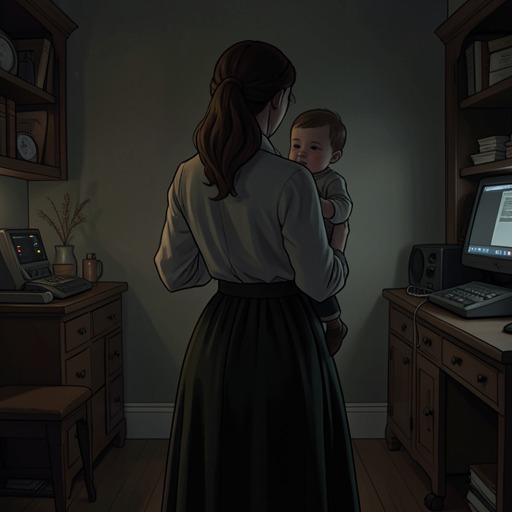
When Apollo asks when Emma last rested and where she sleeps, she explains that she stays awake through the night at the cave mouth so Brian Kagwa will remain safe. Her watch is not presented as a temporary precaution or a comfortable routine: she treats sleep as a danger she must set aside in order to keep guard. The cave, located in Queens, contains the immediate threat to the child and is also a place marked by a larger history of abandoned children. Apollo approaches it thinking of Agnes Knudsdatter, abandoned there by her father, and of the other children whose photographs hang inside. Emma’s vigil therefore protects Brian in a setting where the danger is not abstract but bound to repeated acts of abandonment.
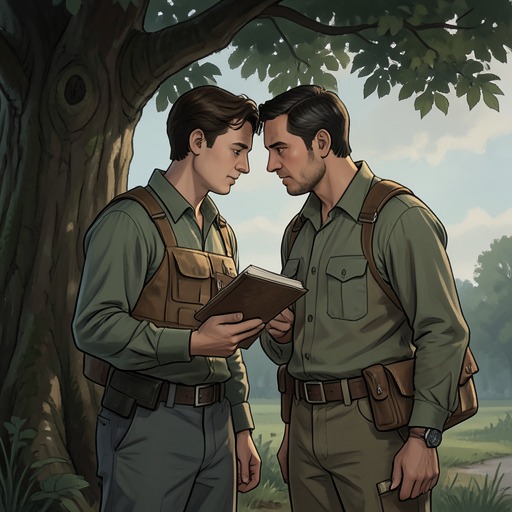
The scene establishes the unequal burdens carried by the couple. Apollo asks about rest only after finding Emma still attending to the cave and the child; she has been managing safety without him. He wants to comfort her, but restrains himself and keeps his movements and voice calm. His offer is specific: she can rest for the night while he stays awake. Rather than immediately accepting reassurance, Emma looks toward the cave and then back to him, considering the offer before agreeing to lie down. The exchange makes trust practical: it depends on whether Apollo will actually remain on watch.
A Vigil Turned Against Jorgen Knudsen
Emma’s wakefulness has also served as a means of attacking Jorgen Knudsen. After Apollo encounters Jorgen’s body, Emma explains that she caused his sleeplessness by entering his mind at night and making him listen. She describes this without visible passion, a striking contrast with the horror of the situation and with the ordinary language of rest that frames the earlier scene. The vigil is thus more than guarding the cave. The nights she spends awake have been directed both toward Brian’s survival and toward denying Jorgen peace.
That effort carries a serious cost. Later, when Apollo insists that Emma had controlled Jorgen’s dreams and seemed to command the woods, she corrects his understanding of what he had witnessed. She says she was alone, trying to keep Brian alive and herself alive while working on Jorgen day and night, and that the effort was killing her. Her abilities did not make the work effortless: in her account, necessity drove her to continue because no one else was there to do it. The vigil exposes the difference between appearing powerful and having support. What Apollo reads as extraordinary mastery is also the result of relentless work under conditions she could not safely leave.
The Lost Light and Its Cost
Apollo connects Emma’s past appearance in the woods to this difference. When he first saw her there, she seemed surrounded by blue light; after he spoke to her, it disappeared. He now tells her that he can no longer see it. Emma identifies that earlier moment as the first time he took her light from her. Her recollection links the loss not simply to supernatural appearance but to a wound in their relationship: Apollo’s words had made her feel blamed rather than supported. The vigil’s exhaustion and the remembered disappearance of the light converge around a question of whether he can help without diminishing or accusing her.
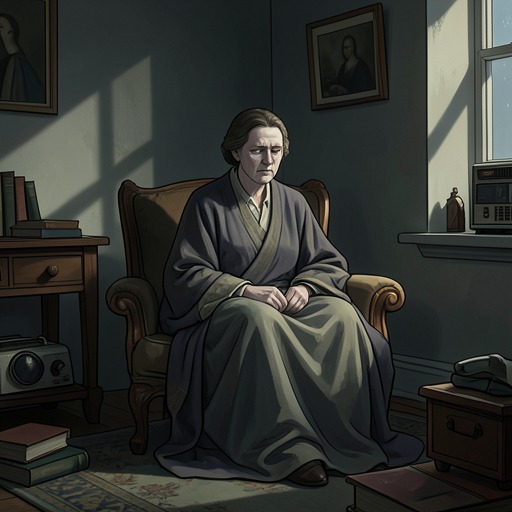
The physical consequences become clearer after Emma has finally slept. Her breathing sounds strained, and Apollo recognizes that her condition appears seriously unhealthy. He had stayed beside her while she fell asleep, but her regular breathing began to affect him as well; afraid that he would be drawn into sleep, he eventually rises and descends toward the cave entrance. He looks back from the loose stone slope and cannot see her face, yet feels safer knowing she is nearby. His relief is not a cure for her exhaustion, but it shows that even a brief change in who keeps watch alters his own sense of isolation.
Rest, Trust, and Shared Responsibility
The respite does not immediately restore Emma. After Apollo carries her to a bedroom and warms it with two space heaters, she remains silent and unfocused, unable to turn her attention to the clothes he has brought for her and Brian Kagwa. In the late-morning light, Apollo sees how depleted she looks. He wonders whether bringing her back has helped or caused further harm. The contrast is stark: the woman he had perceived as commanding the woods now needs to be carried and covered, and one night of sleep does not erase the accumulated strain of the watch.
Emma later explains that she had been keeping Brian Kagwa alive, keeping herself alive, and working on Jorgen Knudsen without anyone beside her. She does not deny that she had exercised power; she rejects the idea that power alone made the impossible sustainable. Her request is for Apollo to help, and for the two of them to become stronger together. Apollo nods, and they move forward. In this context, the vigil’s decisive change is not that Emma ceases to care for Brian or that the danger has passed. It is that she considers handing part of the burden to her husband. The watch begins as solitary endurance; her first sleep and her appeal for help make it a measure of whether care can continue without requiring her to bear it alone.