Gretta Wheeler
The ChangelingGretta Wheeler, the wife of William Wheeler and mother of Agnes Wheeler, appears in the aftermath of Agnes’s death, when grief and unresolved conflict still shape her relationship with William. Her brief encounter with Cal presents two sides of that history: William’s account of shared loss and remorse, and Gretta’s account of repeated disruption and financial harm.
Identity and Family
Gretta is identified as William’s wife. Their daughter, Agnes, has died; William describes Agnes as their baby and says that he and Gretta both lost their minds after the loss. His words establish the death as a defining rupture in their family, while also showing that he frames their grief as something they experienced together. That is William’s account, however, not a reconciliation confirmed by Gretta.
Encounter Through Cal
Gretta arrives escorted by a guard. Before her arrival, William asks Cal to speak with her on his behalf, explaining that he will not be allowed to see her while he is still in a state to talk. He hopes Cal can explain how far he believes he has come and tell Gretta that he knows Agnes’s death was not her fault. William also asks Cal to convey that he has not said their daughter’s name aloud in almost a year. The request makes Cal an intermediary between spouses who cannot, or do not, meet directly in this moment.
Gretta’s response is not presented as acceptance of William’s appeal. She tells Cal that she keeps expecting to be finished with him, but that he continues to find his way back into her life. The recurrence she describes is itself a source of frustration: William’s reappearance unsettles any expectation that their relationship has ended. Her remark gives the reunion a different emphasis from William’s plea. He speaks of remorse and progress; she speaks of a persistent connection she has not been able to leave behind.
Grief, Betrayal, and Agnes’s Name
Gretta identifies a concrete harm alongside the emotional history. She says William emptied her bank account, taking seventy thousand dollars, and points to an internet connection as sufficient means to rob someone without a gun. Her accusation makes the conflict more than a painful aftermath of bereavement: in her account, William has also violated her financial security. The scene does not supply his response to this charge or establish what he did with the money.
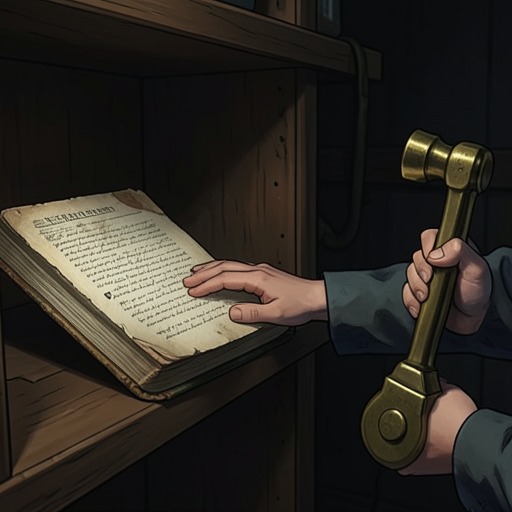
Agnes remains present in the exchange through her name. Gretta says it appears on every page, then speaks the name softly. The emphasis connects the daughter’s memory to the material before Gretta, although the available account does not identify the pages more specifically. Where William says he has been unable to say Agnes’s name aloud, Gretta gives it voice. The contrast does not establish that she has recovered from the loss; it shows that Agnes remains central to how she understands the past.
Narrative Role
Gretta’s appearance places William’s request for another chance beside the consequences he has left in her life. Her words resist allowing his account of improvement and shared grief to stand alone: she recalls both his repeated return and the money he took. At the same time, her quiet naming of Agnes keeps the conflict from being reduced to accusation. The scene presents a family bound by loss, but it does not resolve whether that bond can become reconciliation.