Lillian Kagwa
The ChangelingLillian Kagwa is Apollo Kagwa’s mother, an immigrant from Uganda whose life is marked by a flight from political violence, a determined effort to establish herself in New York City, and years of raising her son without his father. Her story also unsettles Apollo’s understanding of Brian West’s disappearance: Brian had returned once, but Lillian sent him away while preparing to leave the marriage, and she did not tell Apollo until he was an adult.
Identity and Background
Lillian grew up in Jinja, Uganda, through the transition from British rule to independence and the government of Milton Obote. Under Obote, the General Service Unit operated as a secret police force. In 1967, while Lillian and three cousins were traveling to Kampala, men claiming to be GSU agents stopped their car. They demanded that Arthur, the only male cousin, get out to open the trunk. When he hesitated, one of the agents shot him. Lillian was driving; before her senses had fully returned, she managed to put the car in gear and escape. The agents fired at the departing car but could not follow because their own vehicle had run out of gas. Arthur died before Lillian reached Kampala.
The killing was not treated as an exceptional event in a country where violence by state agents had become part of ordinary life. Lillian wanted to leave Uganda, and a year later she secured a visa to the United States. She arrived in New York in 1968, aged twenty-five and knowing no one. English, learned under British rule, helped her find work: at Glamour Time, a modeling agency, her command of the language made the business sound more legitimate than it was. She did not know that the agency was a scam when she accepted the job. Its pay, three dollars an hour, was twice the state minimum wage, and employment itself was precious after she had been unable to find work at home.
Building a Life with Brian West
Brian West first encountered Lillian at Glamour Time, where he was making visits as a parole officer to the agency’s founder. He returned repeatedly during the week, drawn to the new receptionist. Their early awkwardness did not prevent a relationship from developing: Brian struggled with her surname, and Lillian sometimes mistook him for other white men. When he took her to see Rocky, she came to see herself in its image of a fierce dreamer. They had each told the other painful histories—Brian about being robbed by his father, Lillian about Arthur—and held hands in the theater. The story presents this shared moment as the beginning of their family, before either could know what that family would become.
By April 1977, Lillian was pregnant, and Brian had found a two-bedroom apartment in Jackson Heights. Their son was born in September. They named him Apollo rather than Rocky; Brian thought Rocky would be an odd name for a half-Black child. He carried the newborn in the crook of his arm and called him a god and a little sun. For several years, the family seemed to have arrived at a happy ending. By Apollo’s fourth birthday, however, Brian was gone. He left no usable trail, and Lillian and Apollo eventually removed his surname from their lives: she returned to Kagwa, her maiden name, and Apollo became a Kagwa by legal decree.
Motherhood, Work, and Independence
Lillian raised Apollo alone while working full time and taking Saturday classes to become a legal secretary. The work was grueling, but it offered a path toward a more secure life. Apollo grew into a bookish, watchful child, while his mother’s long hours sometimes left him at home without her. After qualifying, she obtained a better job at a Midtown Manhattan law firm, though it kept her away even later. Her choices unfold against the practical demands of earning a living, not an absence of care: she continued building a future for herself and her son even when the hours made that difficult.
When Apollo later tried to establish a rare-book business, Lillian recognized how seriously he was taking it. She offered to have business cards made through her office, with his name and the home telephone number. The gesture was practical, but it also treated his undertaking as a real business worth presenting to others. Her support appears again after Apollo and Emma Valentine’s son Brian is born. Lillian arrived with meals she had cooked at home, and when Emma struggled to get the newborn to latch, Lillian kissed her head and recalled having faced the same difficulty with Apollo without her own mother nearby. She offered experience rather than judgment, recognizing the loneliness that can accompany early motherhood.
The Return She Concealed
Years later, while explaining her past to Apollo, Lillian disclosed that Brian had come back to the apartment. The return occurred when Apollo was four and Lillian had been working for about eleven months at Lubbick and Weiss. The job provided dental and eye-care benefits, important to her because glaucoma had affected her grandmother at a young age. She also described the convenience of taking the train directly to Midtown and walking to the office. These details show what the job meant to her: not simply a salary, but access to care and a foothold in a new life.
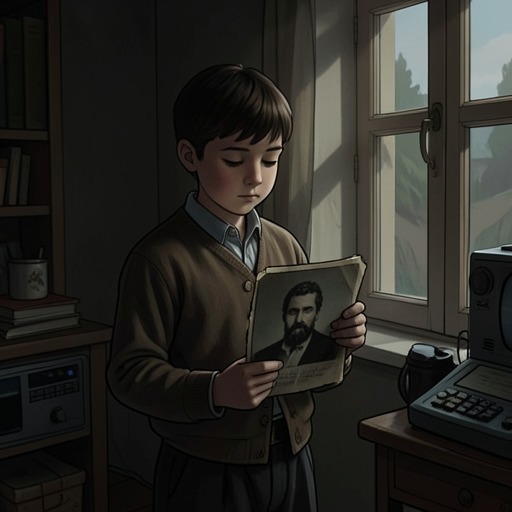
A lawyer named Charles Blackwood began spending time at her desk. Lillian understood his attention as persistent and recalled that colleagues had warned her about him. She sometimes worked half days on Saturdays while Apollo stayed in the living room. At first, the arrangement seemed to work; she even felt proud of how self-sufficient her son appeared. Later, she questioned that pride. Apollo began waking from nightmares that his father had come to the apartment to take him and then left him behind. When he asked as an adult whether Brian really had been there, Lillian confirmed it. She had found Brian at the apartment one afternoon and sent him away. Her hand moved to her ring finger as she explained that she had filed for divorce and was leaving him.
Lillian described Brian as romantic and capable of tenderness, but said that daily life had become unequal. She had placed Apollo in daycare at two months so she could return to work; after long days, Brian sat watching television and expected her to provide meals. His loss of employment made the imbalance worse, because he was home without taking on more of the household work. Lillian’s explanation did not make Apollo responsible for the marriage’s end. Rather, it located the separation in the demands placed on her as a working mother and in Brian’s failure to share those demands. Her decision to send him away preceded his final disappearance, a distinction Apollo had not known.
Care and Disclosure
Lillian remained present in Apollo’s life even when his own choices and circumstances made contact difficult. After his incarceration, she repeatedly called the police until they told her she could enter his apartment. Fabian, the building superintendent, let her use his keys; the police had searched the apartment, and she wanted Apollo to return without finding it further disturbed. She had also restocked his refrigerator. When she came to see him, she had spent much of her savings on the Uber ride, a small but concrete measure of what the visit cost her. The two laughed together, and she asked him to visit Brian’s grave with her the next morning and bring flowers.
That invitation joined the history she had kept from Apollo to the care she continued to give him. Lillian had protected him from the fact that Brian returned and was rejected, but the silence also left Apollo with nightmares and unanswered questions about being left behind. Her eventual disclosure supplies the missing circumstances without reducing their family history to a single cause: Brian disappeared, but before that, Lillian had decided that a marriage in which she carried the work of family life could not continue. Her account gives Apollo a more complete inheritance—one shaped by migration and loss, but also by his mother’s work, judgment, and continuing care.