Patrice Green
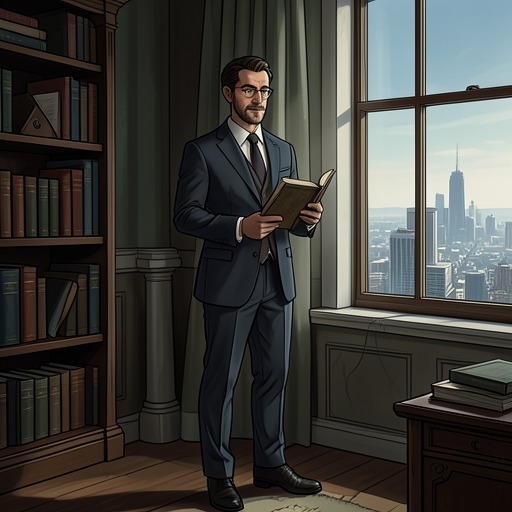
The ChangelingPatrice Green is Apollo Kagwa’s closest friend and fellow rare-book dealer, a former Army counter-IED specialist whose steady presence links the novel’s everyday struggles to its escalating danger. He helps Apollo earn a living and care for his infant son, Brian Kagwa, and later brings the same practical intelligence to a risky investigation. Yet Patrice’s hidden connection to the Tribute to Baby Brian Facebook page complicates the friendship: the man who stands beside Apollo has also kept a consequential secret from him.
Identity and Background
Patrice is an Army veteran who served from 2003 to 2004 in the 62nd Air Defense Artillery Regiment during Operation Iraqi Freedom. He worked on counter-IED operations along a supply route in Iskandariyah, Iraq, south of Baghdad and near the Euphrates River. The novel establishes both his competence and the limits of what Apollo knows about him: Patrice returned to the United States uninjured, but not unharmed, and never explained the fear he carried afterward.
His working life took several turns before bookselling. After returning to the United States, he managed an AMC movie theater on 34th Street and spent five months in library-studies graduate work at Queens College. He eventually became a used and rare bookseller. Apollo describes the two men as often being the only Black book dealers at local estate sales, an uncommon position that helped bring them together. Their shared trade is more than a job: it gives them a language for friendship, collaboration, and the exchange of valued objects.
Patrice’s experience in Iraq does not erase his vulnerability. He dislikes basements and never enters them, even though New York City estate sales often take place below street level. Apollo senses the connection to Patrice’s wartime experience but does not ask him to explain it. At an estate sale in Riverdale, Patrice leaves the basement to Apollo rather than cross that boundary himself. The arrangement becomes part of their partnership: each recognizes what the other can do, and what he cannot comfortably do, without requiring a full confession.
Friendship, Work, and New Fatherhood
Patrice and Apollo’s closeness is evident in their practical arrangements as well as their private concern for one another. When Apollo’s family needs money, Patrice sends word of an estate sale and presses him to come. Apollo initially hesitates, but the work cannot wait: Emma Valentine has only six weeks away from her job before her salary ends. Patrice’s invitation is an act of friendship shaped by material necessity, not a sentimental gesture detached from the bills they have to pay.
Apollo makes the trip with Brian in a rented Honda Odyssey, driving so cautiously that the journey to Riverdale takes nearly an hour. Patrice welcomes the baby on the next outing and says he is glad Apollo brought him. At a computer shop, the presence of the infant has an unexpected practical effect: customers leave, and Patrice quickly gets the clerk’s attention for the equipment he wants. The moment folds fatherhood into the men’s working life. Brian is not set aside while the adults pursue business; he accompanies them, changing how the day unfolds.
The bookselling partnership remains concrete. Patrice proposes a sixty-forty split on whatever Apollo finds in the basement, ensuring that the difficult work and its rewards are shared. He also turns their routine into a small ritual: when they walk toward the Strand, they browse the battered paperbacks and textbooks in the wheeled carrels, even though neither expects to find anything valuable there. Patrice later recalls having to leave before Apollo emerged from the Riverdale basement. Their teasing about the missed goodbye sits alongside the unspoken accommodation that made the sale possible.
Loyalty and Emotional Support
Patrice’s friendship is most direct when Apollo is in serious emotional distress. As they climb the back stairs, Patrice asks Apollo to remember why they became friends. Apollo jokes that Patrice wanted to learn from the better bookseller, but Patrice rejects the explanation and recalls their first meeting at the West End Bar, where he had told the people there that he had recently returned from Iraq. He then drops the usual joking manner and makes clear that he recognizes Apollo’s dangerous state of mind. His warning is characteristically irreverent: he threatens to ruin a valuable book Apollo gave him if Apollo harms himself.
The joke does not make the concern casual. Patrice puts a hand on Apollo’s shoulder and tells him, in effect, that he has seen this kind of look before. He offers no abstract reassurance; he insists on the consequences of Apollo’s absence and makes himself present as someone who will not treat the crisis as a private matter. Apollo’s confused response does not end the exchange. Patrice’s bluntness is a form of care grounded in their shared history, delivered in the language of a bookseller who knows how much a particular book matters to his friend.
The Facebook Page and the Breach of Trust
Patrice’s concealed role in the Tribute to Baby Brian Facebook page changes the meaning of that loyalty. Apollo discovers that the page’s administrator used the name Green Hair Harry, with a Grinch image and a fictional hometown. Patrice is the person behind that alias. He had admitted to being a fan of the page, but had not told Apollo that he created it. When Apollo realizes the connection, the revelation lands amid their exhausting work digging up a grave, turning physical cooperation into a confrontation about trust.
Patrice explains that he had told Apollo he joined the page during their train trip to Long Island, and insists he did not deliberately conceal that part. But Apollo distinguishes membership from authorship: Patrice had withheld the fact that he started the page. The distinction matters because the page has become entangled with Apollo’s grief and public exposure. Patrice’s secrecy cannot simply be folded into the affectionate banter that has defined their friendship; it gives Apollo reason to wonder what else he has misunderstood.
Even so, the conflict does not stop Patrice from helping. When Apollo drives toward the gates of Nassau Knolls Cemetery, Patrice brakes hard and challenges the recklessness of trying to force their way in with the police department nearby. He redirects Apollo toward a safer plan and reminds him that he agreed to help after Apollo came to his home and told him what was happening. Patrice and Dana had also lost money they hoped to put toward a home, because the money came from a man who had stolen from his dead wife. Patrice can acknowledge the technical skill of their adversary without letting that admiration override his decision to stand with Apollo.
Technical Skill and Continuing Danger
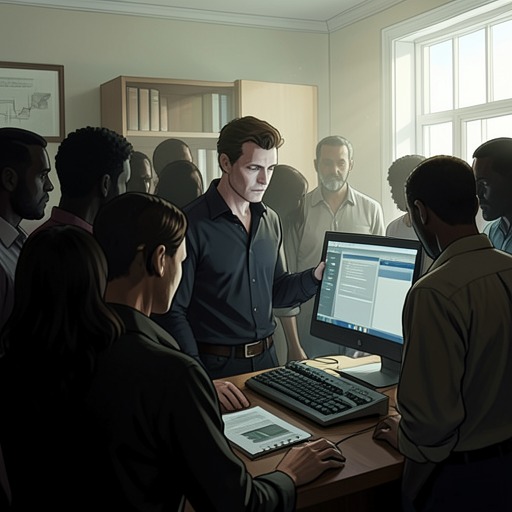
Patrice’s practical intelligence becomes vital as the investigation turns toward digital surveillance. At the cemetery, he examines a small device mounted high on a building and reasons that its alarm system may be wireless. Using an iPad, he navigates through applications until a sequence of numbers appears; he recognizes the system as outdated technology. This scene extends the expertise already suggested by his military service, but places it in an unfamiliar civilian setting, where technical knowledge becomes a way into a secured space.
The same attentiveness leads Patrice to suspect that his own equipment has been compromised. He realizes that whoever sent Apollo the video of Emma Valentine could have reached Patrice’s computer after Apollo forwarded the video and Patrice opened it there. Patrice fears that the intruder could access his Titan computer’s camera and microphone or control it remotely. He starts to call Dana, then stops, turns off his phone, removes its SIM card, and crushes it with the bottom of an ax. His actions show both caution and the extent of the threat: the tools that keep him connected to friends may also reveal where they are.
Patrice is therefore neither an uncomplicated sidekick nor merely the novel’s source of technical help. His wartime past remains partly withheld; his fear of basements shapes the limits of his work; and his authorship of the Facebook page makes affection and betrayal coexist within the same friendship. Yet when Apollo is in danger, Patrice keeps choosing involvement. His loyalty is not presented as spotless or easy. It is a decision repeatedly tested—in the estate-sale partnership, in Apollo’s crisis, at the cemetery gates, and in the effort to understand who may be watching them.