Rikers Island
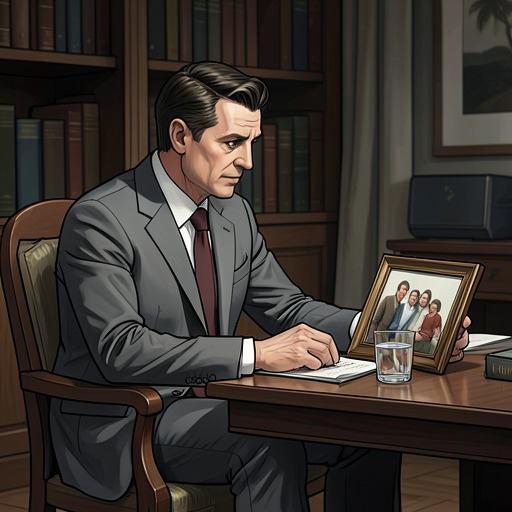
The ChangelingRikers Island is where Apollo Kagwa spends two months after taking three hostages at the Fort Washington branch of the New York Public Library in an attempt to learn where Emma Valentine had gone. His confinement becomes a brief period of enforced suspension: routine narrows his days, while the deaths and disappearances that brought him there remain unresolved. His departure does not restore the life he had before; it returns him to the city, to parole, and to the home he cannot yet face.
Confinement and routine
Apollo’s account of Rikers Island is shaped less by the jail’s physical layout than by the rules governing his daily existence. He is held in Taylor, a unit filled mostly with short-term prisoners, and considers his two months there comparatively fortunate. He follows instructions, keeps his shirt tucked in, wears his identification, and avoids phone calls. His aim is to make no impression on anyone. The habits that keep him out of trouble also help him become, in his own experience, almost absent from himself.
The novel describes that emotional withdrawal as a state of suspended animation. Apollo’s body is made to move, eat, and shower according to schedule, but he feels that little else remains of him. After surgery to repair his eye, he becomes convinced that his heart has failed or been removed. He interprets his lack of fear in jail not as strength but as evidence that he is no longer alive in any meaningful sense: he believes he died when Brian Kagwa died. Rikers thus marks a period when ordinary bodily routines continue even as Apollo experiences himself as emptied by grief.
That numbness has a public context. News coverage identifies Emma as having killed Brian and as having disappeared while on the run. Apollo sees his family turned into the cast of a horror story, and his preferred invisibility inside the jail becomes a way of avoiding that public identity. The account links his withdrawal to both the private loss of his son and the spectacle through which that loss is made known outside the prison.
Release from the island
Apollo’s release is delayed by procedure. He waits with 149 other men in an overcrowded holding area the prisoners call the bullpens. By the time processing is complete, he has spent eleven hours there. His clothes and belongings are returned in a brown paper bag, and he is the only prisoner preparing to leave who does not want release. The contrast makes the moment less a simple return to freedom than an unwanted transition out of the only place where he has been able to remain suspended.
Four blue-and-white buses carry the departing prisoners away before dawn. The men around Apollo react to release with excitement, joking about what they will do next. Their mood differs sharply from his. As they approach Queensboro Plaza, their talk turns to familiar landmarks and to the changing places where newly released men might seek company. Apollo’s attention instead fixes on the route home: he knows the plaza well and can estimate how long it will take to get back to Washington Heights. The city is near, but proximity does not mean that he is ready to return.
The bus leaves the prisoners with their possessions and an envelope containing just enough for one subway ride and a large coffee. Apollo watches it cross the bridge into Queens. By then his heart is beating again, and the sensation feels less like uncomplicated relief than an unwelcome return to life. The other men are eager to resume their routines; Apollo experiences release as the end of his numbness, not the end of his bereavement.
The events that led to imprisonment
Apollo had not returned to his apartment after Brian’s death. A building superintendent found him and called paramedics; after treatment and eye surgery at New York Presbyterian Hospital, Apollo stayed with Lillian Kagwa to recover. Detectives and federal agents met with him there. Brian had been dead for three weeks by the time Apollo finally went back to Washington Heights, but he did not go home. Instead, he arrived at the Fort Washington branch of the New York Public Library with a semiautomatic shotgun and held three of Emma’s coworkers hostage, demanding that they tell him where she had gone. He could not accept their claim that they did not know.
The standoff lasted six and a half hours. The coworkers did not press charges and later testified on Apollo’s behalf in court. Even so, the incident sent him to Rikers Island for two months. The episode establishes the immediate cause of his incarceration while also showing the difference between the act’s consequences and the grief that preceded it: Apollo’s desperation to locate Emma became a criminal crisis, but the people he had threatened ultimately supported him in court.
The journey back and its aftermath
Apollo has not told Lillian when he will be released, and he has not spoken to Patrice Green since going to jail. He calculates that his close circle contains only four people, a stark measure of how isolated he is as he leaves the island. He does not go directly home. At five-thirty in the morning, his body carries him to Bennett Park, where he had once gone with Brian at the same hour. The destination is an involuntary echo of a shared routine, not proof that he is ready to resume it.
Later that day, Apollo attends a meeting of the Survivors at the Yorkville branch of the New York Public Library. His parole officer had encouraged him to go home, shower, and rest, but Apollo asks for help finding a meeting because he wants to avoid entering the apartment. At the meeting he is asked why he took the hostages and has to speak about what he did. He remains at the library until it closes at seven, sitting on the main floor after the group session and trying to persuade himself to endure the work of recovery. Rikers is therefore not the end of the novel’s account of confinement: after his release, parole obligations, grief, and fear of returning home continue to shape where Apollo can go and what he can bear to do. Eventually he reaches his building and unlocks the apartment door, but the release from custody has not made that threshold easy to cross.