South County Library
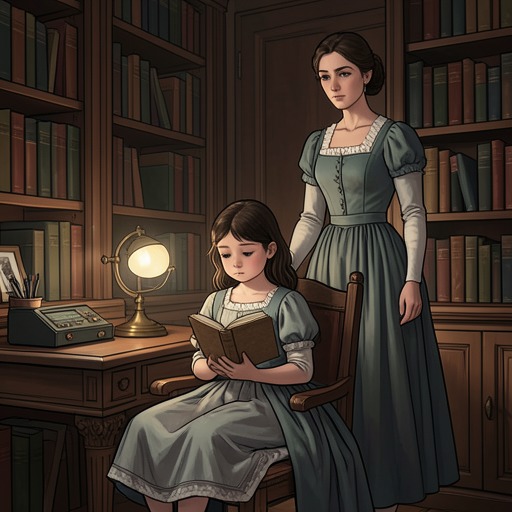
The ChangelingSouth County Library is a public library in Roanoke that became a formative place in Emma Valentine’s childhood. After her parents died when she was five, Emma’s life centered on home, school, and the library; there, the care of her sister Kim and librarian Ms. Rook gave her a measure of stability and opened her imagination beyond the small Virginia town where she had grown up.
Setting and Childhood
Emma was raised in Boones Mill, while South County Library was twenty minutes away in Roanoke. The distance did not keep it from becoming one of the three places that defined her early life. Kim became Emma’s legal guardian when Kim was eighteen, took local work, and raised her rather than going directly to the nursing college that had accepted her. Emma’s childhood routine—home, school, and the library—placed the library alongside family and education as a central part of her world.
Ms. Rook and a Place of Care
Ms. Rook, Emma’s favorite librarian, helped raise her almost as much as Kim did. When Kim was late picking Emma up, Ms. Rook would put on a movie so Emma could stay occupied while the library began closing. The practice made the library more than a place Emma visited to read or watch films: it was also part of the network of adults who looked after her after the loss of her parents.
Brazilian Films and a Wider World
At twelve, Emma chose a movie almost at random because its cover showed Black people carrying spears. It was Quilombo, a Brazilian film about slave uprisings in Brazil. Ms. Rook checked on Emma, saw that she was watching, and left without knowing what the film depicted. Emma liked it, but kept quiet about its subject because she thought Ms. Rook would be distressed to learn what she had put on.
The film’s Portuguese dialogue, heard with English subtitles, drew Emma further toward Brazilian cinema. She persuaded Ms. Rook to order several more films, including Bye Bye Brasil, Subway to the Stars, and Os Trapalhões e o Rei do Futebol. The library eventually stopped buying them because one child’s enthusiasm did not justify the cost of the tapes. By then, however, the films had already changed the scale of Emma’s imagined world: they showed her that life extended far beyond Boones Mill and helped kindle her desire to see it.
Narrative Significance
South County Library’s importance lies in the combination of practical care and discovery it represents in Emma’s childhood. Ms. Rook’s accommodation of late pickups offered a small but sustained form of support; the Brazilian films made that same setting a passage to unfamiliar places and histories. The library thus links the ordinary routines of being cared for with Emma’s growing awareness of a larger world.