Three wishes and wish-making
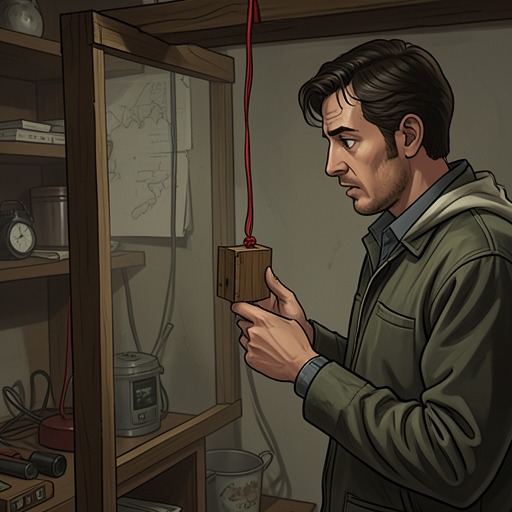
The ChangelingThree wishes and wish-making are given a physical form in Emma Valentine’s red string: a worn keepsake that carries a rule, a private hope, and a promise between Emma and Apollo Kagwa. Its significance lies not in a confirmed supernatural result but in the choices it provokes. Emma agrees to wait for the string to fall away naturally; Apollo cuts it, then offers to make the wishes come true through their life together. Later, Nichelle Murray names two wishes, while the third remains unsettled and protected by Emma’s confidence.
The ritual and its origins
During her stay in Salvador, Brazil, Emma lived with a family in Itapuã, where she visited a lagoon called Lagoa do Abaete. There she came to know a washerwoman whom her host family had described as a witch. Emma was drawn to the woman, who reminded her of Emma’s mother: tough, funny, and unconcerned with other people’s opinions. Before Emma left for Manaus, the washerwoman told her to make three wishes for her life and tied a red string around her wrist.
The instructions made the string part of the wishing itself. Emma was to let the fabric come apart; when it fell from her wrist, her wishes would come true. She must not cut it off. For a time, Emma treated the arrangement as entertainingly mystical, but the string stayed on her skin for more than six months. By the time she explained the ritual to Apollo, the fabric had become dirty and stiff. Its shabby condition was evidence of duration: Emma had not simply remembered the wishes but carried their rule with her.
Emma admits that she wants the wishes badly enough to believe in magic, even as she jokes about the string’s appearance. The ritual thus holds two attitudes together rather than resolving them. It can be playful and faintly embarrassing, yet it also gives Emma a concrete reason not to dismiss her hopes. The string’s eventual fall is imagined as a future event that will certify their fulfillment; until then, the wishes remain open.
Apollo’s intervention
When Emma shows him the string, Apollo takes her hand and pulls it toward him. He repeats an inward reminder that he is Apollo, then picks up a plastic knife and cuts the string in one movement. It falls onto the plastic tabletop, and Emma shivers as he continues to hold her hand. He promises that all three wishes will come true with him.
The act reverses the ritual’s explicit condition. The washerwoman had said the string must not be cut; Apollo makes the cut himself, replacing patient waiting with a decisive gesture and a personal pledge. The evidence does not establish that the ritual’s magic is real or that cutting the string produces any supernatural consequence. Instead, the scene turns on Emma’s interpretation of Apollo’s action: she can regard it as arrogant, or take it as bold and worthy. The cut therefore functions both as an interruption of her ritual and as an invitation to trust him.
Apollo’s promise gives the wishes a shared, relational meaning. He does not ask Emma to name them before making the pledge, and the moment leaves her response to his advance undecided. The gesture is powerful precisely because it cannot settle whether his confidence is devotion, presumption, or some combination of the two. What it does establish is that he has made himself accountable, in Emma’s presence, for the wishes the string had represented.
The wishes disclosed
Later, Nichelle recalls Emma’s return from Brazil and celebrates Apollo’s decision to cut the string as a bold move. Apollo tells her that he kept the string so he would not forget his promise. It is tucked into his wallet, flat behind his driver’s license. The object has changed hands and function: no longer worn on Emma’s wrist, it is a private reminder carried by Apollo, linking his promise to his ordinary identity and daily life.
Nichelle says Apollo has already given Emma two wishes, though Emma has never told him what they were. She identifies them as a good husband and a healthy child. Apollo confirms that he and Emma have chosen not to learn their child’s sex in advance, preferring to find out together at the birth. The wishes are therefore connected to the life they are building, but Nichelle’s disclosure is not the same as Emma explaining them herself. The scene preserves a distinction between what others infer and what Emma has chosen to share.
Nichelle begins to raise a third finger as if to identify the remaining wish, but opens her hand before revealing it. She then says that the third wish is the only one that has not come true and that she is trying to explain it without breaking Emma’s trust. Apollo, distracted by news that Emma met a Dutch photographer in Salvador, has momentarily forgotten about the third wish. Nichelle’s insistence redirects him: the unknown wish is not a casual detail but something Emma has entrusted to her friend.
Meaning and unresolved outcome
The string’s changing place in the story gives the wishes several connected meanings. On Emma’s wrist it records her encounter with the washerwoman and her willingness to wait; on Apollo’s table it marks his interruption of that waiting; in his wallet it becomes a reminder of what he promised. The same object can therefore signify Emma’s independent hope, Apollo’s romantic confidence, and the responsibility that follows from making a promise to another person.
The wishes are partly disclosed but not completed as a set. Nichelle names a good husband and a healthy child, while the third remains withheld at the point covered by the evidence. Her concern for Emma’s trust limits what Apollo—and the reader—can know. The book thus keeps the ritual’s central uncertainty alive: the string does not provide an indisputable demonstration of magic, and the promise does not reveal the final wish. What remains certain is the human bond formed around them, and the unresolved obligation Apollo remembers in the small red remnant he keeps.