William Wheeler
The ChangelingWilliam Wheeler is introduced as a sincere rare-book buyer and an unexpected helper to Apollo Kagwa, but his eventual identification as Kinder Garten transforms those roles into a disguise. He is tied to the Knudsen family’s inheritance of a pact with a troll, and he turns that inheritance into both a surveillance business and a plan to make Brian Kagwa’s death a spectacle. His arc hinges on a stark reversal: the man who helps Apollo search for his missing wife is also the antagonist at the center of the family’s suffering.
Identity and Introduction
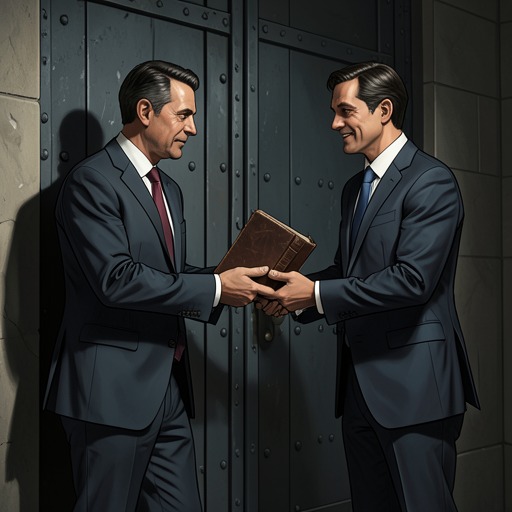
Apollo first encounters William while fleeing along Amsterdam Avenue. William catches up with him at Amsterdam and 179th Street; Apollo recognizes the paunchy man from Holyrood, where he had been caught using his cellphone. William introduces himself by name, explaining that Patrice Green sent him and that he wants to buy Apollo’s book. His cellphone occupies his right hand, while his left quivers against his belly as he calls out his full name. The scene makes him physically unthreatening and slightly awkward, but also gives him an immediate connection to Apollo’s professional life.
William’s interest in books initially seems genuine. When Apollo asks whether he loves Harper Lee, William says that To Kill a Mockingbird is one of only two books he has read for pleasure. His earnestness unsettles Apollo, who had begun to laugh at him: Apollo is accustomed to rare-book dealers treating books as saleable objects and their condition as more important than what they contain. William’s plain admission briefly makes him seem like an exception to that cynical trade. He has also paid an enormous sum for a book, so his presence in Apollo’s life is not merely that of a curious reader.
Help, Friendship, and the Boat
After Emma Valentine disappears, William approaches Apollo at a fountain, waving his cellphone as he waits. Apollo initially suspects that this near-stranger may be asking for a refund or staging another display of showmanship. William instead says that he wants to help. He describes how he enlisted trusted friends to search: a hundred people, each with a computer, could cover ground the police could not, and those who cared would keep working day and night. The scale and persistence of the effort offer Apollo a form of support after the FBI and New York City Police Department have failed to find Emma. William says he told only people he trusted and who cared.
William’s practical help is imperfect but consequential. His boat, Child’s Play, is docked at the Locust Point Yacht Club in the Bronx because a round-trip rental became a one-way trip and the billing card was reported stolen. William insists that he did not steal the boat, though it is not his. He agrees to take Apollo toward the island where Emma may be, and proposes traveling by night because their route might attract the attention of Coast Guard or police boats in daylight. Before setting off, he has spent the day teaching himself to operate the sloop with an instructional video on an iPad. He guides it into Hammond Creek, then plans a route past SUNY Maritime College and under the Throgs Neck Bridge to enter the East River. His willingness to help is real, even as the stolen-card detail and improvised preparation make the journey feel precarious.
Family Inheritance and the Hidden Identity
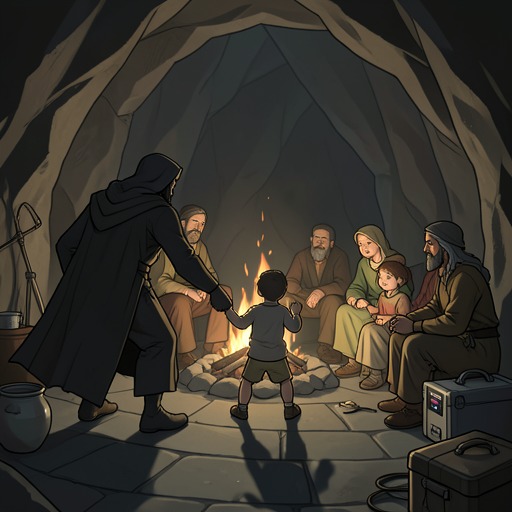
The later revelations place William within the Knudsen family history. Jorgen Knudsen describes his son as believing that the troll was not a burden but a blessing, and that the family should return to its old traditions. The son interpreted the family pact as a source of power and inheritance, arguing that the troll might deliver the family as it had supposedly brought them to America. He believed that honoring the pact required sacrificing a child, repeating what Nils Knudsen had done 190 years earlier. Jorgen says he admired his son’s resolve.
That resolve becomes concrete in the abandonment of Agnes Wheeler in a forest cave. Jorgen says his son’s wife, Gretta Wheeler, rejected what he had done and left with their other daughter, Grace Wheeler. He portrays the separation as the rupture that broke his son: after Gretta and Grace left, Jorgen took care of him. This family account links William’s actions to an inherited bargain, but it also shows that he actively chose to revive it. Tradition supplies his justification; it does not erase his responsibility for abandoning Agnes.
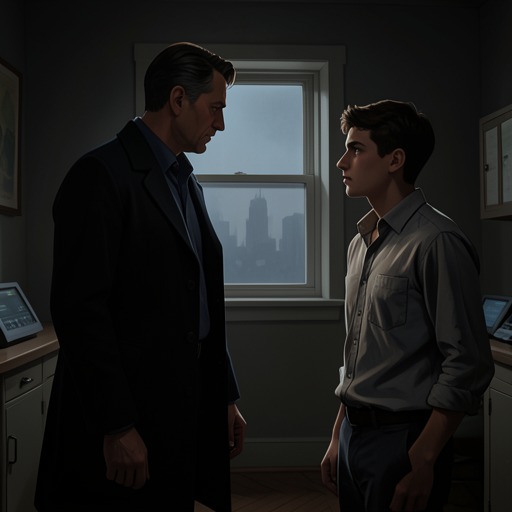
Apollo eventually names William while trying to understand why Kinder Garten had entered a room to turn off the space heaters. Emma asks who William Wheeler is. Her confusion underlines how completely he has remained outside her knowledge: to her, the man at the center of their misery is effectively a phantom, known through an avatar on a screen rather than as a person she has met. The reveal changes the meaning of William’s earlier presence. The book buyer, the helper at the fountain, and the man piloting Child’s Play are identified with Kinder Garten, the antagonist Apollo and Emma confront.
Surveillance and the Business of the Pact
The hidden operation is housed in a basement arranged as a living and working space. Among a boiler, laundry machines, old paint cans, an air mattress, clothes, and a thin pillow sits a computer system exactly like the one Patrice Green built in his basement apartment. An iPad beside a monitor displays a photograph of an infant cradled in a man’s hands. Kinder Garten sits at the rig wearing giant headphones, with blood on the floor beneath his chair. The room’s ordinary domestic clutter surrounds the technology through which he watches and controls events.
Kinder Garten explains that he monetized the inherited pact. His father, he says, performed the service for free, but the arrangement was meant to bring the Knudsen men prosperity in return for their ultimate sacrifice. Since his father’s sacrifice was insufficient, Kinder Garten claims, the troll brought no blessing and did not pay his mortgage. He spread the word on specialized message boards and offered paying subscribers access to the camera feed. His customers could log in whenever they wanted; he describes them as watching everyone all the time. He notes that covering laptop cameras with electrical tape could prevent such viewing, but assumes most people will not think to do it.
The scheme treats surveillance as both a source of income and a means of turning private suffering into entertainment. Kinder Garten calls Brian Kagwa “subject zero,” a beta test, and hopes to expand the audience and take payment in bitcoins to make transactions harder to trace. He admits that he has only one camera in the basement because he could not safely remain there long enough to install more, and describes the better camera he wants: a 35-millimeter full-frame CMOS sensor for full-HD capture. What he advertises to subscribers is the finale: watching the troll eat Apollo and Emma’s child.
Confrontation and Death
The promised spectacle has not unfolded as Kinder Garten expected. He says that the troll tries to raise the children it takes, but is bad at caring for them: it offers food they cannot eat or forgets its own strength. Brian has been different, and Kinder Garten cannot explain why. When he apologizes for the delay, Apollo recognizes that Brian seems to be protected. Kinder Garten’s account exposes the gap between his commercial plan and the living child whose fate he has tried to sell.
Kinder Garten begins opening a photo gallery and tells Apollo that he will see. Before he can find the image, Emma steps back and swings the Mattock sideways, lodging its pick in the side of his head above the left ear. The blow knocks him down and tears the tool free with a portion of his skull. He thrashes on the floor, bleeding heavily, while Apollo and Emma watch; his eyes eventually shift toward Apollo. Emma’s attack kills him and ends his immediate control of the operation. The interrupted image leaves his intended demonstration unfinished, but the surveillance system and the threatened child have already exposed what his enterprise was built to exploit: a family’s inherited violence converted into a marketable show.