
The Principle of Nonintervention
The Character of RainThis flow traces the Narrator (God)'s encounters with people who watch a death unfold and the moral uncertainty attached to intervention.
increasing Bearing strength in each event
 decreasing
Bearing strength in each eventdecreasingA Childhood Theory
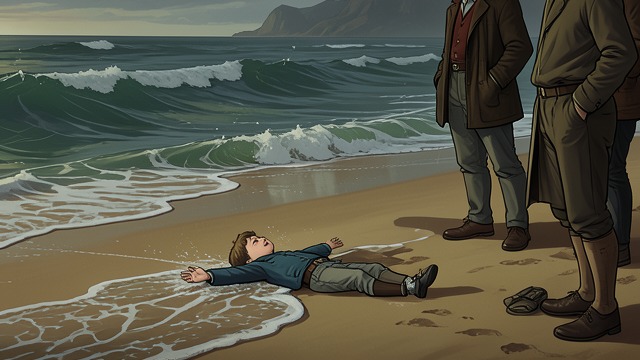
A Childhood Theory
The beach as audience
While drowning at Tottori, the child sees people watching but not helping. The Narrator (God) interprets their inaction as a Japanese refusal to create a debt of gratitude.
Fear of witnessed death
The presence of observers makes the crisis more frightening, not less. The child begins to associate nonintervention with a cultural rule rather than individual failure.
Jesus on the Cross
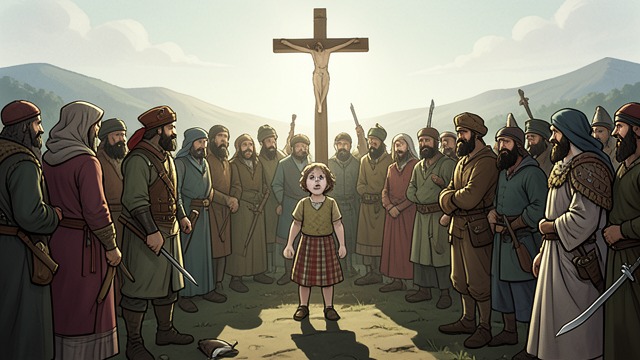
Jesus on the Cross
A familiar spectacle
The Narrator (God) reads an illustrated account of Jesus being crucified while a crowd watches. The image recalls the beach, where people also watched the child approach death.
Identification across stories
The child imagines that Jesus must have felt the same abandonment. A reading experience transforms a religious image into a personal connection.
Kashima-san at the Pool
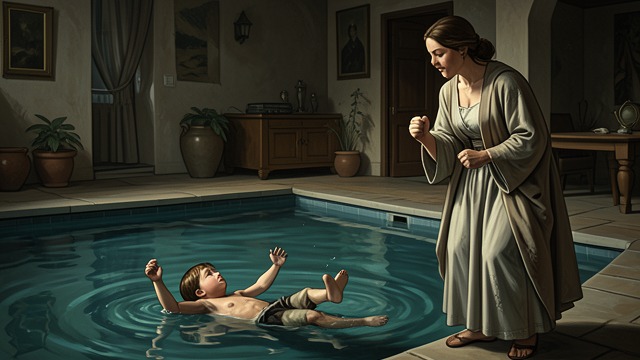
Kashima-san at the Pool
A witness does not act
Kashima-san looks down at the submerged child and does not pull it out. The Narrator (God) expects that she will leave the choice undisturbed.
Meaning assigned by the child
The child reads her stillness as recognition of a law that demands death. Whether that reading is accurate remains unresolved after the rescue.
Nishio-san Breaks the Silence
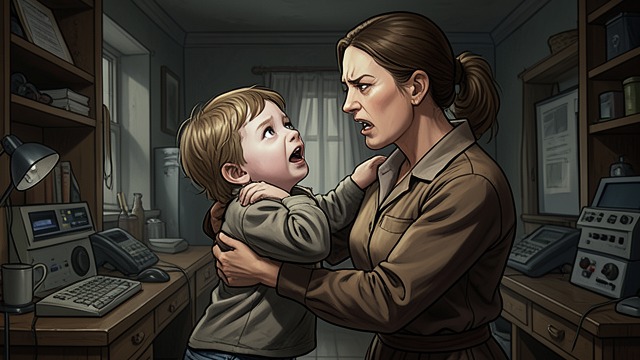
Nishio-san Breaks the Silence
Intervention arrives
Nishio-san grabs the Narrator (God) and shakes the child back to life. Her intervention cuts across the passive scene the child had accepted.
The event remains secret
The Narrator (God) does not tell the family that Kashima-san was present. The contrast between the two women survives in the child’s memory without becoming a public accusation.
Okinawa and Fear of Death
Okinawa and Fear of Death
A historical catastrophe
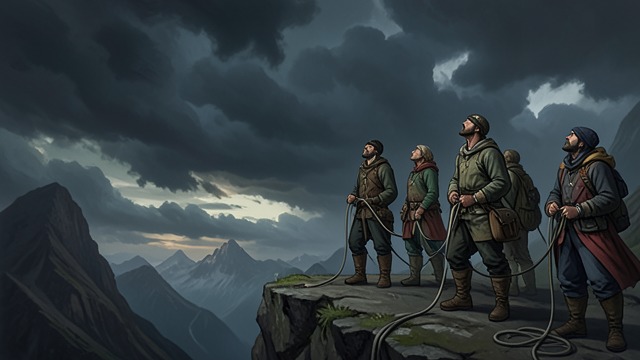
The adult narrator recalls thousands of Okinawans leaping from cliffs after believing the advancing Americans would kill them. Many die trying to avoid a death they fear.
A paradox considered
The narrator resists easy judgment of the dead while questioning whether suicide may itself express fear of dying. The historical reflection broadens the childhood encounters with watched and chosen death.
After the first drowning at Tottori
After the child learns to read
August 1970, during the koi-pool crisis
Moments after Kashima-san watches
In the adult narrator's later visit to Okinawa
