
Disgust and the Discovery of Self
The Character of RainThis flow traces how the Narrator (God) uses revulsion toward Koi (carp) to discover that disgust can disclose a distinctive personal identity.
increasing Bearing strength in each event
 decreasing
Bearing strength in each eventdecreasingA Question About Boys
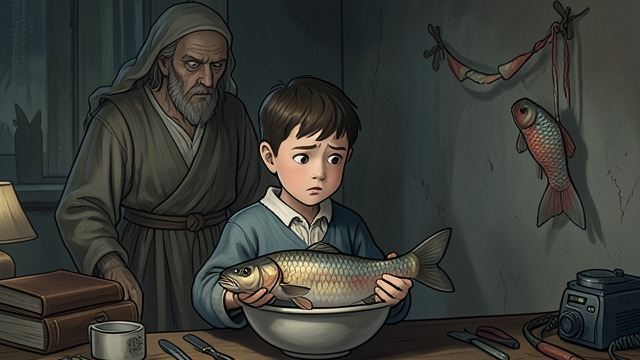
A Question About Boys
A cultural symbol challenged
The Narrator (God) asks why a carp stands for boys and why girls have no month. Adult answers fail to satisfy the child’s sense of fairness.
Observation begins
The child demands to see real carp, turning an abstract symbol into an empirical question. The inquiry opens a path from custom to personal judgment.
The Fish Judged
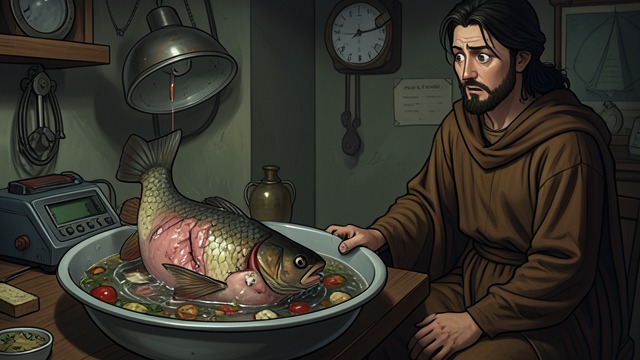
The Fish Judged
A grotesque impression
The Koi (carp) seem corpulent and repellent as they surge for food. Their long lives do not impress the child, who sees age as no virtue by itself.
A firm conclusion
Compared with the graceful and strange fish at the aquarium, the carp appear uniquely unattractive. The Narrator (God) turns a bodily reaction into a judgment about the symbol of boys.
The Gift and Its Cost
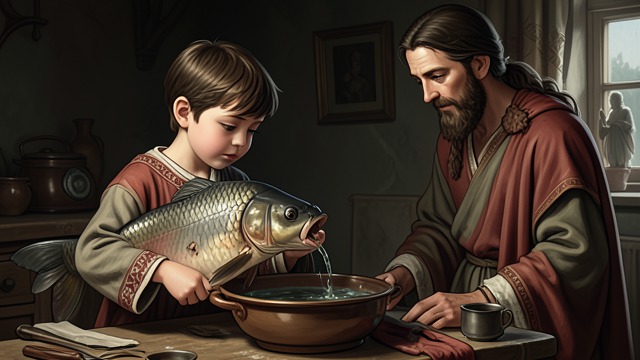
The Gift and Its Cost
An unwanted duty
The parents give the Narrator (God) three carp and expect the child to care for them. The child accepts politely despite already finding the fish repulsive.
Disgust becomes unavoidable
Feeding makes the child encounter the fish’s mouths at close range every day. What had been an opinion now governs a repeated bodily experience.
A Rule of Identity
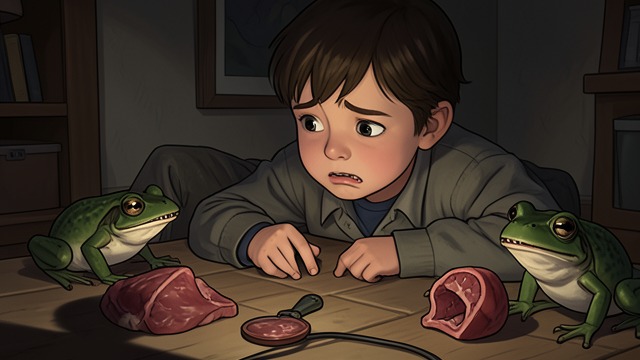
A Rule of Identity
Revulsion examined
The child wonders why carp mouths provoke a stronger reaction than frogs, bodily mess, or raw meat. The difference cannot be explained by a general fear of unpleasant sights.
A personal signature
The Narrator (God) proposes that what disgusts a person may disclose who that person is. Revulsion becomes a route to self-knowledge rather than something to dismiss.
The Body Reflected Back
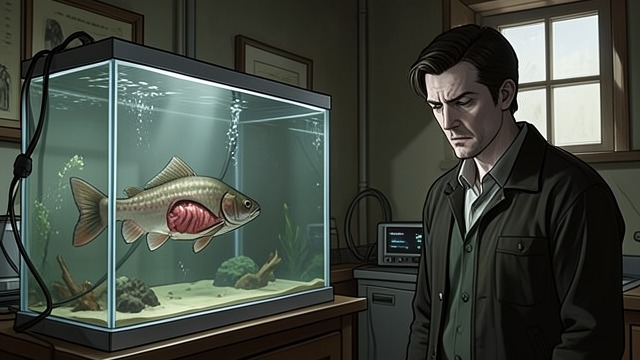
The Body Reflected Back
The fish accuse the observer
The Narrator (God) sees in the carp’s visible digestive tracts a reminder of human bodies and its own tube-like origin. Disgust shifts from the fish to the life they seem to represent.
Selfhood destabilized
The child fears that individuality may be only a surface over appetite and bodily emptiness. This recognition helps drive the crisis in which the Narrator (God) enters the pool.
May 1970
Later in May, at Futatabi Arboretum
The third birthday
During the first weeks of feeding
Late August, before the pool crisis
