
The Lure of Nonexistence
The Character of RainThis flow traces the Narrator (God)'s early familiarity with death and the changing relationship between death's attraction and the will to survive.
increasing Bearing strength in each event
 decreasing
Bearing strength in each eventdecreasingAn Early Near-Absence
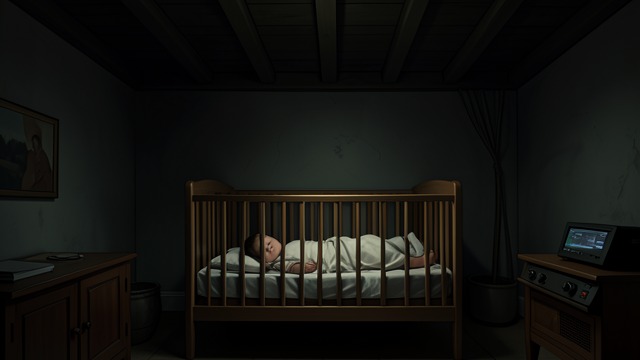
An Early Near-Absence
Life experienced as stillness
The Narrator (God) begins in a condition that appears to contain no movement, desire, or awareness of time. Later, the child interprets this period as having approached nonexistence.
Death as a remembered impression
The ceiling above the crib becomes an image of a tomb lid. The child’s earliest account of death grows from bodily enclosure rather than adult teaching.
The Sea’s Beauty Below
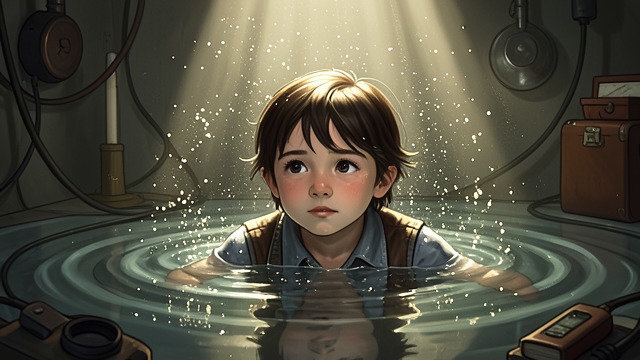
The Sea’s Beauty Below
Fear interrupted by wonder
As the child sinks at Tottori, sunlight and moving sparkles become mesmerizing. The Narrator (God) briefly forgets fear while approaching death.
Rescue restores attachment
Hugo’s warning leads to the child’s rescue. Afterward, the Narrator (God) recognizes that it is glad to remain alive, even though the beauty of the submerged scene stays vivid.
The Koi Pool’s Invitation
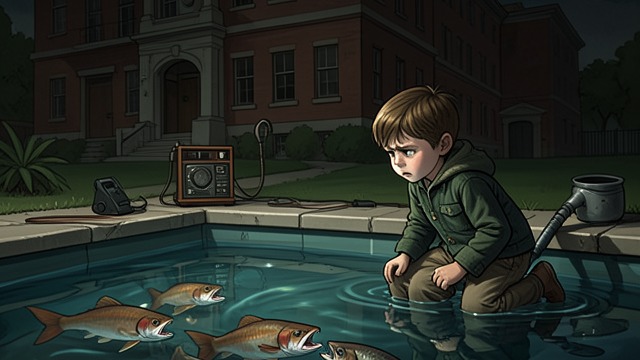
The Koi Pool’s Invitation
Exhaustion and dread
Repeated exposure to the carp’s mouths leaves the child increasingly distressed. The garden that once felt like paradise seems to harbor death.
Nonexistence seems peaceful
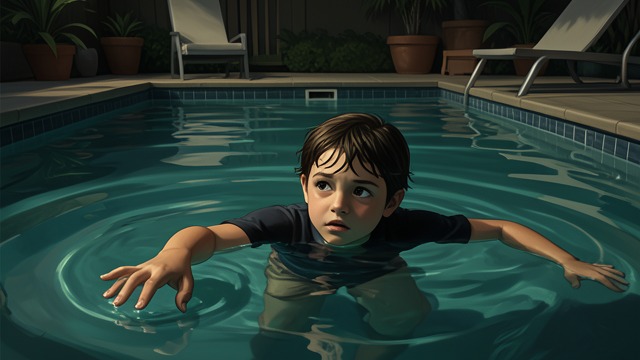
The Narrator (God) collapses into the pool and experiences calm rather than panic. The child sees surrender as an escape from feeding, departure, and the demands of living.
Life Reclaimed by Force
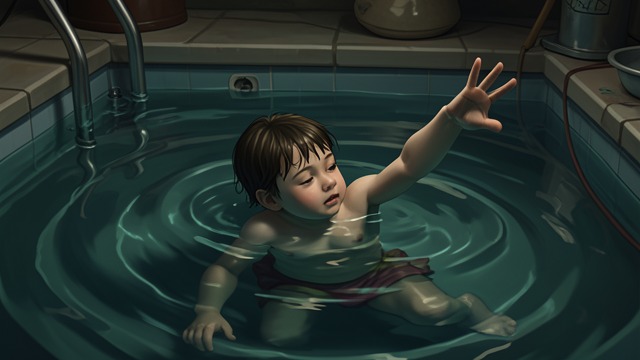
Life Reclaimed by Force
Nishio-san intervenes
Nishio-san grabs and shakes the child, bringing air back into its lungs. The return is painful, immediate, and beyond the Narrator (God)'s own choice.
Survival remains ambiguous
The child is grateful to be spared the fish-feeding ritual but remains unsure whether life or death would have been better. Rescue interrupts the decision without resolving its meaning.
Death Without an Answer
Death Without an Answer
The counterfactual remains open
The adult narrator wonders whether an ending in the pool might have been better. A surviving life can be interesting without proving that the unknown alternative would have been worse.
Mortality persists
The final reflection acknowledges that everyone eventually faces death without rescue. The story refuses a neat lesson, holding uncertainty beside the memory of feeling at home in water.
During the first two years
April, during the first drowning
August 1970, late in the feeding routine
Moments after the pool immersion
In the retrospective ending
