
From Inertia to Motion
The Character of RainThis flow traces the physical and mental transition from absolute stillness through fury into an active, exploratory childhood.
increasing Bearing strength in each event
 decreasing
Bearing strength in each eventdecreasingThe Inert Body

The Inert Body
A body that does not act
The child remains on its back, unmoved by hunger, sound, music, or earthquake. Its body grows even as purposeful movement does not.
Inertia as a force
The narration turns this stillness into an image of inertia: a power that holds the world in place. The child’s lack of action unsettles the adults’ belief in inevitable development.
The Body Breaks Stillness
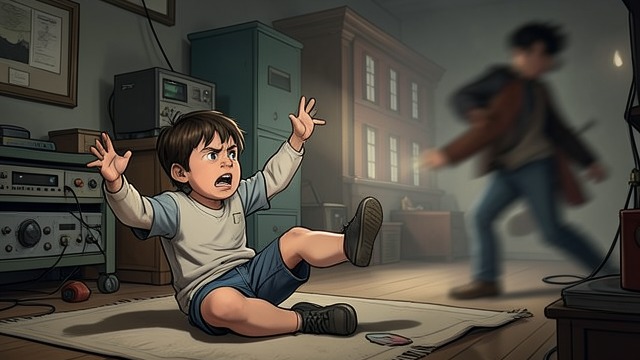
The Body Breaks Stillness
A violent beginning
The child sits up and howls, kicking at the people who approach. Physical movement arrives not as a gradual lesson but as an eruption of anger.
A new kind of difficulty
The family welcomes the first signs of life while struggling with their intensity. Motion makes the child more present and more disruptive at once.
Walking and Running
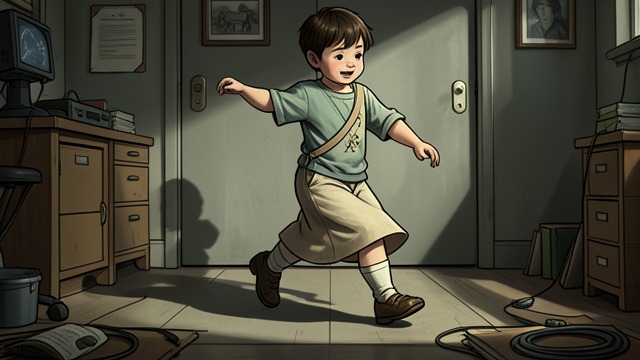
Walking and Running
Learning to stand
The Narrator (God) learns to walk by pitching forward and transferring weight from one foot to the other. The adult account rejects magic in favor of a simple, bodily experiment.
Movement expands freedom
Running adds speed and the possibility of escape, including escape from adult rules. Physical ability becomes a means of independence and mischief.
Swimming into the Sea
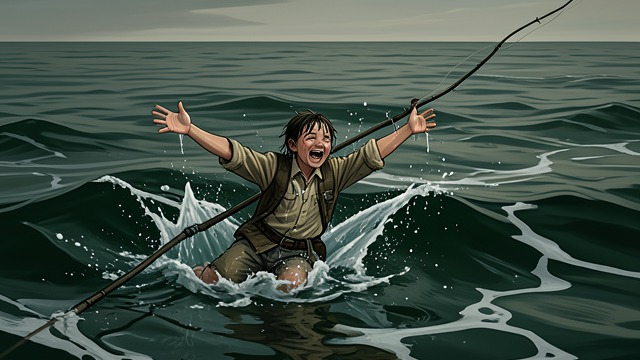
Swimming into the Sea
The first embrace of water
At Tottori, the child approaches the Sea of Japan with fear and desire. Once carried by its waves, the Narrator (God) discovers a physical exhilaration unlike walking on land.
Confidence becomes risk
The sea seems inviting enough to follow toward Korea, but its floor drops away. The child’s exploratory movement becomes a struggle against drowning.
A Dangerous Window
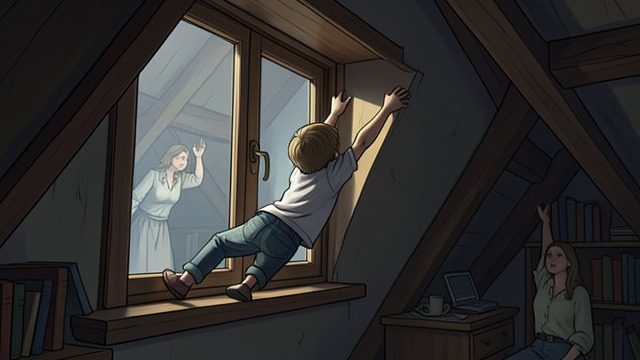
A Dangerous Window
Curiosity at night
The child longs to see beyond the attic window and climbs out of the crib to reach the sill. A desire for a wider view overcomes ordinary caution.
Discovery and punishment
The Narrator (God) ends up hanging outside the window and treats the view as a new observation post. Mother rescues and spanks the child, and the attic is reassigned.
Birth through age two
At age two
After the February 1970 awakening
April, at age two and three quarters
Late April, at age two and three quarters
