André
The Character of RainAndré is the narrator’s older brother, four years her senior and, in her account, the family member most committed to provoking her. Their rivalry is filtered through the narrator’s childhood conviction that words can create or deny existence: she withholds his name to punish him, turning an ordinary sibling conflict into a private act of erasure. Her account also gives the antagonism a mundane counterpart: when the children speak, their exchanges may amount to little more than a question about a missing box of LEGOs and an unhelpful answer.
Identity and Background
The narrator identifies André as her brother and specifies that he is four years older. One formative memory fixes their difference in age and power through an undignified image: he spends an entire afternoon reading a Tintin comic while sitting on her head. The episode is presented as part of a wider pattern of torment, not as an isolated disagreement. For the narrator, the memory helps explain why she treats naming him differently from naming other people around her.
Her refusal is deliberate. After naming several people, the narrator decides that speaking her brother’s name is out of the question; she reasons that, if he is not named, he does not truly exist. This is her childhood logic rather than a literal change in the family’s relations. The account makes the distinction important: André remains present in her story, but she claims the power to withhold recognition from him. A name that has served elsewhere as a bond becomes, in this instance, a weapon of exclusion.
Naming and Sibling Conflict
The narrator’s decision to leave André unnamed is explicitly punitive. She does not present the silence as inability or forgetfulness: she chooses it because she believes he has earned punishment. The gesture belongs to her developing theory of language, under which naming gives people a kind of existence and binds the speaker to them. André becomes the exception that tests that theory. Rather than extend the recognition she has offered others, she tries to cancel him through the very power she has assigned to words.
Her later account confirms that the rivalry does not dissolve with the naming game. She portrays André as taking pleasure in tormenting her and describes his success in keeping her enraged for hours as a satisfying end to his day. That description belongs to the narrator’s emphatic view of him; the evidence offers her experience of his conduct, not an independent account of his intentions. Her exasperation grows so absolute that she turns it into a sweeping, deliberately extreme judgment about older brothers. The exaggeration conveys the intensity of her grievance without establishing any real threat or action.
Hugo and the Household
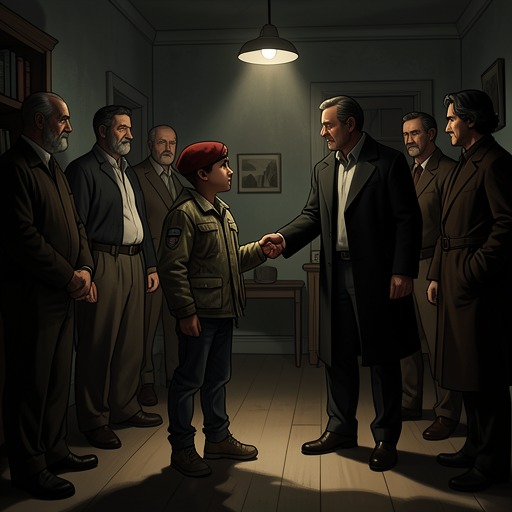
André’s relationship with Hugo changes the narrator’s position toward both boys. In 1970, amid political turmoil in Vietnam, a Vietnamese businessman who is a friend of the narrator’s father has to return home with his French wife. Their six-year-old son, Hugo, stays with the narrator’s parents for an unspecified length of time. The narrator initially thinks well of Hugo, but her view shifts when he joins André and the two boys become inseparable. She describes this new alliance as Hugo going over to the enemy, making clear that André’s rivalry with her shapes how she interprets the household’s new arrangement.
The narrator responds to Hugo as she has responded to André: she decides not to name him. The repetition makes naming less a settled rule than a tool she applies in conflict. Yet her account of the boys also complicates her anger. She says she puts up with Hugo because he has saved her life, while continuing to cast André as her foremost nuisance. Her gratitude toward Hugo therefore does not prevent her from resenting his closeness with her brother; the boys’ alliance places a valued person on the side she regards as hostile.
Everyday Encounters and Narrative Role
The children’s limited exchanges provide a quieter measure of André’s place in the household. The narrator characterizes the conversation between her brother and sister as often revolving around a missing box of LEGOs, followed by the admission that its location is unknown. The detail does not show André’s inner life, but it sets the grand force the narrator attributes to names against ordinary sibling speech: daily language can be practical, brief, and inconclusive.
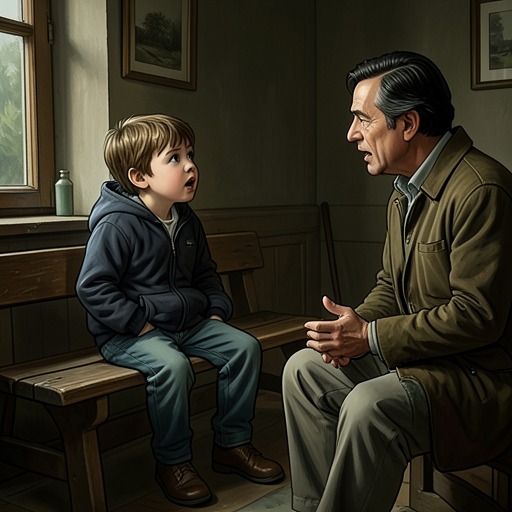
In another childhood exchange, André and Hugo give the narrator a teasing look while she questions why a carp represents a boy. The narrator records the gesture as a shared act of mockery, consistent with her sense that the boys have formed a unit against her. Elsewhere she describes André as the worst nuisance imaginable, a judgment that places him below even Hugo, whom she tolerates despite their rivalry. André’s significance in these passages lies less in a developed account of his own motives than in the pressure he exerts on the narrator’s ideas of speech, recognition, and family allegiance. The story shows a brother who remains unnamed by choice yet repeatedly returns as the person against whom the narrator defines her power and her grievance.