Hugo
The Character of RainHugo is a six-year-old boy placed in the Narrator’s family’s care after political turmoil separates him from his parents. First treated by the Narrator as an adversary when he befriends her brother, he becomes the person whose quick warning to Mother saves her from drowning. His rescue abruptly changes the meaning of their relationship: the child she had tried to exclude becomes indispensable to her continued existence.
Identity and Background
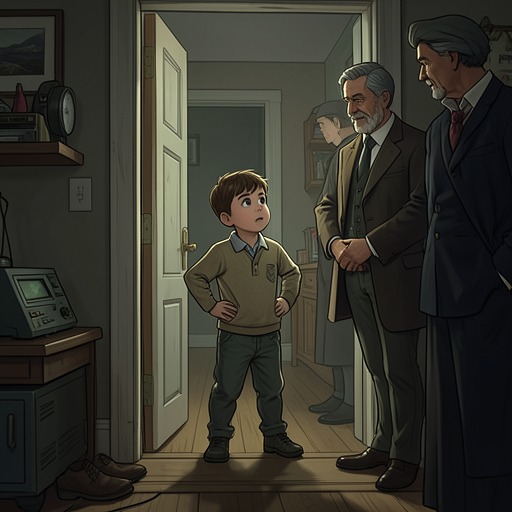
Hugo is the son of one of Father’s friends, a Vietnamese businessman married to a French woman. In 1970, political turmoil in Vietnam compels the businessman to return home with his wife, while their son remains behind in the care of the Narrator’s parents. The arrangement has no specified end date: Hugo is entrusted to the family for an indeterminate period, making him both a guest in the household and a child separated from his own parents.
The Narrator describes him as serious and reserved. Those qualities initially make a favorable impression on her, before his growing closeness to her brother alters how she sees him. The account gives no independent view of Hugo’s experience of being left in the family’s care; he is presented through the Narrator’s recollection, first as a newcomer in her household and then as a figure in her private system of loyalties and rivalries.
Arrival in the Household and Rivalry
Hugo’s relationship with the Narrator changes when he and her brother become inseparable. The Narrator frames this new alliance as Hugo’s crossing over to the enemy, a deliberately childlike judgment that turns companionship between the boys into a personal affront. Her response is to withhold Hugo’s name. She treats this refusal to name him as punishment, even though she continues to know who he is and to observe his place in the household.
The hostility also intersects with the Narrator’s frustration about language. At this point, she has spoken only a few words of French and feels unable to express what she considers important perceptions about the boys. She believes they are missing nothing by waiting for her to articulate their true nature, while her silence leaves her unable to make those judgments heard. Hugo is therefore not simply a rival for her brother’s attention: he is one of the people around whom the Narrator experiences the limits and withheld force of her own speech.
The Rescue at Sea
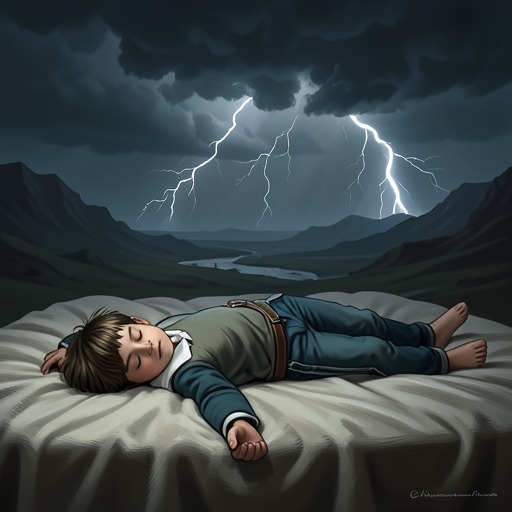
The rivalry is overturned during the Narrator’s near-drowning. Hugo is playing with André and Juliette when he sees the Narrator’s head disappear beneath the water. He goes to warn Mother and points out where she has gone under. Mother later tells the rescued child that without Hugo’s intervention, she would have died. Hugo does not rescue her by himself in the account; his essential action is to notice what has happened, alert an adult, and direct her to the location.
After being hauled from the water, the Narrator is wrapped in a towel and cared for by Mother. Once she understands what Hugo did, she looks at him and says, “Thank you, Hugo. You’re nice.” The solemn gratitude is a sharp reversal of the earlier punishment: she names him, addresses him directly, and recognizes a kindness that her hostile classification had obscured. The declaration is followed by stunned silence. In the same aftermath, the Narrator says she has been talking for a long time, revealing that her earlier inability to express herself had not been the whole truth.
Change and Narrative Significance
On the beach, the Narrator thinks of Hugo as a mathematical equation: without him, there would be no self to experience anything. She follows that reasoning to an affirmative conclusion—she is glad not to be dead, and glad that she knows it. Hugo’s intervention thus changes more than her estimate of one boy. It makes her survival depend on someone she had treated as an enemy, and gives her a concrete reason to value being alive.
The episode also complicates the Narrator’s account of memory and identity. She says that she remembers everything after February 1970, while distinguishing those firsthand memories from the period before the white chocolate that gave her an identity and a memory. Hugo’s arrival and rescue belong to the post-awakening life she claims to recall directly. Within that retrospective structure, he remains important not through a long account of his later life, which the narrative does not provide, but through a precise reversal: the reserved boy she excluded sees her disappear, acts to bring help, and becomes the condition of the self who remembers him.