Life is a tube that swallows and remains empty
The Character of Rain“Life is a tube that swallows and remains empty” is the expression through which the Narrator (God) interprets the carp’s feeding as a revelation about life itself. What begins as a disturbing sight—the fish opening their mouths to receive rice cakes—becomes a challenge to the narrator’s sense of human distinctness and a confrontation with the possibility that life is governed by appetite rather than transcendence.
The Image and Its Occasion
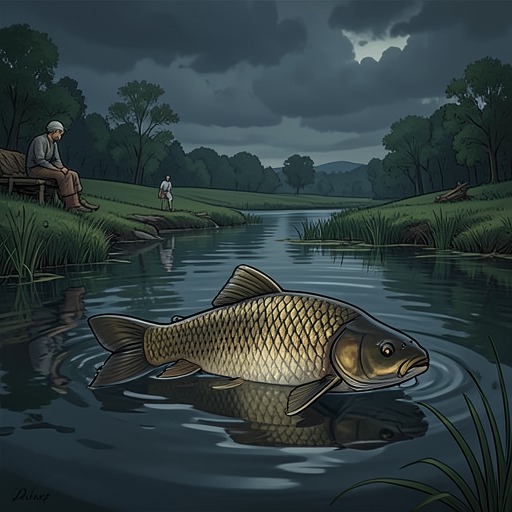
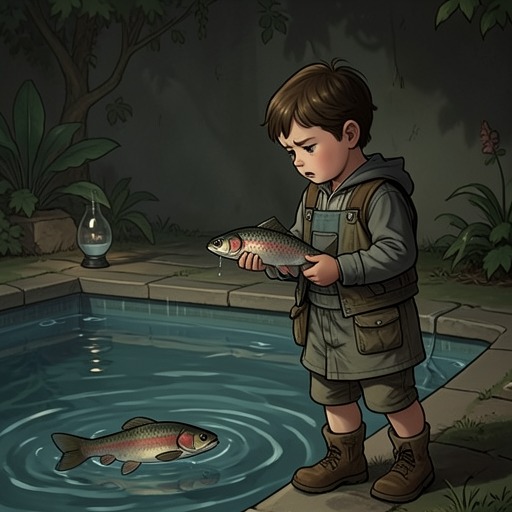
The expression arises during two weeks of feeding the carp at noon. The narrator throws them pieces of rice cake; they lunge, suck the food down, and open their jaws so widely that their stomachs are visible. Their feeding is both ordinary and appalling: the fish take in nourishment, yet the sight exposes the bodily process usually concealed from view.
The narrator understands this exposure as a breach of a primordial taboo. The fish make visible the digestive tract that people ordinarily keep hidden, and the narrator’s attention fixes on that physical resemblance. The idea that human beings might display their insides extends the spectacle beyond the pool: the fish’s bodies suggest that people, too, are organisms that eat, whatever distinctions they make between themselves and other creatures.
From Observation to Revelation
At first, the narrator silences the voice that draws this comparison. But the daily repetition of the feeding does not make the sight familiar; instead, the narrator becomes more depressed. The possibility that the act of feeding carries a divine message changes the fish from an unpleasant chore into a source of meaning, and the narrator decides that understanding the message requires letting the voice speak.
The voice’s command to open one’s eyes makes seeing the basis of its claim. Life is presented as membrane, guts, and an unfillable hole demanding to be filled; the sentence “Life is a tube that swallows and remains empty” condenses those images into a single, stark formula. Its paradox is central: the tube takes food in, but remains empty. Consumption therefore promises no final fullness, only the renewal of the need to consume.
Human Identity and the Expression’s Force
The image also attacks the narrator’s recent sense of being different and capable of greater thoughts. The voice calls the narrator a tube that emerged from another tube, collapsing a claim to exceptional identity into bodily origin and function. In this framing, the fish do not merely resemble people; their visible interiors expose a continuity that human self-conception tries to obscure.
The expression is consequently more than a description of digestion. It strips life of reassuring distance from the body and makes appetite an unsettling measure of shared existence. Its force comes from the contrast between the fish’s plainly visible mouths and the hidden interiors of human beings: what seems grotesque in the pool becomes difficult to dismiss once the narrator recognizes it as a reflection.