Little Green Lake
The Character of RainLittle Green Lake is a small lake in the mountains near the Narrator (God)’s home in Shukugawa. The Narrator (God) gives it this name and makes it a regular swimming place after surviving a near-drowning at sea. Its importance comes from more than its beauty: the lake offers a setting for learning, memory, and a sense of connection with water, while the nearby garden and its carp pool later become associated with danger and rescue.
Setting and Naming
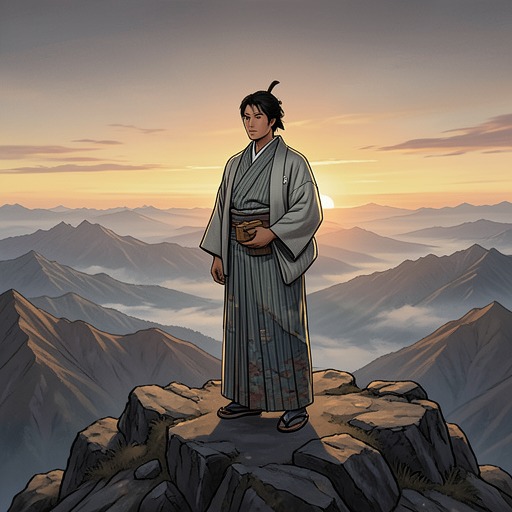
The lake is introduced as a small, secluded place near the family home in the mountains. Its shores are fringed with azalea bushes, and its water is warm. The name Little Green Lake is the Narrator (God)’s own, marking an early act of personal naming rather than a formal designation. The description establishes a distinct place within the Shukugawa landscape, close enough for regular visits but apart from the home and garden.
Learning to Swim
After a frightening encounter with the sea, the Narrator (God) decides to learn to swim. Nishio-san takes the child to Little Green Lake every morning, where the Narrator (God) learns to swim underwater alone. The lessons are not presented as formal instruction: the child explores the lake independently, keeping their eyes open beneath the surface. In this way, the experience that had made drowning imaginable becomes the occasion for learning to move through water with greater confidence.
The lake also gives the Narrator (God) a changed view of the surrounding world. On surfacing, the child sees the tree-covered mountains enclosing the water and imagines being at the center of an expanding circle. The image makes the lake both a concrete swimming place and a vantage point from which the landscape seems newly ordered around the self. The Narrator (God)’s earlier conviction of divinity persists after the sea incident, and the lake’s beauty accompanies rather than resolves that belief.
Seasonal Change and Repeated Visits
The lake’s appearance shifts with the seasons. In May, the azaleas around it bloom, and their color spreads across the mountain slopes until the swimming place is surrounded by pink. The change makes the lake part of a larger landscape rather than a neutral backdrop: the flowering bushes alter the character of the place and frame the Narrator (God)’s return to the water.
The lake remains part of the child’s routine during a period of incessant rain. Nishio-san accompanies the Narrator (God) while holding an umbrella, remaining on the dry side; the child, by contrast, leaves home in a swimsuit and goes into the water. The rain does not interrupt the visits but becomes part of their appeal. The Narrator (God) floats in the lake and treats the falling rain as an extension of the surrounding water. This episode develops the lake from a place for swimming into a setting through which the child imagines a kinship with water itself, including its opposed qualities of life-giving force and danger.
The Lake, the Garden, and Memory
Little Green Lake is repeatedly associated with refuge and remembered childhood. The Narrator (God) later identifies the lake’s greenness among the essential memories retained from life after February 1970. It stands alongside the garden and the taste of plum wine as a specific recollection, suggesting that memory preserves the place through its particular appearance and its role in the child’s life, not merely as an interchangeable outdoor setting.
The lake should be distinguished from the garden pool involved in the later crisis. In the garden, the Narrator (God) feeds the carp and becomes increasingly distressed by their feeding; at the pool’s edge, the child falls into the water. Nishio-san intervenes and pulls the child from it. The sequence does not take place at Little Green Lake, but it changes the meaning of water in the surrounding Shukugawa setting. The lake had offered repeated visits and the freedom to learn; the garden pool becomes the site of a life-threatening episode and rescue. Together, the two settings complicate any simple equation of water with safety or danger.
Narrative Significance
Little Green Lake gathers several strands of the Narrator (God)’s early life: recovery after the sea, bodily learning, a powerful sense of self, and the preservation of memory. Its recurring seasonal and weather changes give the narrative a stable location that is never quite static. The lake’s flowering edges and rain-filled visits register the environment as an active presence in the child’s experience, shaping what can be seen, felt, and remembered.
Its significance is also defined by contrast. The lake supports exploration and a sense of belonging in the natural world, while the nearby pool exposes the Narrator (God) to a crisis that only Nishio-san’s intervention ends. The distinction keeps the landscape from functioning as a single symbol: different waters, in different circumstances, carry different consequences. Little Green Lake remains the childhood place where the Narrator (God) learned to swim and where the remembered landscape of Shukugawa acquired its enduring form.