Nishio-san Decides to Stay
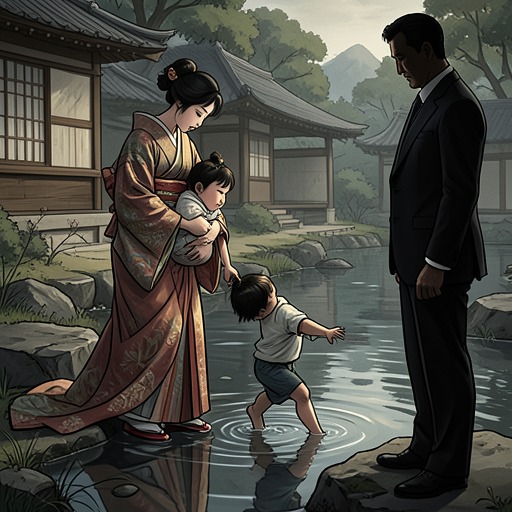
The Character of RainNishio-san Decides to Stay is a childhood episode in which a threatened separation becomes a temporary reprieve, and the narrator learns that knowing a loss is inevitable does not make attachment less important. Nishio-san first announces that she is leaving her work with the family; the narrator’s distress brings the decision to her father, who intervenes. When Nishio-san returns and promises to stay, the narrator embraces her with a new awareness: the family will eventually leave Japan, so this reunion postpones rather than abolishes the parting.
Resignation and Its Stated Causes
The next day, Nishio-san tells the narrator’s father that she is leaving. She explains that she has too much work, is tired, and needs more time at home to care for her twin daughters, who are ten and need their mother. The parents have to accept her decision. The account gives Nishio-san’s own reasons plainly, grounding the crisis not in a sudden quarrel with the family but in the demands of her work and her responsibilities at home.
The announcement arrives in a tense household context. The narrator has heard a conversation while hiding under the kitchen table and understands enough to carry what she heard to her parents. The account does not disclose the conversation’s full contents or establish exactly what prompted Nishio-san’s resignation. It does show that Kashima-san had been present in the lead-up: she had smiled quietly as Nishio-san wept, and the narrator’s father is furious with her after the child reports what she heard. That sequence makes Kashima-san a source of suspicion and conflict without resolving precisely what part she played.
Protest and Family Warning
The narrator responds physically before she can accept the possibility of separation: she wraps her arms around Nishio-san’s neck and pleads, “Please don’t go! Please!” Nishio-san weeps but does not change her mind. The child’s embrace makes the relationship’s immediate stakes visible, but it cannot yet alter the adult decision.
After carrying her account to her parents, the narrator stays in her mother’s arms, sobbing and repeating, “Nishio-san has to stay with me! Nishio-san has to stay with me!” Her father is angry with Kashima-san and asks Nishio-san to speak with him in private. Mother, meanwhile, tries to widen the child’s view beyond the immediate crisis. The family will leave Japan in a year, two years, or three, she explains, and Nishio-san will not go with them. In her view, this may be a good time for the separation to happen. The warning changes the meaning of the dispute: even if Nishio-san withdraws her resignation, the narrator cannot keep her forever.
The Reversal
The narrator’s grief intensifies into howling. Then Father and Nishio-san reappear, and Nishio-san runs to the child and sweeps her into her arms. She tells the narrator not to worry and assures her that she is staying and will not leave. The account does not reveal what was said in private or identify a single reason for Nishio-san’s change of decision. It presents the return itself as the decisive turn: a moment earlier the child had faced an imminent loss; now she is held by the person she had begged to keep.
The relief is real, but it is already qualified. The narrator reflects that the reassurance, had it come fifteen minutes earlier, would have filled her with joy; by then, however, she knows that the stay is only a reprieve and that the tragedy will happen later. The reversal therefore does not erase the pain of the announcement. It gives the child what she wants in the present while making her newly conscious of the future limit on that gift.
Choosing Attachment Despite Its Limit
From the episode, the narrator draws a choice about loving under the knowledge of eventual loss. One possibility is to avoid becoming attached to people and things; the other is to love them more fiercely because time together is limited. She chooses the latter. Rather than hold back after learning that the family will eventually leave, she hugs Nishio-san with all her strength. The embrace is both a response to the immediate reunion and a deliberate acceptance of the attachment that will make a later parting hurt.
Kashima-san passes by and sees Nishio-san holding the narrator, contented and peaceful. She does not know that the narrator overheard the earlier conversation, but she senses that the child played some part in Nishio-san’s decision to stay. Her pursed lips and baleful stare preserve the conflict even as the child and Nishio-san share their moment of relief. The event thus ends not with universal reconciliation but with the narrator’s closeness to Nishio-san set against Kashima-san’s disapproval.
A Reprieve Within a Larger Farewell
Father later tells the narrator that the family will not leave Japan for another two or three years. The longer stay is bittersweet: to the child, even that span seems like an eternity, yet it also confirms that departure remains ahead and Nishio-san will not accompany them. The narrator suggests that Father change jobs, an answer shaped by a child’s wish to undo the conditions that threaten separation. The exchange gives the stay a clear boundary: Nishio-san remains for now, while the family’s eventual departure remains in view.
The episode is narrated as part of the narrator’s claimed firsthand memory of the period after February 1970. Elsewhere, she says that the white chocolate gave her an identity and a memory, and that what she knows from then on is remembered firsthand, though she also concedes that her expansive claim cannot be proved or disproved. Here, that retrospective frame supports the scene’s central contrast between the child’s immediate, bodily appeal and the older narrator’s understanding of what the promise can and cannot secure. Nishio-san’s decision to stay matters not because it cancels the future loss, but because the narrator chooses to meet the remaining time with love rather than withdraw from it.