Shukugawa
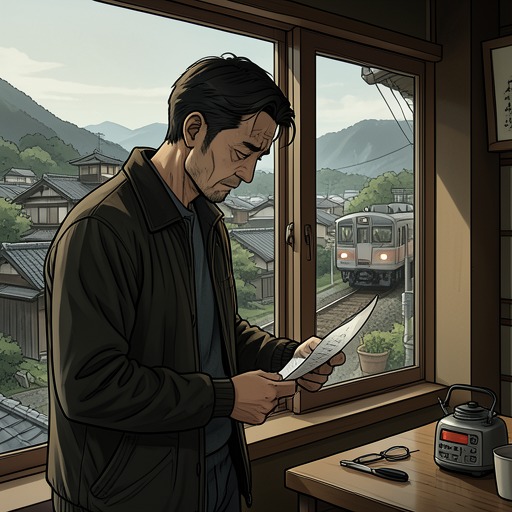
The Character of RainShukugawa is the village in Kansai that anchors the Narrator (God)’s early life in Japan: the place where, at two and a half, she associates White Chocolate with awakening and with becoming Japanese. Its tiled walls, ginkgo-shaded streets, gardens, and nearby Little Green Lake form more than a backdrop. In her recollection, Shukugawa is the first place that feels wholly like home, and later the home she insists she cannot leave.
Setting and First Awakening
The Narrator places her birth in Japan at the age of two and a half, in February 1970, in Shukugawa, under her paternal Grandmother’s gaze and through the grace of her White Chocolate. This is a figurative birth: the sweetness gives a previously inert child a speaking self and a continuing inner voice. The location therefore marks the beginning of remembered personhood as well as a point on the map.
Her account also distinguishes this awakening from what came before. She says that before the White Chocolate she remembers nothing and must depend on other people’s recollections; afterward, she claims firsthand memory. Shukugawa is consequently where her personal history begins in the form she can narrate, even as she acknowledges that the earliest portion of her life reaches her indirectly.
A Neighborhood Made into a World
The remembered neighborhood is calm and beautiful, bordered by walls topped with tiles and shaded by ginkgoes growing in gardens. Farther along, the street becomes a path winding beside the mountain toward Little Green Lake. These particulars give the place a defined shape: a protected domestic edge opening onto a route through the landscape and toward water.
A walk with Father crystallizes that geography into a feeling of belonging. As they move through flooded streets, the Narrator jumps into the torrent at the curb, soaking her dress and Father’s trousers while he appears not to notice. The route leads toward Little Green Lake, and she remembers holding his hand while everything seemed to be where it ought to be, beginning with herself. In that moment, the neighborhood is not merely familiar scenery; it is an ordered universe in which she feels at home.
The certainty breaks when she turns and finds Father gone and her hand empty. She has not seen the moment he let go. The sudden absence makes the landscape associated with security the setting for a first sharp fear of loss: if someone as substantial as Father can disappear, the apparent stability of home cannot guarantee that its people will remain.
Belonging and the Threat of Departure
Shukugawa is bound to the Narrator’s sense of Japanese identity. At two and a half, she chooses the affection and attention of Nishio-san, who treats her as a uniquely honored child, and declares through that choice that she will become Japanese. She later locates this transformation in Shukugawa itself. The place’s beauty—its rain-moistened garden, distant mountains, and neighborhood sounds—becomes inseparable from being cherished by Nishio-san.
That belonging turns into a point of conflict when the Narrator learns that her family will eventually leave Japan. She protests that she cannot leave, insisting that Japan is her country and that this is her house; she says she will die if she has to go. Her claim joins national belonging to the intimate geography of home. The fear is not simply of travel or change: leaving would mean losing the place where she believes her identity and safety were first made.
Memory and Significance
In retrospect, Shukugawa gathers the Narrator’s strongest early images of home into a single landscape: the tiled walls, garden trees, mountain path, water, and Father’s hand. The account is selective rather than a comprehensive record of the village. Its importance lies in how particular surroundings become charged with attachment, and how quickly that attachment is shadowed by disappearance and anticipated departure.
The village thus holds together two opposing experiences. It is the setting of awakening and belonging, where the Narrator feels that the world is correctly arranged around her; it is also the home whose possible loss she cannot imagine surviving. Shukugawa matters because the remembered place gives childhood identity a geography—and makes the threat of leaving feel like a threat to the self.