World War II
The Character of RainWorld War II is a historical presence in the narrative rather than a continuous account of military events: it surfaces through a survivor’s childhood testimony, family disputes that carry the war into 1970, and the narrator’s later visit to a site of mass death in Okinawa. Together, these episodes show how the war persists in private memory and inherited explanations, even when its physical traces have disappeared.
The War Enters Through Memory
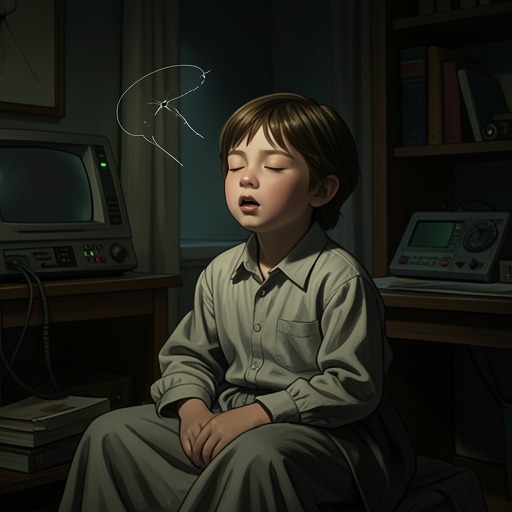
The narrator distinguishes between what can be remembered firsthand and what must be received from others. The white chocolate, which gives the narrator an identity and a connection to pleasure, marks the beginning of remembered life in February 1970. Before then, the narrator says, there is no personal memory; accounts from other people must supply what is missing. The contrast matters for the war’s place in the book: the narrator did not witness the events of 1945, but encounters them through Nishio-san’s story and through the attitudes that remain in the family decades later.
The narrator claims to remember everything after February 1970, while acknowledging that this does not mean recalling every conversation or every parental worry. The claim is presented as impossible to prove or disprove, and the narrator becomes less interested in being believed. That tension gives the recollections a distinctive status: they are asserted as intimate experience, yet the narrative also marks the limits of memory and the difference between firsthand recollection and testimony. World War II belongs to the latter category, but its consequences enter the narrator’s remembered world.
Nishio-san’s Account of Kobe
Nishio-san recounts the bombing of Kobe in 1945 from the perspective of a seven-year-old. She had heard distant bombing before, but on this occasion believed her family was the target. During the attack she was buried beneath debris and struggled to find a way out. When she heard people nearby, she followed the sounds, taking them as evidence of life. Reaching the surface did not bring safety: further explosions buried her again, and she repeatedly tried to climb out.
After the bombing stopped, the scale of her family’s loss became clear. Her father was dead, as were her mother and brothers. Her sister had died two years earlier, after being hit by a train. Nishio-san describes being surprised that she had survived and recalls feeling jealous that her sister had been spared the nightmare of the bombing. The account makes survival more than a simple escape from danger: it leaves the child alive amid the destruction of her home and the deaths of her family.
The story also reveals how Nishio-san understands the instinct that kept her moving. She continued upward even when the direction seemed to lead from one danger into another. Her account is one of the stories she tells the narrator, and its repeated struggle to emerge gives the war a personal shape: not a distant date in a history, but a childhood experience that Nishio-san carries into her later life. The narrator notes that her stories often ended with bodily loss, a recurring feature that connects the way she tells the past to the violence she had survived.
A Past That Remains in Family Conflict
The war also appears in arguments about Japan and its former enemies. In one exchange, a speaker invokes the humiliation suffered in 1945 and treats people associated with the Americans as a single group; another voice rejects that generalization. The disagreement shows that the war’s meaning is contested within the family. One position turns wartime injury into a continuing judgment about people in the present, while the opposing response distinguishes those people from the actions remembered from 1945.
A later exchange makes the persistence of that grievance explicit. When someone points out that the year is 1970 and that the person under discussion is a diplomat rather than a soldier, the reply insists that nothing has changed since 1945. The conversation does not resolve the disagreement. Instead, it sets two measures of time against one another: the calendar has advanced, but for the speaker the past remains active enough to determine how the present is interpreted. The war therefore shapes not only recollection, but also the assumptions through which family members judge others.
Okinawa, Surrender, and the Narrator’s Reflection
The narrator’s account of Okinawa concerns events shortly after Japan’s surrender in 1945. The island’s inhabitants knew the war was over, that American forces had landed and were advancing, and that the latest orders were to stop resisting. They also believed earlier assurances from their leaders that the Americans would kill every Japanese person. As the inhabitants retreated to the island’s cliffs, many jumped to their deaths rather than be captured or killed. The narrator describes the deaths as a mass suicide shaped by fear and by belief in the fate awaiting them.
The narrator visited the cliffs in 1989 and found no sign identifying what had happened there. The sea had carried away the evidence of those who died, leaving the place apparently unchanged despite the deaths of thousands within a short period. This contrast between the enormity of the event and the absence of a visible memorial becomes central to the narrator’s reflection: a landscape can appear untouched while holding a history of mass death that visitors must actively imagine.
The narrator considers possible reasons people might have leaped, including fear of torture and the possibility that the setting encouraged some to regard death as an act of patriotism. The account does not claim to know what each person thought. It instead dwells on a paradox: thousands died to avoid being killed, and fear of death may itself have driven them toward it. World War II thus connects Nishio-san’s particular survival story to a collective catastrophe, while the narrator’s retrospective visit turns the vanished traces of the event into a question about how the dead can be remembered.
Historical Violence and the Book’s Scale
These episodes shift between different forms of knowledge: Nishio-san’s spoken recollection, arguments that keep 1945 present in family life, and the narrator’s later response to an Okinawan site. None makes the narrator a witness to the war. Rather, the narrative shows how its history reaches a later generation through testimony, conflict, and acts of looking back. The distinction is important: personal memory, another person’s account, and public history meet in the same story without becoming interchangeable.
World War II also provides a stark counterpoint to the narrator’s childhood understanding of life and death. Nishio-san’s repeated attempts to survive and the account of Okinawans choosing death under the belief that capture meant certain death present different responses to wartime terror. The narrator’s reflections do not flatten those circumstances into a single judgment. They hold together survival, fear, remembered grievance, and the difficulty of knowing what the dead believed. In this way, the war’s significance lies not only in what happened in 1945, but in how its losses continue to shape the stories people tell and the silences a changed landscape leaves behind.