
David Hunter and Alice Hunter
The Chemistry of DeathThis thread traces David’s continuing fatherly bond with Alice through the crash, dreams of ordinary family life, and a final farewell that permits him to keep living.
increasing Bearing strength in each event
 decreasing
Bearing strength in each eventdecreasingA Daughter Lost
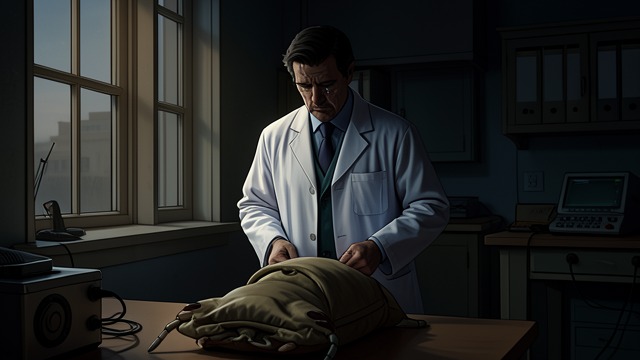
Fatherhood Interrupted
A sudden absence
Alice Hunter is six years old when she dies in the crash that also kills Kara Hunter. David survives, but the family life that defined his identity is abruptly taken from him. His professional understanding of death cannot explain the disappearance of Alice’s presence or reconcile him to the silence left by her death.
A grief kept private
David’s later life in Manham is shaped by a loss he rarely shares. His decision to work as a country doctor gives him contact with living patients, but it does not make him forget the daughter he has lost. Alice’s absence remains a private measure of how much of his former life has vanished.
Ordinary Family Dreams
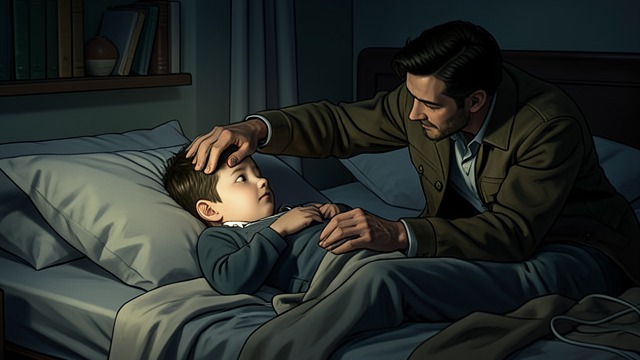
A Returned Childhood
A family restored in sleep
David’s dream brings Alice back as a living child in the household she once shared with him and Kara. The emotional power lies in ordinary family contact: he can talk with her, touch her, and briefly imagine that they still have a future together. The dream gives his fatherly love a vivid, physical form.
The cost of waking
When David awakens, the contrast between the dream and reality renews his grief. His sleepwalking adds danger to the experience, as his unconscious body sometimes carries him near an open window or the stairs. The dream comforts him only temporarily; its return makes the knowledge of Alice’s death feel newly immediate.
Alice Leaves the Room
A Child’s Goodbye
A last embrace
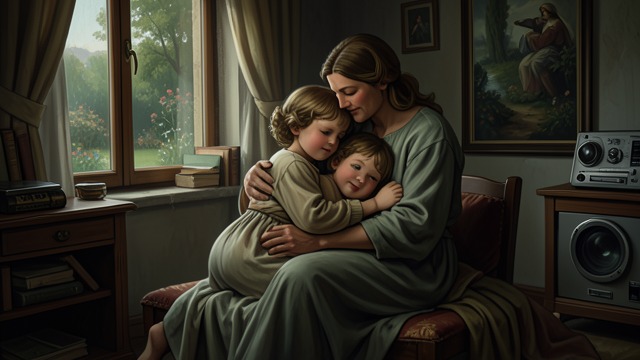
In David’s dream, Alice is curled on Kara’s lap before being asked to go and play outside. She hugs her father and says goodbye, and David feels the warmth and reality of her small frame. The scene recreates the tenderness of parenthood at the moment he is least able to distinguish dream from waking life.
Love made protective
Alice’s departure leaves David alone with Kara, whose warning pushes him to face the choice between remaining with his dead family and returning to Jenny. The dream does not diminish Alice’s importance; it transforms the bond into a reason for David to survive. His promise that he will be there when Alice returns becomes poignant because he knows, beneath the dream, that she cannot return.
The Last Dream
A Quiet Departure
Familiar rooms without reunion
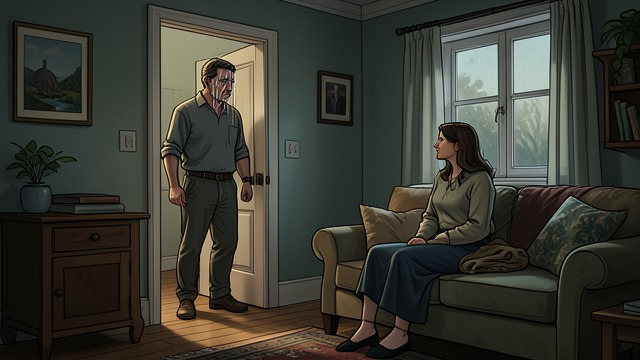
David visits the house from his dreams for the final time. It remains peaceful and familiar, but Alice and Kara are no longer there. He understands that the visit has ended, not because his love has vanished, but because the dream’s former purpose—to give him a temporary life with them—no longer holds.
A father’s grief changes shape
David wakes with wet cheeks and accepts that nothing is wrong with crying. His bond with Alice persists as part of his identity, while his new life with Jenny becomes possible without being treated as betrayal. The farewell offers no supernatural certainty or complete cure; it marks a difficult movement from being held by loss to carrying it forward.
A Life Beyond the Dream
Carrying Alice Forward
Memory beside survival
In the epilogue, David continues to live with the consequences of the violence in Manham and with the loss of his family. Yet his contact with Jenny and the possibility of a shared future show that he has not returned to the emotional isolation that followed Alice’s death. Remembering his daughter no longer requires refusing the living.
An unfinished bond
Alice is absent from David’s waking life, and the novel does not suggest that new love replaces her. Instead, his fatherly attachment remains one strand of a larger life that he can now inhabit. The return of his forensic work and the closing image of a body place him again near death, but he faces that work as a living man rather than someone seeking reunion through despair.
Nearly four years before the main events, in the car crash
The night David wakes beside the open bedroom window
After Henry drugs David, in the dream before David wakes in the hallway
The night before David leaves Manham for good
In the epilogue, after David has left Manham
