Car crash that killed David Hunter’s family
The Chemistry of DeathThe Car crash that killed David Hunter’s family is known through its aftermath rather than a dramatized account of the collision. A drunk driver in the other car survived unhurt, while David Hunter’s wife, Kara, and daughter, Alice, were killed. The event broke the continuity between his former life as a forensic anthropologist and the rural medical career he later built, but it did not give him the explanation he most needed: what happens to the life that death takes away.
The Crash and Its Unequal Outcome
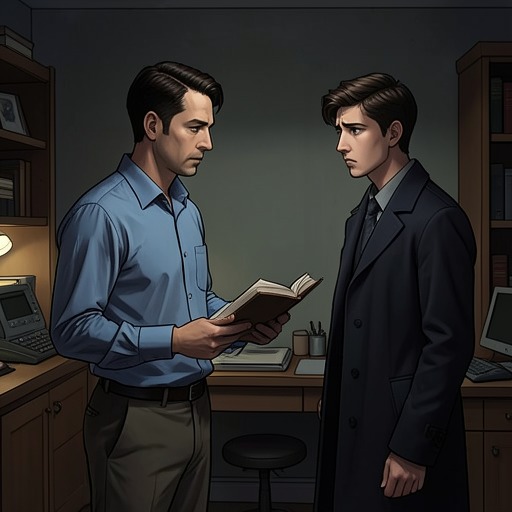
Mackenzie tells David that the crash killed Kara and Alice, while the drink-driver responsible survived without injury. That stark imbalance is among the few concrete circumstances the account supplies, and it establishes the loss not as an abstract bereavement but as the sudden death of the two people David cherished most. The collision is described as taking them in an instant; no fuller sequence of the crash is recounted.
The difference between the dead and the unhurt survivor shadows David’s later understanding of the event. He can identify what happened to his family physically, but the account offers no resolution, punishment, or further information about the driver. The crash therefore enters the narrative through its irreparable consequence for David, not through an investigation of its mechanics.
A Forensic Expert Confronts Death at Home
Before the crash, David had made a professional study of death. He understood the chemistry of decomposition and could chart its progress according to weather, soil, and season. Forensic work had taught him to identify when and how a person died, and to establish who that person was. He regarded such knowledge as necessary, and took satisfaction in solving the physical questions that a body could answer. The dead were individuals, but he knew them through death rather than through their lives.
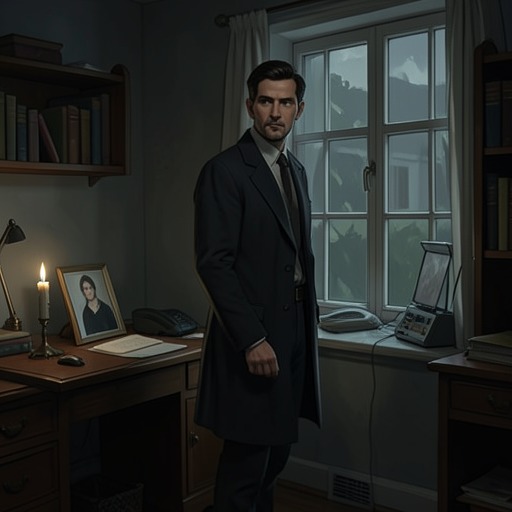
Kara and Alice made that professional distance impossible. David knew the physical transformation their bodies would undergo, almost hour by hour, yet this expertise could not tell him where they were in any larger sense, or how the animation and spirit he had known could simply cease. His knowledge could describe bodily change without explaining the loss of the people themselves. The crash thus turns his former competence into a source of painful contrast: he can understand the process of dying, but not what death means for those he loves.
Retreat into a Different Career
David’s inability to answer those questions becomes intolerable. Friends and colleagues understood his grief, but he scarcely registered their concern. Nor could he immerse himself in forensic work: its daily subject matter continually recalled what he had lost. He responds by turning away from the life he had known, relearning his earlier medical training and beginning a new career focused on living patients.
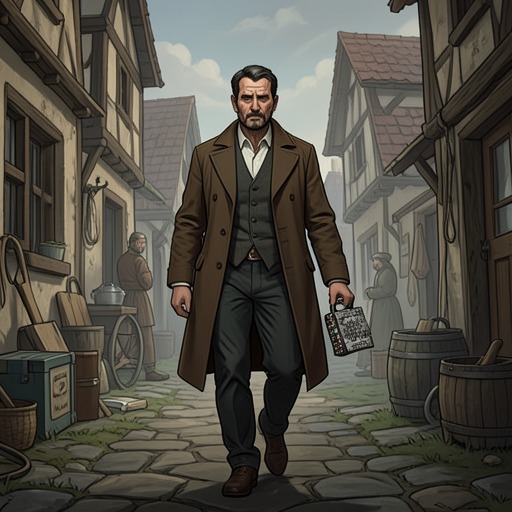
His move to Manham and work as a general practitioner give that retreat a practical form. Instead of examining the dead, he tries to delay death by caring for the living. The change does not bring him closer to an answer about the fate of Kara and Alice; it gives him another kind of work to do while leaving that question unresolved. Mackenzie later summarizes the transition as David having practised as a general practitioner for only three years after leaving forensic anthropology and coming to the village following the crash. David’s stillness in response shows how abruptly a biographical fact can reopen the loss beneath his new professional identity.
The Past Re-enters the Present
When Mackenzie asks for help with a murder investigation, David initially resists the return to forensic work. The request presses on the same division the crash created: the specialist who once interpreted death and the bereaved man who found that such interpretation could not restore meaning. David describes his former self as almost another person, one who could treat the body’s transformations as familiar professional knowledge. His present life had been built partly by leaving that expertise behind.
The investigation nevertheless draws him back. After Mackenzie has raised his past, David delays opening the photographs, tries to continue with his patients, and finds the envelope’s presence difficult to ignore. He eventually takes the photographs out, still telling himself that looking does not commit him to helping. The shift recalls how the crash made his former occupation unbearable, while showing that the knowledge he abandoned remains available and consequential. His return to forensic attention does not undo the family’s death or answer his deepest question; it marks the point at which the past he fled again becomes part of his present.
Significance
The crash is the hidden hinge of David’s story. It explains why he left forensic anthropology, why he chose work with the living, and why a request to examine death carries a personal weight beyond professional duty. The contrast is not between knowledge and ignorance in general, but between two kinds of knowledge: David can measure bodily decay with precision, while the loss of Kara and Alice leaves him unable to know what became of the lives he loved.
The narrative keeps that distinction unresolved. David’s new career has worked as a way to live after the crash, but it has not settled the questions the crash forced upon him. When forensic work returns through Mackenzie’s investigation, the event’s consequences return with it: not as a recovered scene of impact, but as a continuing division between the facts death can yield and the meaning David still cannot recover.