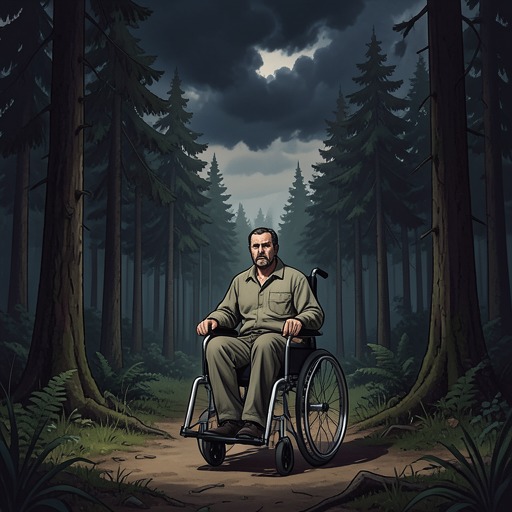
David Hunter moves to Manham and becomes the village doctor
The Chemistry of DeathDavid Hunter moves to Manham and becomes the village doctor marks a deliberate break with his former life: after the deaths of Kara Hunter and Alice Hunter, he leaves London, retrains for general medicine, and takes a temporary rural post. The move offers a new vocation rather than an answer to his grief, while his expertise in human decomposition continues to shape his work in Manham.
The move to Manham
Three years before the main events, David arrives at Manham’s small railway station on a wet March afternoon. It is his first time in Norfolk and the Norfolk Broads. The surrounding flat marshland and fens feel remote from London, and that distance is what matters to him: he needs to get away, though he has made little practical preparation for the journey. He has sold his car and has no transport arranged, so he sets off on foot with his suitcase, following a faded road sign toward the village.
The post began with a small notice in The Times: a rural medical practice needed a general practitioner on a six-month temporary contract and offered accommodation. David applies without much expectation, drawn as much by the location and its distance from London as by the work. When the offer arrives, he accepts it by return of post. The move is therefore both an employment decision and an attempt to start over somewhere far from the life he has lost.
From studying death to treating the living
Before coming to Manham, David had immersed himself in the study of death. He understood the physical changes that follow it and could assess how decay progresses according to weather, soil, and time of year. In that work, he had learned to identify when and how a person died, but the dead were strangers known to him through their remains. After Kara Hunter and Alice Hunter were killed in a crash caused by a drunk driver, that professional distance could not protect him. He knew what would happen to their bodies, yet his knowledge could not answer what had happened to the lives within them.
Unable to bear that unanswered question, David turns away from his former work and relearns his medical training. Treating living patients gives him a different purpose: he can try to delay death, even if he cannot explain it. The rural practice becomes a way to build a career anew, and, for a time, the change works. Mackenzie’s questions about David’s past later unsettle that separation, bringing his former professional identity and its painful associations back into view.
Forensic knowledge in his new work
David’s medical post does not erase his earlier expertise. When the investigation into Sally Palmer’s death requires an estimate of time since death, he explains how insect development can constrain it. He identifies blowfly larvae among the remains, estimates that one is seven or eight days old, and notes the absence of empty pupal cases. Taken together, the insect evidence supports a preliminary interval of one to two weeks; allowing for the hot weather and rapid decay, he gives a best estimate of roughly nine or ten days.
He also interprets adipocere, the brittle, pale substance formed as body fat breaks down. Its effect on the soil has killed nearby grass, while its texture and limited amount fit rapid outdoor decomposition and a body present for less than two weeks. David is careful to present these findings as estimates rather than certainties. His precision is useful precisely because he accounts for heat, wounds, and the conditions at the scene instead of treating decomposition as a fixed clock.
Reading remains and their surroundings
Later observations show David comparing different kinds of evidence rather than relying on one indicator. Around a dog’s open throat wound, he finds beetles as well as older fly remains. Since flies and maggots generally appear earlier and beetles later in the process, the change in insect activity helps describe the course of decay, though he cautions Mackenzie that beetles are less reliable than maggots and that other variables matter.
David also uses the condition of remains and the ground around them to distinguish discovery from death. When a dog leads investigators to a skeleton, he establishes that it is not Lyn Metcalf: the remains have been there since long before her disappearance, with no soft tissue left. In a separate examination during the investigation, he notes that a body’s premature drying points to substantial blood loss while the person was alive. Low iron content in the soil where Sally Palmer was found, however, does not fit the amount of blood expected from a severed jugular. Later, a body with similar wounds is assessed as having been dead about six or seven days in the heat; the blackened vegetation and expected iron testing contribute to David’s preliminary conclusion that the victim was killed elsewhere and brought to the site.
Across these investigations, the move to Manham proves not to be an escape from David’s knowledge of death. It changes what he does with that knowledge: once applied to the dead as an end in itself, it now serves the living by helping establish what happened, how remains came to be where they were found, and what the evidence can—and cannot—show.