David Hunter’s unresolved grief
The Chemistry of DeathDavid Hunter’s unresolved grief begins with the sudden deaths of his wife, Kara Hunter, and their six-year-old daughter, Alice Hunter, and continues to shape both his work and his sense of what life can mean. He leaves London for a temporary rural medical post, trying to escape the places and people bound up with his loss. Yet the move changes his surroundings, not the questions that torment him: his scientific knowledge can describe what happens to a body after death, but cannot tell him where the life within his family has gone.
The loss behind the move
Before coming to Manham, David Hunter had built his professional life around forensic work and the study of death. He knew how to read the body’s transformation: decay could be charted against weather, soil, and time of year, and physical evidence could help establish when, how, and to whom death had come. He treated that knowledge as necessary and took satisfaction in the exactness of the work, while recognizing that the dead people he examined were strangers whose lives he had never known.
The distinction collapsed when the car crash killed Kara Hunter and Alice Hunter. A drunk driver caused the crash and walked away unscathed, while David’s wife and daughter were reduced, in his mind, from the living people he cherished to bodies undergoing the processes he had spent his career studying. He could anticipate those processes almost hour by hour. That expertise did nothing to answer what mattered most to him: what had happened to the life and spirit that had animated them, and whether it had simply ceased to exist. His grief therefore carries a particular professional irony. The more precisely he understands bodily death, the more sharply he feels the boundary of what that understanding cannot explain.
Escape into rural medicine
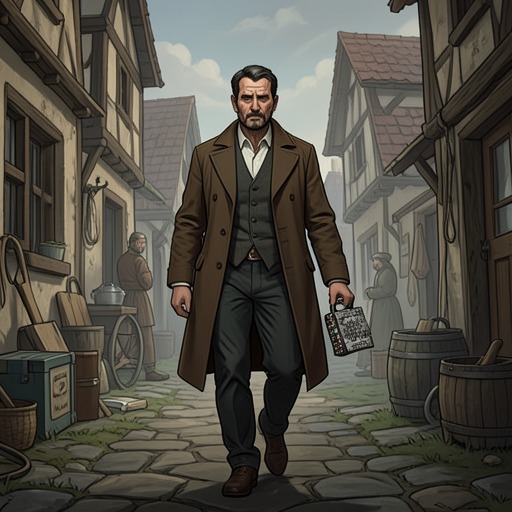
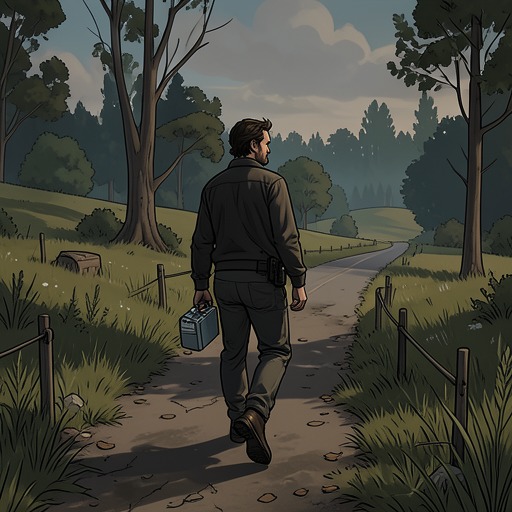
After the crash, David finds that neither the support of colleagues and friends nor a return to forensic work can relieve him. Forensic practice would immerse him in death and repeatedly recall what he had lost; ordinary sympathy, meanwhile, barely reaches him. He turns away from his former life and applies for a temporary general-practice position advertised in The Times. The post offers six months of work and accommodation in Norfolk, far from London. He applies without much hope or excitement, then accepts as soon as the offer arrives.
The move is an attempted escape, but also a deliberate change in the object of his labor. David relearns his medical training and takes up work with the living, where treatment might at least delay the body’s final transformation. He does not claim that this new career answers his questions about death. Rather, it gives him a different task and a way to withdraw from the world associated with his old one. When asked whether he believes he can manage the rural practice despite limited experience in general medicine, he considers the question seriously and says that he can. The confidence is practical and provisional; he is beginning a new role without suggesting that he has recovered from the loss that prompted it.
That attempted separation becomes harder to maintain once an investigation draws on his forensic knowledge. Reflecting on his past, David describes the former specialist as almost another person: someone who could study the skull beneath the skin and understand decomposition while keeping the dead at an abstract distance. The photographs brought to him by Mackenzie make that distance difficult to preserve. His attention returns to a field he had left behind, showing how the new career has not erased the old identity—or the grief bound to it.
Dreams, waking, and recurring loss
David’s dreams make his bereavement recur in a form that is both consoling and cruel. In them, Kara Hunter and Alice Hunter are alive, present, and available to speak with and touch. One recurring dream places the family in a house David has never encountered in waking life but experiences as home. The ordinary intimacy of talking about his day matters: the dream restores not a dramatic reunion but the everyday future that the crash took away.
The pain arrives on waking. David does not dread the dreams because they are frightening in themselves; he dreads having to leave their apparent reality and encounter his family’s deaths again. The grief then feels newly immediate, as if the loss has happened once more. This pattern makes sleep a repeated passage from an imagined continuation of family life into the fact of its absence. The dreams preserve what he longs for, but their return also renews the wound.
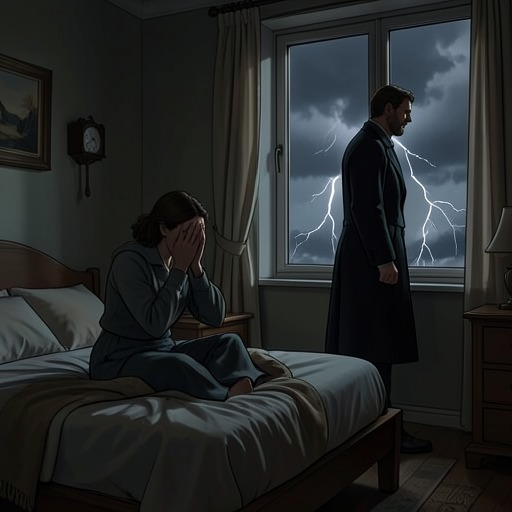
The boundary between sleep and waking is unstable in another way. David sometimes discovers that he has moved while asleep, without remembering how or why. After one dream, he wakes in a disoriented state beside an open bedroom window; on other occasions, he has found himself at the top of the stairs. The episodes are not simply another image of loss: they place his sleeping body in potentially dangerous locations while his conscious mind is absent. Their recurrence shows that his grief is not confined to deliberate remembrance or to the private content of dreams. It affects his nights and leaves him unsure of what he has done while unconscious.
Questions without an answer
David’s medical and forensic training gives him a vocabulary for the body but not for the survival, disappearance, or meaning of personal life. In his account of the crash, he can imagine the physical changes that Kara Hunter and Alice Hunter’s bodies would undergo, yet insists that this knowledge cannot answer where they are or what became of their animation. The failure is not a lack of expertise within his field; it is a question that the field cannot settle. His grief persists at the junction between what can be observed and what he cannot know.
A remark by Linda Yates—that dreams have a reason—leads David to consider whether his own dreams might mean more than a psychological effect. He can imagine rational explanations, including one offered by Henry Maitland, but the dreams seem to him unusually coherent and real. He is reluctant even to acknowledge that part of him wants to believe they offer more than memory. That hope frightens him because he understands that seeking reunion with his family by ending his own life would be an act of despair, not love. More troubling still, he sometimes finds that he does not care enough to reject the thought. The passage records dangerous despair, not an attempt or a decision to act.
David’s grief thus remains unresolved in the evidence of his move, his work, and his recurring dreams. Rural medicine offers a different purpose but no explanation for death; forensic investigation revives expertise he had hoped to leave behind; and dreams briefly restore a family life that waking cannot sustain. His struggle is not simply to remember Kara Hunter and Alice Hunter, but to endure the distance between the certainty of their deaths and the unanswered questions their deaths have left him.